



Garden by garden planning turns a messy yard decision into a sequence you can actually finish. You divide the yard into workable areas, fix the part that affects daily use first, then let each finished area guide the next one.
That matters when the yard already has problems you can feel underfoot: a path that puddles after rain, a hot fence line that cooks plants, a bare corner you avoid, or a patio edge that never connects to the garden around it. A full redesign can hide those details on paper. A zone-by-zone plan makes them visible before money, plants, and weekend energy disappear into the wrong place.
Pick The First Zone By Friction, Not Beauty
A good first zone solves a real use problem and teaches you something about the rest of the yard.
Key Takeaways
- Choose one yard zone before buying plants.
- Map paths, water, shade, and views together.
- Fix daily-use areas before decorative corners.
- Avoid repeating one layout in every zone.
- Review each finished area after one season.
Table of Contents
What Garden-By-Garden Planning Means In A Real Yard
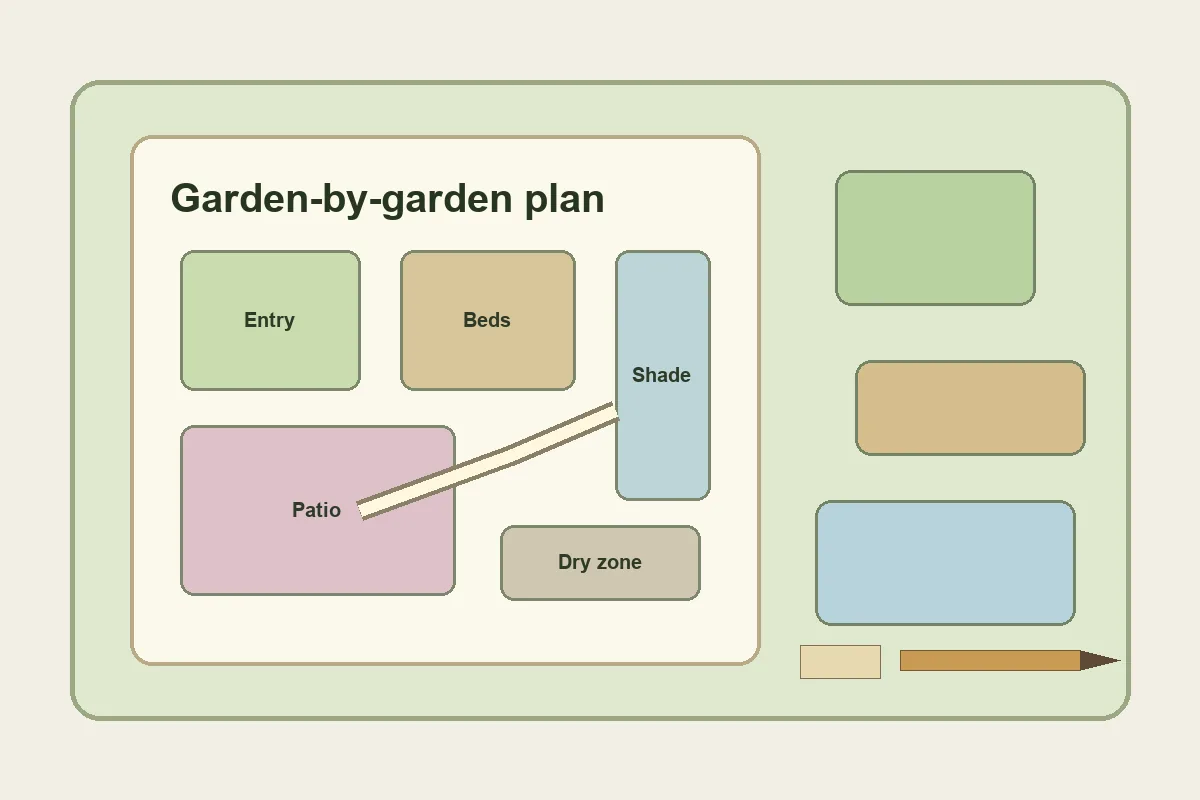
Garden-by-garden planning treats a yard as connected areas with separate jobs. One area may be the front walk. Another may be a vegetable bed, a side-yard passage, a patio edge, a shade border, or the narrow strip beside the driveway. Each area gets its own purpose, constraints, and timing.
The method works because most yards fail in pieces. A bed near the kitchen may need herbs and drainage. Along the back fence, screening and drought-tolerant shrubs may matter most. At the front entry, a cleaner path may help before more flowers go in. When those areas are planned separately, the work becomes smaller and the decisions become sharper.
Every zone can have its own job while the yard still feels connected. Repeated materials, a clear route, and visual rhythm help one area lead naturally to the next. The difference is order. You solve the most active space first, then borrow what works.
The landscape design chapter from NC State Extension Gardener Handbook puts site analysis before design decisions, which is exactly why a zoned approach works for home gardeners. Use, light, soil, drainage, and views decide the shape before plant shopping begins.
Map The Yard By Use Before You Map The Beds
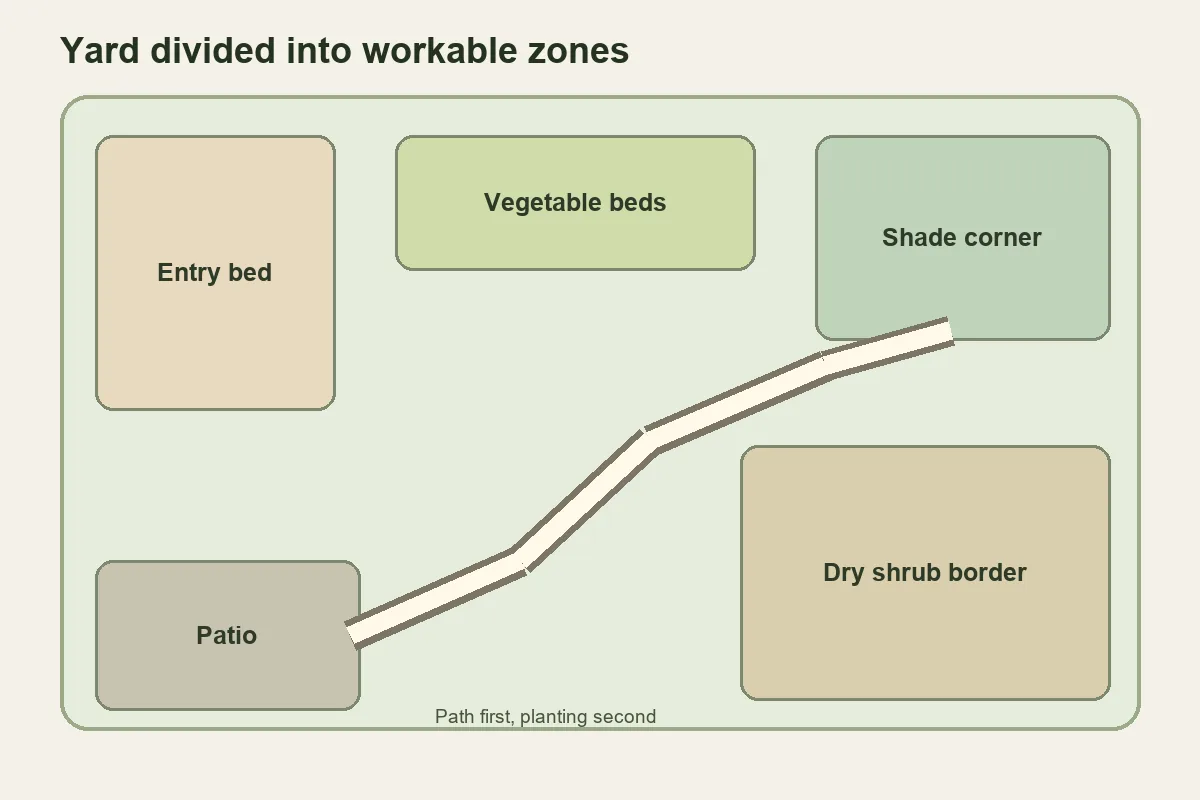
Start with how the yard is used on an ordinary week. Walk from the back door to the hose, compost area, shed, driveway, gate, trash bins, and favorite sitting spot. Those worn lines matter more than a neat paper border. A garden that blocks a real route becomes a maintenance problem almost immediately.
Draw the yard roughly, then mark three things: movement, stopping points, and avoided areas. Movement is where feet, hoses, carts, and pets travel. Stopping points are places where someone sits, harvests, works, or looks out from a window. Avoided areas are the damp corner, the scorching wall, the slippery slope, or the strip that collects tools because nobody knows what else to do with it.
A broad garden layout design process decides the whole structure. This planning method decides the order of attack. It asks which area deserves attention first, which area should wait, and which decision will affect everything built later.
Use flags, hose, string, or scrap lumber outside before committing. A path that looks generous on paper can feel tight when you carry a watering can through wet leaves. A bed that looks small on a screen may take half a Saturday to weed. The body notices scale faster than a sketch does.
Start With The Zone That Controls Daily Movement
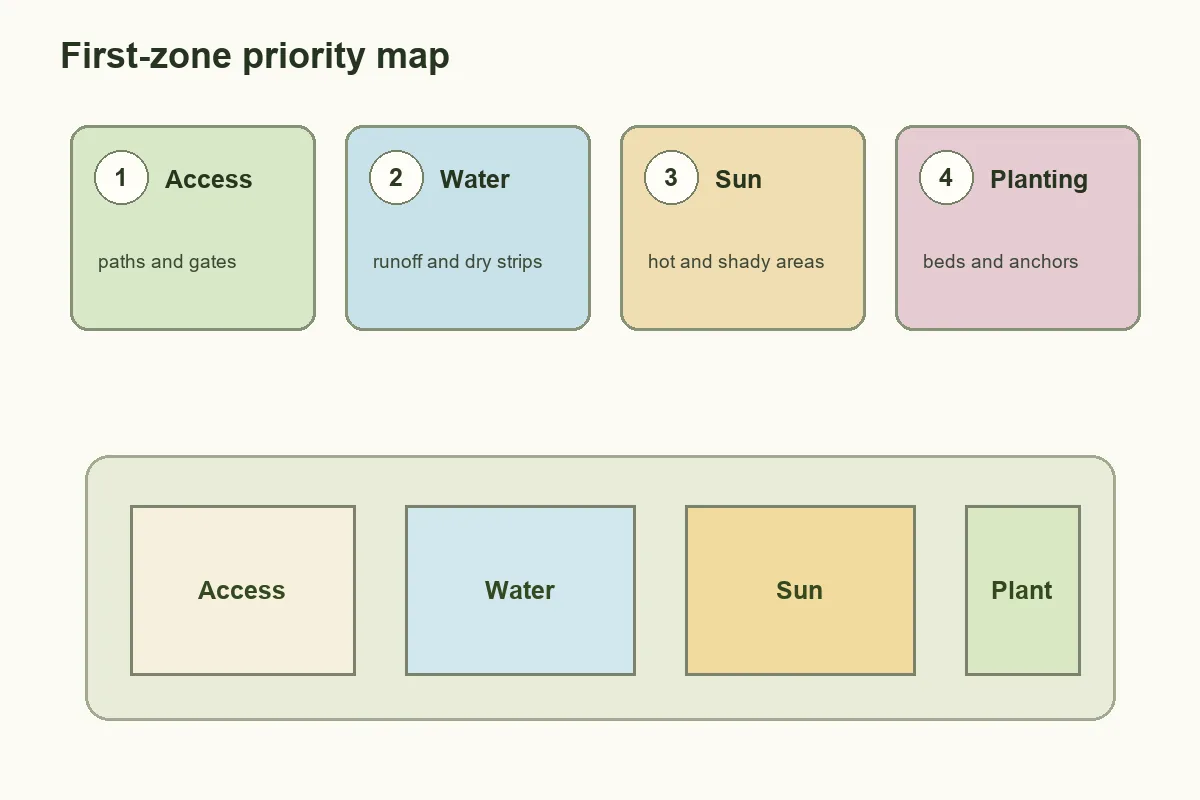
The best first project is often plain. A stable path, a hose route, a working gate, or a clear patio edge may feel less exciting than a new flower border, yet it changes how the whole yard functions. Once movement works, planting decisions get easier because beds no longer fight foot traffic.
Daily movement also reveals hidden conflicts. A narrow side yard may need stepping stones and shade-tolerant groundcover with a walkable edge. The path to a vegetable bed may need mulch or gravel before the bed needs more crops. Around a patio, one low planting zone can soften the hard surface without blocking chairs.
Hard materials belong early in the sequence because they are harder to change later. The logic in hardscaping for outdoor rooms fits this step: paths, edges, steps, walls, and seating areas shape how plants are experienced. Put the bones in the right place first, then let plants finish the feeling.
Observation: I often see yards improve faster when the first weekend goes into access first. Once the muddy route is firm and the hose reaches without dragging across stems, the next planting day starts cleaner.
| First-Zone Signal | What It Usually Means | Best First Move |
|---|---|---|
| You cut across beds to reach the hose | The real path differs from the designed path | Build the route before adding more plants |
| One view makes the whole yard feel unfinished | A focal area controls attention | Frame that view with structure before color |
| Plants fail in one hot, dry strip | The zone has a water and exposure mismatch | Change plant palette or irrigation before replanting |
| The patio feels detached from the garden | The edge has no transition | Add a low planting band or path connection |
Build Sun, Water, And Soil Decisions Into Each Zone
Each zone needs its own growing conditions. A front bed can sit in reflected heat as the back corner stays damp and cool. A side yard may be bright for two hours and gloomy for the rest of the day. Treating the whole yard as one condition creates weak plant choices.
Measure sunlight before drawing final beds. The local pattern matters more than the label on a plant tag. The process in measuring sunlight in a garden gives a practical way to separate morning sun, afternoon heat, filtered shade, and full shade. Those differences decide which zone can carry vegetables, flowering shrubs, containers, or low-maintenance foliage.
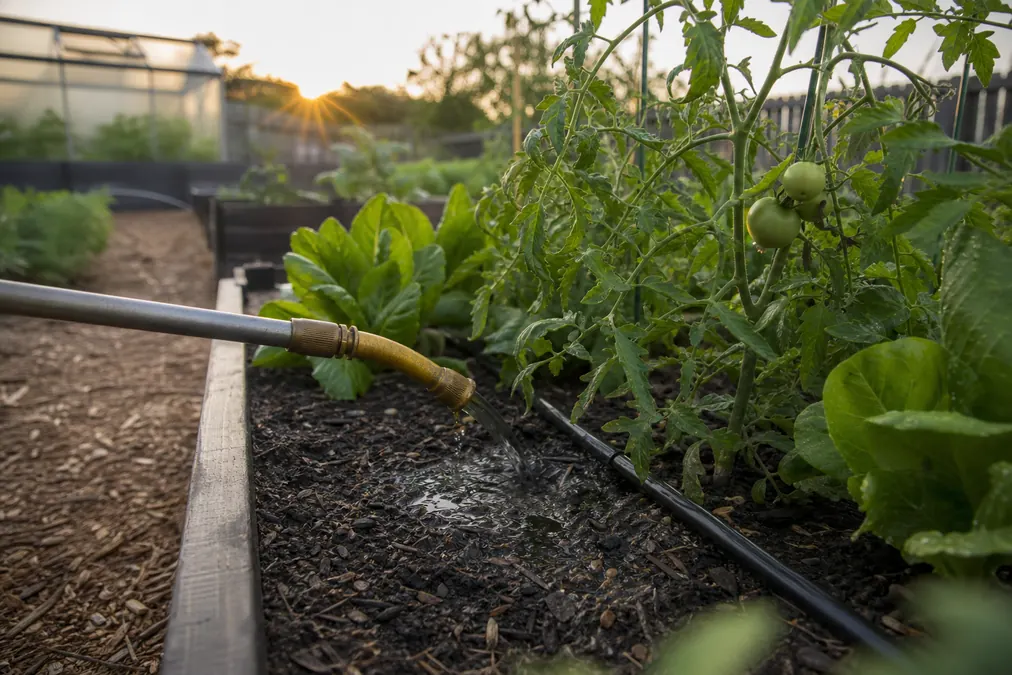
Water should be mapped the same way. Group thirsty plants where irrigation can reach them easily, and keep dry-tolerant plantings away from overspray. The University of Arizona Cooperative Extension water-wise landscape guide describes hydrozones as areas grouped by similar water needs. In a home yard, that can be as simple as keeping the vegetable bed, patio pots, and dry shrub border on different watering expectations.
Soil is the third check. Test it separately across the property. Construction fill near the house, compacted side-yard soil, and amended vegetable beds can behave like separate gardens. Push a trowel into each planned zone after rain. If one area smears into a shiny ribbon while another crumbles dry, they need different planting plans.
Make Garden Rooms Feel Connected Without Matching Everything
A zone-by-zone yard can become patchy if every area gets a separate style. Connection comes from repeated cues, not identical planting. Use one path material, one edging rhythm, one repeated shrub shape, or one recurring foliage color to pull separate areas together.
Think in thresholds. The point where patio becomes path, path becomes bed, or lawn becomes vegetable area needs a small cue that the space is changing. That cue might be a gate, an arch, a change from gravel to stepping stones, a pair of containers, or a low evergreen at the turn. The transition should be readable before the reader reaches the next area.
The broader landscape design principles still matter here. Scale, repetition, balance, and focal points keep separate zones from feeling accidental. This method just applies those principles one area at a time, with enough restraint that the yard grows coherently.
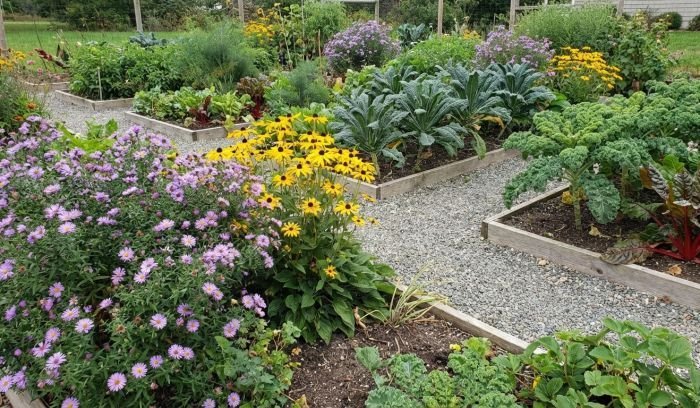
Avoid repeating a successful zone blindly. The sunny vegetable area may need straight rows and working access. In a shade sitting area, texture, quiet color, and a soft edge may matter more. At the front entry, clarity and lower plant heights often carry the space. One yard can hold different moods if the materials, routes, and plant masses still speak to each other.
Phase The Work So One Finished Area Teaches The Next
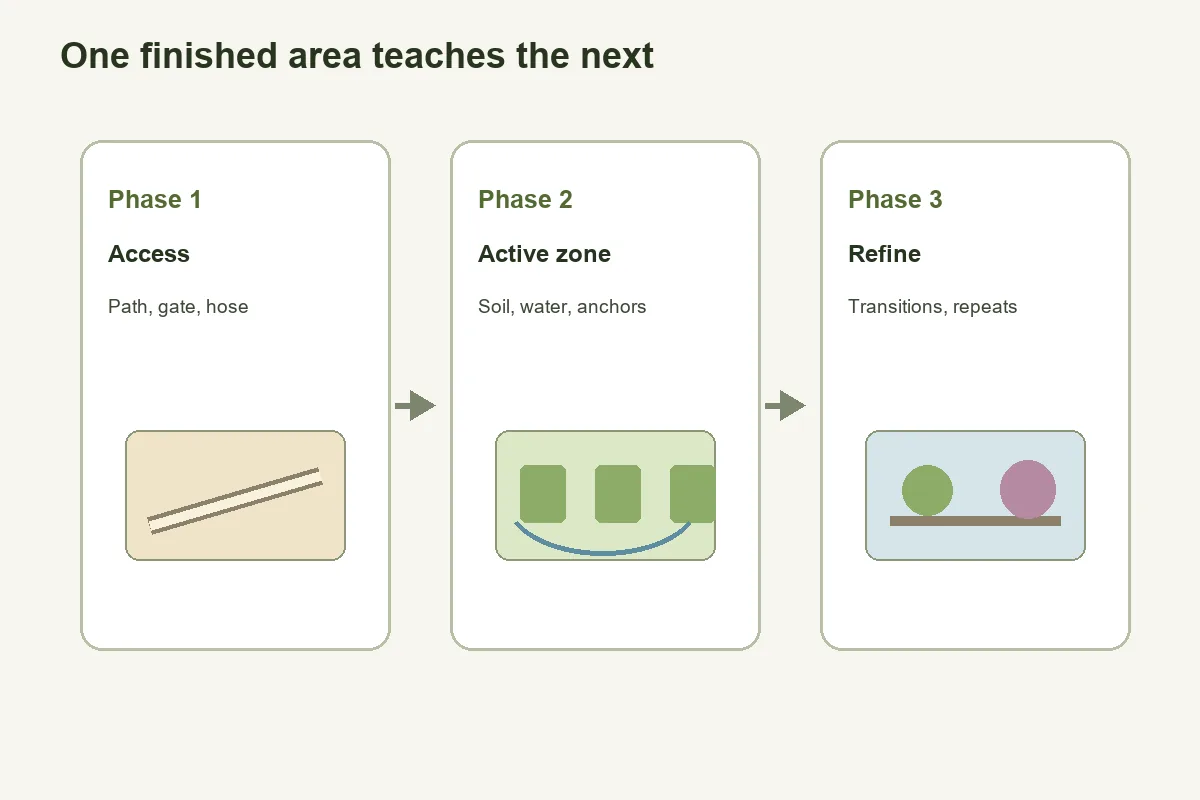
Phasing keeps a yard from becoming a permanent half-project. Finish one zone to a usable state before opening the next one. Usable means the path holds, the soil is prepared, the main plants are in, water is solved, and the area can be maintained without stealing every weekend.
A three-phase sequence works for most home yards. Phase one fixes access and the most visible or most-used zone. The second phase builds the area that depends on what changed, such as a connecting bed or side path. Lower-pressure spaces, seasonal color, and refinements come third. That order prevents late decisions from undoing early work.
The calendar still matters. A planting-heavy zone may wait for spring or fall. Paths and seating zones can often be built in cooler weather. Water-efficient borders need planning before summer stress arrives, especially if the yard already has dry strips. The broader water-efficient garden layout logic helps keep thirsty and dry areas from fighting each other once the plan expands.
Set a review point. After four to six weeks of use, note where feet actually go, which plants wilt first, where water pools, and which view feels better than expected. Those notes become field data for the next zone.
A Simple Weekend Sequence For The First Area
Use the first weekend to choose and mark one zone. Pick an area no larger than you can clear, measure, and understand in one session. For many yards, that is the path from door to garden, the patio edge, the front entry bed, or the first 8 to 12 feet around a vegetable area.
On day one, mark boundaries, watch sun, check drainage, and walk the route with tools. On day two, decide the first physical change: path, edge, soil repair, irrigation access, or one anchor planting. Leave decorative fill plants until the zone proves its shape.
If the area still feels confusing, reduce the scope. A small finished zone with clean access and healthy plants teaches more than a large unfinished plan. The next area will be easier because the yard has already started giving answers.
Conclusion
A yard becomes easier to design when it stops being one large problem. Choose the first zone by friction: the path you use daily, the bed that fails repeatedly, the view that controls the space, or the patio edge that never feels connected.
Keep the first move practical. Mark the area, test the route, measure sun, solve water, and build only what that zone can support. When the finished area starts to feel natural underfoot, with paths staying dry and plants sitting where the light fits them, the next garden becomes easier to see.
Frequently Asked Questions
What does garden by garden mean?
Garden by garden means planning a yard one functional area at a time. One area may be a patio edge, front entry, vegetable bed, side yard, or shade corner. Each zone gets its own use, access, water, and planting decisions before the next zone begins.
Is this different from a full garden layout plan?
Yes. A full garden layout plan sets the whole structure at once. This method sets a broad direction, then finishes one area before moving to the next. It works well when budget, time, or site problems make a full redesign unrealistic.
Which garden zone should I design first?
Start with the zone that affects daily use. Paths, gates, hose routes, patio edges, and main views usually come before decorative corners. If one problem wastes time every week, fix that area before adding new beds elsewhere.
Can a small yard use this planning method?
Yes. A small yard may have only three zones: entry, sitting area, and planting area. The method still helps because each zone needs a clear purpose. In tight spaces, access and mature plant size matter even more.
How long should I wait before starting the next zone?
Wait at least four to six weeks of normal use when possible. That gives time to see foot traffic, watering problems, heat stress, and maintenance gaps. Seasonal planting can shift the schedule; the review step prevents repeated mistakes.