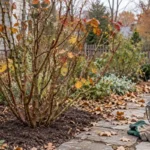
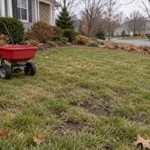
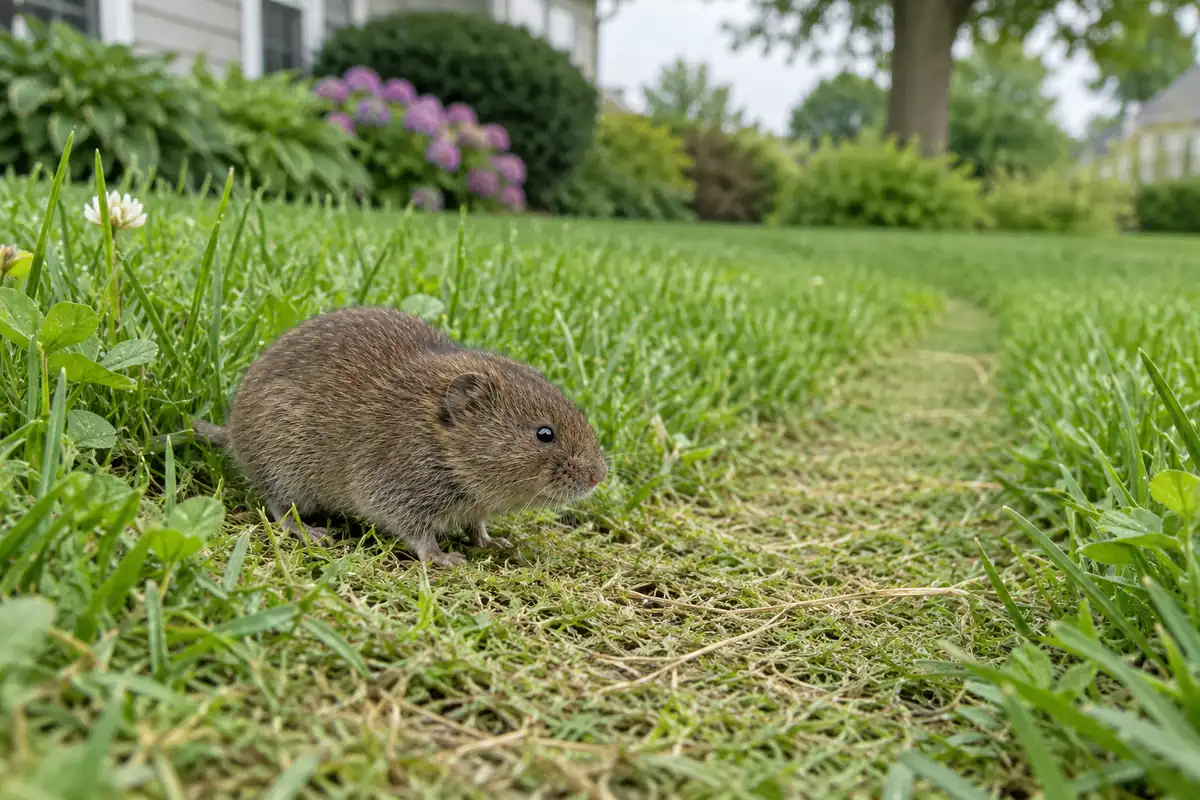
To decide how to get rid of voles in your yard, confirm fresh feeding and protect the plants being chewed. Narrow paths through grass can look alarming, and a young tree with bark missing around its base faces a much larger risk. Start there, then reduce nearby hiding places and consider localized trapping if feeding continues.
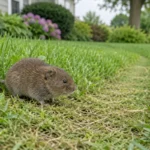
Voles are small plant-eating rodents, and their damage can occur above or below ground. Meadow voles often leave clipped surface trails; pine voles may feed on roots without those obvious tracks. Neither an old tunnel nor a single hole tells you how many animals remain. A useful plan ties each action to fresh injury: move shelter away from vulnerable stems, block access where practical, and check whether new chewing stops. Repair the lawn after you have separated old scars from continuing activity.
Choose the first action by the damage
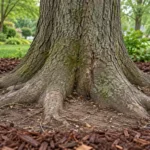
Bark is being chewed
Protect the trunk now with a fine mesh guard. Check the whole circumference and keep the guard clear of growing bark.
Fresh clipping follows a grass trail
Reduce dense cover beside the damaged plants. Repeated feeding may justify protected, localized trapping.
Old trails, no new plant injury
Monitor and let surviving grass regrow. Old paths alone do not justify poison or trapping.
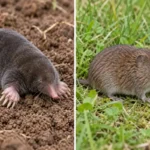
Raised soil, no chewing
Check for mole activity or another cause before choosing a vole treatment.
Key Takeaways
- Confirm fresh feeding before treating every hole as active.
- Protect young trunks before repairing cosmetic lawn damage.
- Reduce dense cover beside plants without clearing every bed.
- Use protected trapping only where damaging activity continues.
- Track new chewing to judge whether plant protection works.
Table of Contents
How to Get Rid of Voles in Your Yard: Work in This Order
Begin with a walk around the damaged plants. Look for grass stems clipped close to the ground, a narrow route connecting shelter to food, and gnawing near the soil line. Short, pale cut ends among darker old grass suggest recent feeding. Photograph the injury before moving debris, keeping your hands away from droppings or animals.
Grass tracks and holes need context. A mole can push up a ridge and a vole can use an existing underground passage to reach a bulb. Root loss without surface trails also deserves attention: Clemson Cooperative Extension distinguishes mostly underground pine vole activity from the more visible routes of meadow voles. A raised tunnel by itself is a reason to inspect further.
Put plants with lasting injury first
Inspect young trees, woody shrubs and recently planted perennials before tackling the lawn. A clipped grass blade may regrow from a surviving crown. Bark stripped around a trunk interrupts the living tissues connecting leaves and roots. That difference changes how quickly you need to act.
Choose one damaged area to follow. Record the plant, the location of fresh chewing and the nearby cover. Then protect that plant and adjust its immediate surroundings. This sequence makes it easier to tell whether an action helped; changing every bed at once can conceal where feeding continues.
Ask one question before buying a treatment: is a plant losing new tissue, or are you looking at a trail that has already begun to fill in? The first situation calls for protection. The second may need monitoring and lawn care. Integrated pest management uses that distinction between the presence of an animal and damage worth controlling.
Remove Vole Cover Without Stripping the Whole Garden
Dense vegetation allows a small rodent to move between food and shelter with less exposure. Tall weeds touching a planting bed, grass folded over a tree base and piles of cut stems can create connected routes. Break those connections beside the plants being damaged Keep useful habitat elsewhere on the property.
Mow lawn grass at the height appropriate for its species and season. Cutting everything to soil level can weaken turf and leave a separate repair problem. Trim weeds along the affected edge, remove accumulated clippings and keep stored materials from resting against vulnerable trunks. Continue routine mowing until the grass stops growing.
Seed spilled under a bird feeder can add food to an already sheltered corner. Clean up the spill and check the vegetation around it. University of Minnesota Extension includes excess seed and debris among the conditions that can favor vole activity. Moving a feeder without addressing the sheltered feeding area leaves part of the attraction in place.
Keep mulch useful and expose the trunk
Mulch still protects soil from drying and temperature swings. Its placement matters. Pull loose material away from the bark, leaving the trunk base visible and removing the soft tunnel of cover that leads directly to it. Mulching for soil health can continue across the rooting area without piling material against a stem.
A cool, damp mat of flattened leaves may lift as one soft layer, revealing a narrow passage underneath. Remove loose cover carefully; do not scrape the bark or dig through attached roots during inspection. Check the exposed base for feeding before spreading mulch elsewhere.
Heavy winter mulch around sensitive perennials creates a tradeoff. Those plants may still need insulation, particularly in exposed sites. Protect vulnerable crowns with an appropriate physical barrier before adding cover, and inspect the edges where animals could enter. Removing all winter protection can exchange feeding injury for cold injury.
Habitat changes reduce favorable conditions. They do not seal the yard. If a neglected adjoining strip continues to supply cover, concentrate on the plants you can protect and track new damage there.
Protect Young Trees Where Bark Loss Does Lasting Damage
Look around the entire base, including the side facing a hedge or fence. An irregular patch of exposed pale wood with fine tooth grooves is different from normal rough bark. The wound may be partly hidden by mulch or, in winter, by snow. A tree that still has green leaves can already have serious lower-trunk injury.
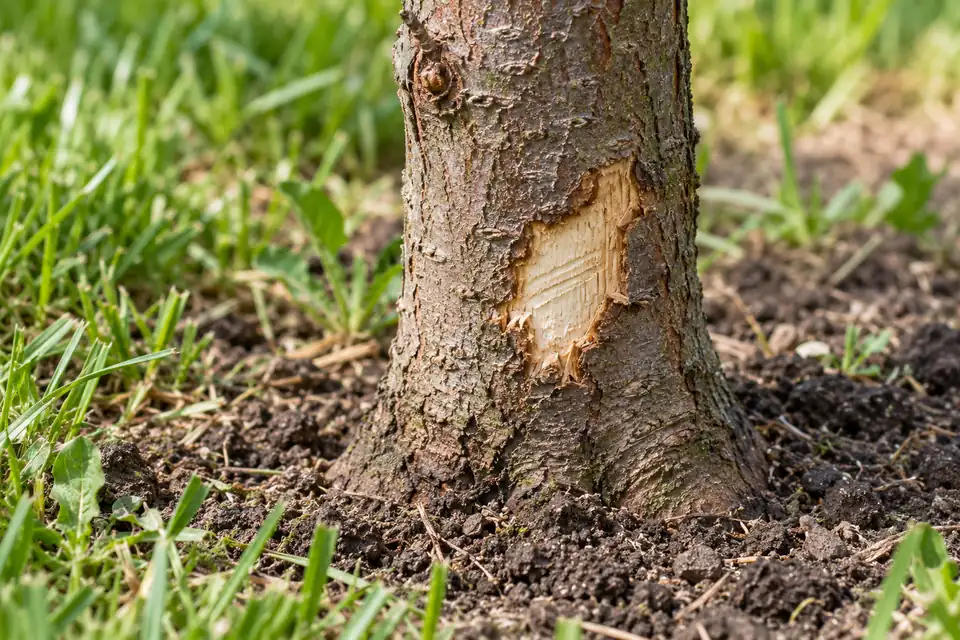
Fine hardware cloth can separate teeth from bark and leave air around the trunk. Use openings of 1/4 inch or smaller and form a cylinder with room for the tree to grow. The barrier needs to extend above the snow level animals can stand on. A guard that is tall enough in October may become accessible after a drift builds beside it.
Close the lower route without injuring roots
A gap at ground level can defeat a well-made cylinder. Iowa State University’s winter tree-protection guidance gives a 2-3 inch buried lower edge for its vole guards. Treat that as a specific installation example, not a reason to cut roots or excavate deeply around an established tree. If roots prevent safe placement, seek a suitable local guard design.
Leave clearance between mesh and bark, secure the cylinder so it cannot rub, and inspect it as the trunk expands. Loose mulch can hide the root flare, the widening where trunk becomes structural roots. Moving that loose material helps you see the base; it does not justify digging out the tree’s anchoring roots.
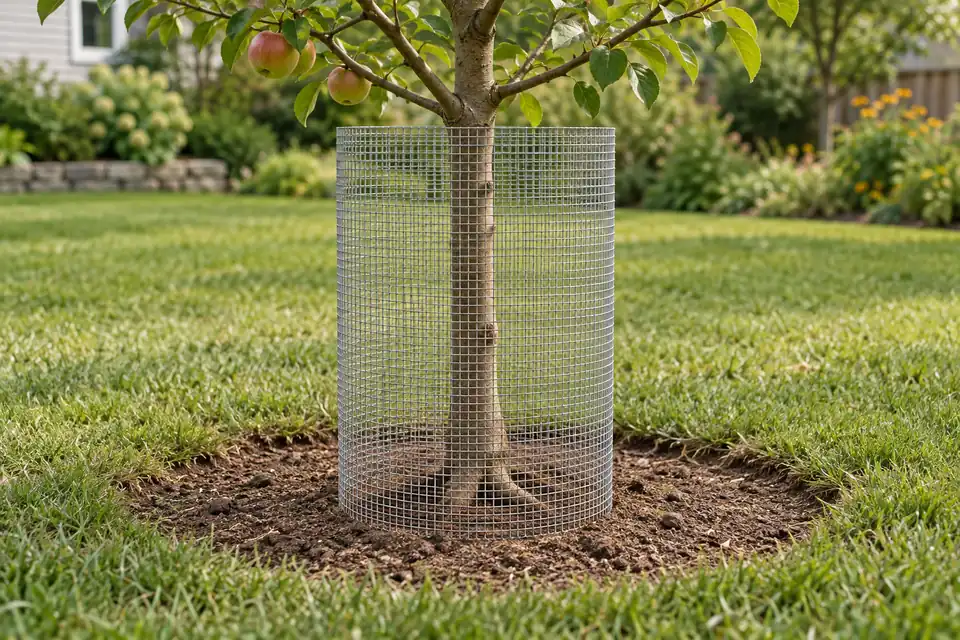
Pro Tip: Photograph the guard from the side after installation, including the soil line. After snow or mulch shifts, compare that view to see whether a new route has opened below or above the barrier.
Protection stops access; it cannot replace tissue already eaten. If bark loss circles the trunk, or a valuable tree has a deep wound, arrange an arborist’s assessment. Painting the injury or wrapping over it does not reconnect the damaged tissues. Continue checking nearby uninjured stems, which may be easier to protect than to replace.
Block Access to Small Beds and Bulbs
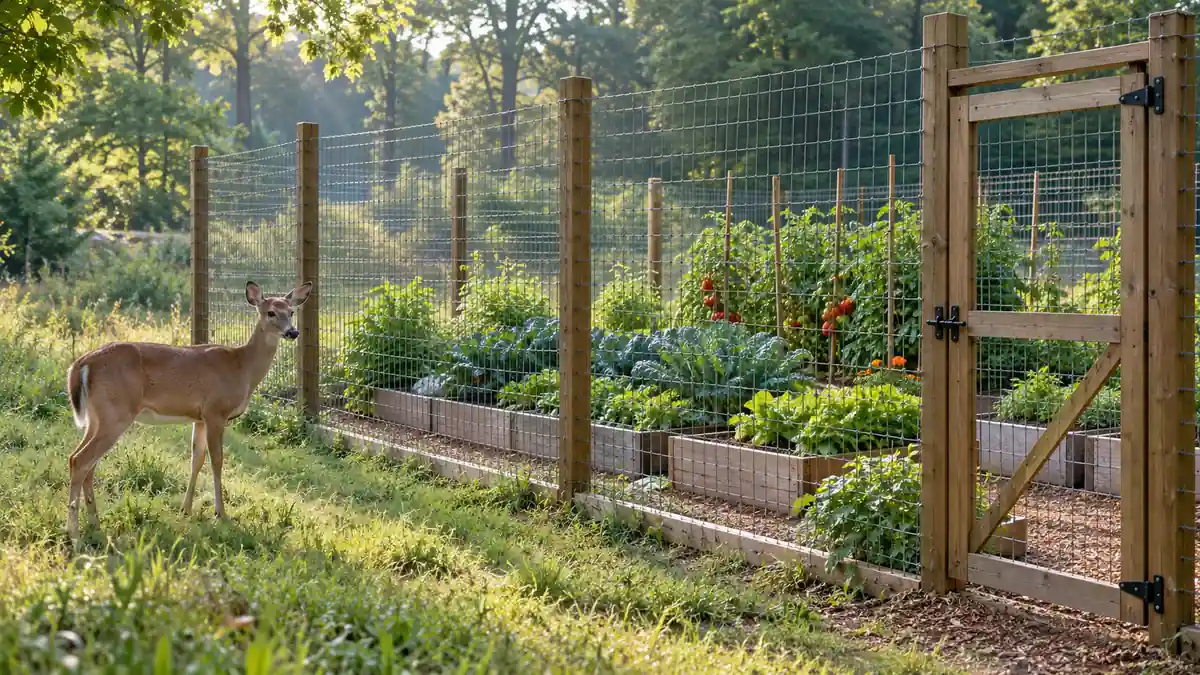
A small planting area is easier to exclude than an entire yard. Before building a barrier, locate the vulnerable food: bulbs disappearing along one edge, chewed perennial crowns under loose litter, or newly damaged vegetable roots. The barrier has to interrupt the route to that food, including access below the surface.
For a garden perimeter, University of California IPM describes fine mesh exclusion against vole entry with openings no larger than 1/4 inch, at least 12 inches above ground and a lower edge buried 6-10 inches. Those are garden-fence dimensions, not instructions for digging around a tree trunk. Soil, roots and the ability to maintain the barrier affect whether that approach fits your bed.
Check corners and joins as closely as the long sides. A loose seam, an open gate or a new soil gap can leave the protected planting accessible. Keep vegetation from draping across the edge. Repair openings before concluding that the mesh itself failed.
A raised wall alone does not close the underside
Voles can reach food through soil, and an existing raised bed may remain open underneath. Planning exclusion when building or replanting is less disruptive than removing established plants later. Any bottom barrier must allow drainage and account for future roots; a sealed sheet that holds water creates another cause of decline.
A missing bulb also needs a feeding diagnosis. Soil disturbance, rot and other animals can produce similar losses. Look for actual chewing and connecting activity before rebuilding the bed around a presumed vole problem. A wilted plant with intact roots requires a different investigation.
Physical protection is most useful when the protected area is small enough to inspect. If a barrier disappears under weeds and seasonal debris, its weak points become hard to find. Keep an accessible edge, record fresh injury inside the bed, and check entry routes before expanding the installation.
Choose Localized Control When Fresh Feeding Continues
Continued chewing after cover reduction and plant protection can justify trapping a localized vole population. Placement matters because an animal traveling a narrow runway may never encounter a device set in an unrelated open patch. Choose a location where recent feeding and a travel route meet.
Mouse-sized snap traps are used for voles in Extension guidance. An exposed trap can injure other animals or a child. Choose a protected arrangement that keeps non-target animals away and allows the mechanism to operate as intended. Follow the trap manufacturer’s placement and handling instructions, check applicable local rules, and inspect set traps daily. Wear gloves when handling equipment or captured animals.
If pets, children or wildlife can reach the location and you cannot protect it properly, use a qualified wildlife-control professional. A makeshift cover that obstructs the trigger is not a working safety enclosure. Neither a mole trap nor a large generic live trap becomes appropriate simply because a hole is present.
Do not let repellents delay trunk protection
Rain, new growth and inaccessible feeding surfaces can interrupt repellent coverage. University of Maryland Extension’s animal-damage guidance also cautions that scent and sound deterrents are unreliable. Treat a repellent as uncertain protection, not a substitute for a sound barrier around a trunk already being chewed.
Oregon State University Extension similarly warns against untested gadgets and homemade remedies for these burrowing mammals. Pouring household mixtures into a hole does not establish which animal uses it or protect roots from injury. Grub treatment also misses the food source of a plant-eating vole.
Poison baits introduce exposure risks for pets, children and wildlife, including animals that eat poisoned rodents. Product registration, permitted sites and application requirements vary. Do not improvise with indoor rodent bait outdoors or put an unspecified poison into a vegetable bed. Where toxic control is being considered, have a qualified professional assess the species, site and current label.
Trapping can reduce animals using a small damaged area; immigration and favorable cover can bring activity back. Keep the habitat and exclusion work in place. Judge control by new injuries at the plants you are protecting. Voles can still enter from neighboring habitat.
Judge Progress by Fresh Feeding, Then Repair Turf
Old paths can remain visible after feeding has stopped. Mark several damaged locations in photographs and return to the same views. Compare the edge of a bark wound, clipped plant ends and the condition of surviving crowns. A new pale bite beside the previous wound is more useful evidence than the continued existence of a brown grass track.
Use a simple record with the date, plant and change observed. Check protected stems after mowing, a storm or snow movement, when cover and barrier height may have changed. Regular checks help you catch a loose guard before a small opening becomes repeated bark loss; they do not measure the number of animals underground.
Observation: Loose grass lying across a surface runway can make the track look raised. Check whether the soil itself is lifted before interpreting the shape as a mole tunnel.
Give surviving grass a chance to return
Winter vole tracks often become obvious at snowmelt because hidden feeding paths are suddenly exposed. Grass with surviving crowns can recover, a distinction made in University of Minnesota’s lawn guidance. Remove loose dead material gently when the ground is firm enough to work, and watch for growth before buying seed for every trail.
A flexible lawn rake can lift loose clippings without the aggressive soil disturbance of a rigid garden rake. Stop if surviving grass pulls out with the debris. Working saturated soil or tearing crowns can enlarge the bare area you are trying to repair.
Persistent bare patches may need reseeding at the right time for the grass and climate. In suitable cool-season lawns, dormant seeding is a later-season option once conditions will keep seed from germinating before winter. It is not an automatic October treatment for every lawn.
Keep lawn recovery separate from woody-plant recovery. A track filling with new grass does not show that a girdled tree has healed. Continue protecting nearby stems and reassess expanding injury, failed barriers or new root loss. If the signs no longer match a vole, revisit the identification before repeating the same control.
Conclusion
Inspect the most vulnerable trunk or planting first. Confirm recent chewing, remove shelter touching that plant and close the access route with a suitable barrier. If feeding continues, choose protected, localized control at the damaged area.
Look for intact new growth, a bark wound that stops expanding and a guard that remains clear of the trunk. Those changes tell you more about plant protection than a yard with no visible holes.
Frequently Asked Questions
Do voles commonly get inside houses?
Voles usually remain outdoors. Indoor entry is uncommon, and their poor climbing ability is described in University of California IPM guidance. A mouse-like animal indoors needs its own identification before you assume the yard’s vole activity explains it.
Will an owl box keep voles out of the yard?
Owls can eat voles. An owl box does not prevent entry or protect a trunk from chewing. Reliable vole control from owl boxes has not been established, according to University of California IPM.
Can one visible vole tell me how many are present?
No. A sighting confirms an animal was present at that moment, not the size of a hidden population. Use fresh feeding at vulnerable plants to judge where protection is needed.