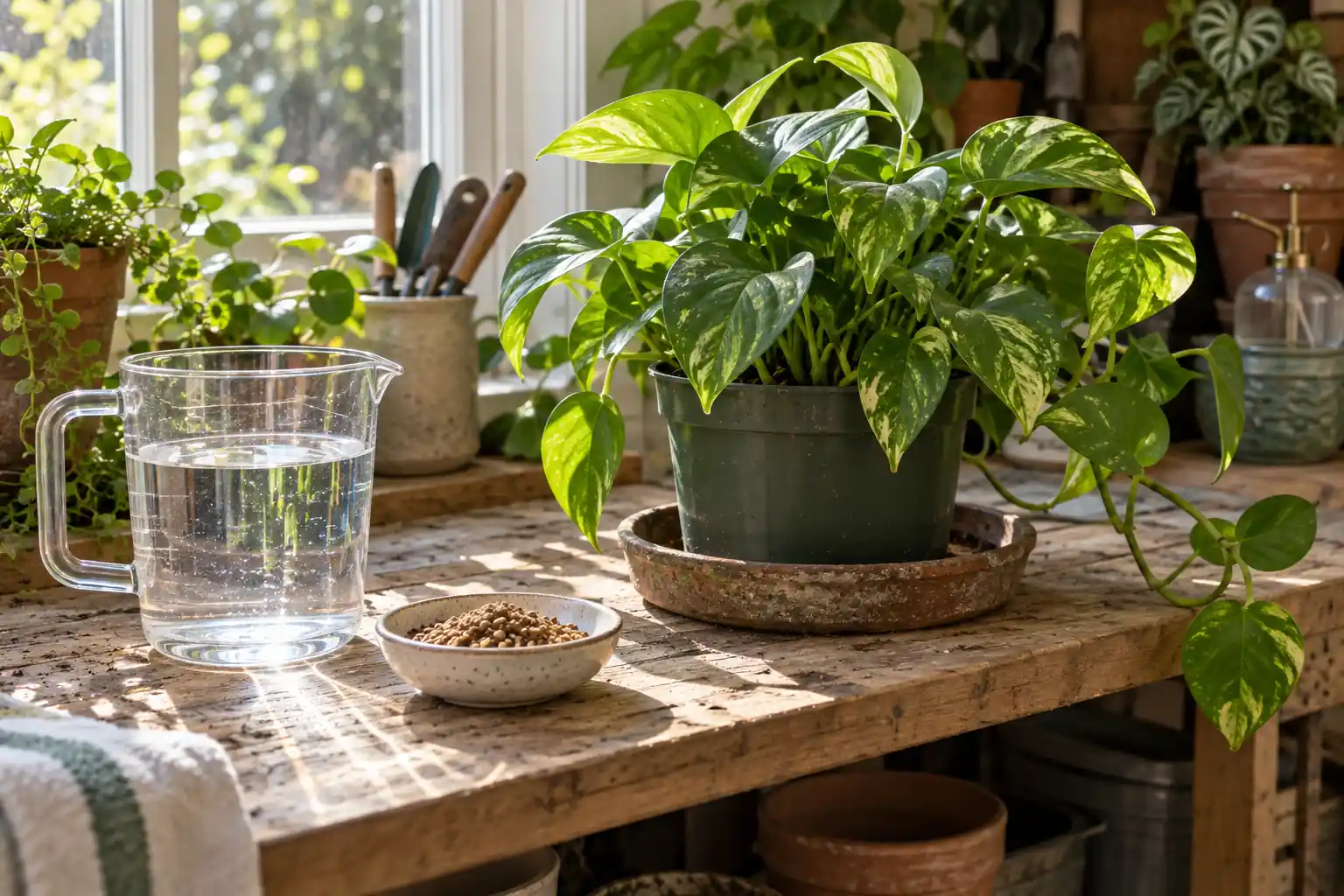
Mosquito Bits for fungus gnats can target larvae in potting mix when the label on your particular product permits that use. The flies hovering above a pothos pot are a different life stage, so they can remain visible after the first treatment. A yellow card dotted with adults, damp soil, and a few newly emerging flies do not tell you whether the larval treatment has reached the right container.
Start with the source pot and the instructions on your bag. Online advice often mixes standing-water mosquito directions, soil applications, and water-soaking methods. Those instructions have different targets and quantities. Once you have confirmed larvae and matched the label, the next task is to wet the growing medium as directed and keep the roots out of standing water. Track the same pots afterward. A fly crossing the room cannot identify its source.
Before treating a pot
Larvae confirmed: Use the source container, not a plant chosen because a fly landed on its leaves.
Label matches: Find fungus gnat larvae, the intended growing-medium use, and the permitted application method on your bag.
Pot ready: Check moisture and drainage first. A saturated pot needs a root-zone correction before another watering.
Adults still flying: Keep monitoring cards in place; a larval treatment cannot immediately remove existing adult flies.
Key Takeaways
- Identify the breeding pot before preparing any treated water.
- Match the application method to your actual package directions.
- Keep mosquito water rates separate from fungus gnat instructions.
- Check drainage before adding water to already damp pots.
- Compare larval activity and adult catches over repeated inspections.
Table of Contents
Mosquito Bits for Fungus Gnats Target the Feeding Larvae
The active ingredient is Bacillus thuringiensis subspecies israelensis, usually shortened to Bti. Susceptible larvae must ingest it. Applying it to growing medium puts the material where feeding occurs; waving a jug near adult flies or spraying leaves does not solve the same problem. The distinction also explains why a treated pot can still release adults from stages that were already beyond feeding larvae.
Small dark flies gathering near a wet container are a clue. Confirm the source before treating. Translucent, dark-headed fungus gnat larvae in that medium give a more useful starting point than insects caught by a window across the room. If the organism jumps from the soil or the flies concentrate around drains or fruit, resolve the identification first.
Adults and larvae need different checks. Sticky cards catch flying insects and make their activity easier to follow; they do not expose the larvae hidden below the surface. A pot-specific larval check helps determine whether the breeding source remains active. UC IPM’s fungus gnat management recommendations distinguish monitoring adults from managing the moist medium where immature stages develop.
Flies can multiply around a large houseplant whose leaves still look healthy. Seedlings and cuttings have less root tissue to lose, making persistent larval activity more consequential. Match the watering response to the plant’s stage. Drying a propagation tray until seedlings collapse exchanges an insect problem for damaged plants.
Read the Fungus Gnat Directions on Your Bag
Find the actual container before measuring granules. Check the product name, EPA registration number, target pest, permitted use site, application method, and precautions. The EPA and Summit Mosquito Bits label documents identify EPA registration 6218-86. A different product or formulation requires its own directions even if a seller groups it under the same kind of biological control.
Online documents do not always show identical instructions. The December 2021 EPA master label includes direct growing-medium application and an alternative water method. Summit’s linked 8-ounce and 30-ounce specimen labels describe the water method. That difference matters if someone recommends sprinkling granules over every houseplant. Use direct application only when the directions on your particular bag authorize it.
Houseplant use must also match the label. Standing water in a saucer and moist potting mix are different application sites. The presence of flower pots in a mosquito-control section does not turn that section’s water-area rate into a fungus gnat soil rate. Find the separate fungus gnat larvae instructions and follow the matching section.
If the pest, site, or method is missing or unclear, pause the application and ask the manufacturer or local Extension office about that package. Have the registration number and a photograph of its directions ready. An old retailer answer or a short social-media recipe cannot establish which instructions govern the container in your hand.
Prepare the Water Treatment Only When the Label Matches
The water method on Summit’s linked 8-ounce specimen uses 4 tablespoons of Mosquito Bits per 1 gallon of water and a 30-minute soak. These are directions for that specimen version, conditional on your bag carrying the matching authorization. Check your own package before using the quantities below. The manufacturer’s fungus gnat water-treatment directions also specify removing the floating granules, mixing the treated water, and applying it to the growing-medium surface.
- Read the fungus gnat section and its precautions before opening the bag.
- Measure the granules and water using the amounts stated on your product. For the linked specimen label, that is 4 tablespoons per gallon.
- Allow the labeled soaking period. The linked specimen label states 30 minutes; do not replace it with a shorter time taken from a blog.
- Remove the floating granules as directed, then stir or shake the treated water.
- Apply the water directly to the medium according to the label. Keep the application separate from leaf cleaning or spraying.
- Handle the used granules and remaining material according to the package’s disposal instructions.
The gallon is a preparation quantity, not a command to pour a gallon into one small pot. Decide whether the plant is ready for watering before preparing a batch. A cool, heavy container that has remained wet since its last watering needs attention to drainage and water retention. Do not make the pot wetter merely because an application date has arrived.
Use a dedicated, clearly identified measuring setup and keep the original container available. Avoid pouring dry granules in a way that raises dust. The label includes skin, eye, and inhalation precautions; a biological active ingredient does not remove the need to follow them. Store the closed product as directed, away from food and access by children or pets.
Direct-soil granules have a different handling sequence when a package permits that method. Do not combine a direct-application amount with the water recipe or assume a standing-water teaspoon rate applies to a nursery pot. One complete, matching method is easier to carry out and evaluate than a mixture of instructions.
Repeat on the Labeled Schedule as New Larvae Feed
A single treatment does not make every overlapping stage disappear. The linked Summit specimen label calls for weekly treatment for three weeks and another treatment series if fungus gnats reappear. Follow the frequency on your own label. Adding applications between those dates because adults remain visible increases handling and watering without establishing that more product is needed.
Write the application date next to the pot’s name. Put the monitoring card in a comparable position for each observation period, and record how long it remained there. A card exposed for seven days will often carry more insects than a card inspected after one afternoon. Without that time detail, the apparent change can reflect the monitoring method.
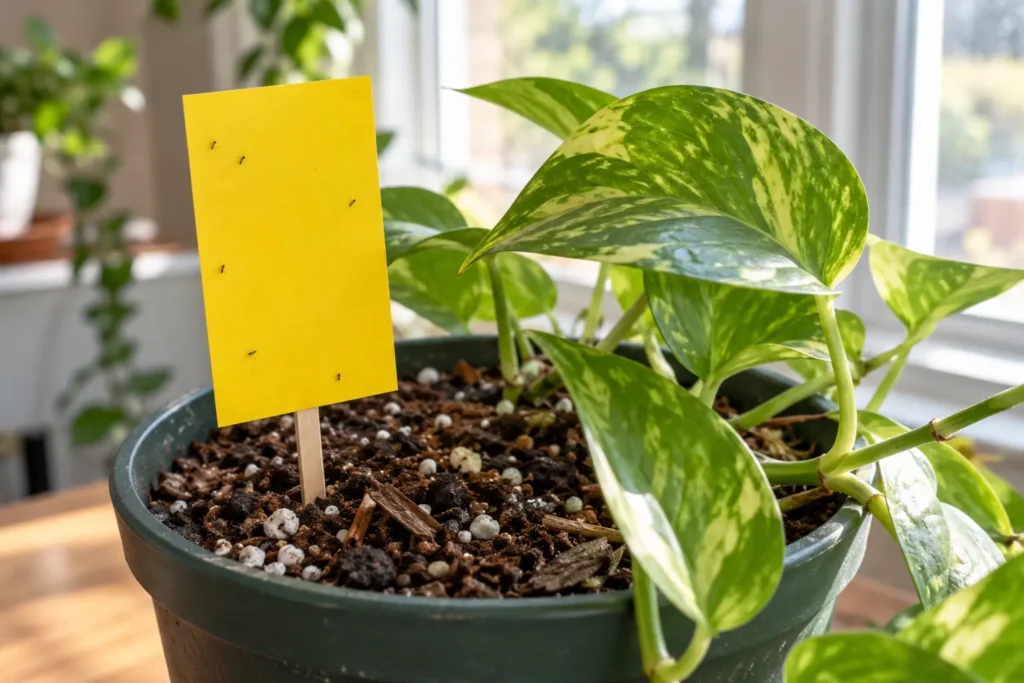
Existing adults may keep appearing as larvae decline. Check whether catches are concentrated around one container or spread across several pots. Inspect new arrivals, propagation trays, and damp pots that were not part of the original inspection. A correctly treated container cannot prevent another breeding source from releasing flies into the room.
Repeat larval checks alongside the adult observations. Adult sticky-card monitoring and larval checks are separate observations in University of Minnesota Extension’s recommendations; also check the plant’s condition. If insects persist, review identification, source pots, label compliance, and retained moisture before increasing treatment. Calendar repetition alone cannot correct a clogged drainage opening or an unrelated fly problem.
Persistent Flies Can Come from Untreated Pots or Other Stages
Use the combination of signs to choose the next inspection. Adult catches, larval activity, and root-zone moisture answer different questions. One fly after watering is a poor reason to discard healthy plants or double a treatment rate. A quieter room does not establish that every wet propagation tray has stopped producing larvae.
| What you observe | What to check | Next action |
|---|---|---|
| Adults continue; larvae appear less often | Other pots, observation period, and existing immature stages | Inspect additional sources and continue the package schedule. |
| Larvae remain in the original pot | Correct product, method, preparation, and growing-medium use | Review the complete label sequence before another application. |
| Flies cluster away from pots | Drains, food, and insect identity | Confirm the organism before applying a soil treatment. |
| Leaves droop; the pot stays heavy | Retained water, blocked openings, and standing saucer water | Correct root-zone conditions before adding another drench. |
| A new plant brings renewed activity | New container and nearby plants | Inspect the arrival and track its source separately. |
Dense leaf cover can hide the medium and encourage watering from memory. Move foliage gently so you can inspect the container without breaking stems. Check the saucer, the pot’s base, and any decorative outer container. A dry-looking surface can sit above a wet lower root ball, so surface color alone should not determine the next watering.
Fresh catches that shift to a different plant suggest a source problem worth investigating. Compare that plant with the original one before treating both. This follows integrated pest management: identify the pest, locate activity, choose an appropriate intervention, and reassess the result. Record each change so you can connect the response to the action taken.
Reduce Damp Breeding Sites and Keep Roots Aerated
Wet organic medium gives fungus gnats a favorable breeding environment, but every houseplant has its own water tolerance. A pothos with established roots can have different needs from newly rooted cuttings. The watering interval in houseplant care changes with plant condition, pot size, medium, and drainage. Do not force every plant through a complete dry-out.
Lift the pot when checking moisture. A heavy container, persistently cool wet mix, and water trapped in an outer pot call for a drainage inspection. Sour-smelling medium or declining roots adds another reason to examine the root zone. Those signs warrant a root inspection before another watering; several conditions can cause them.
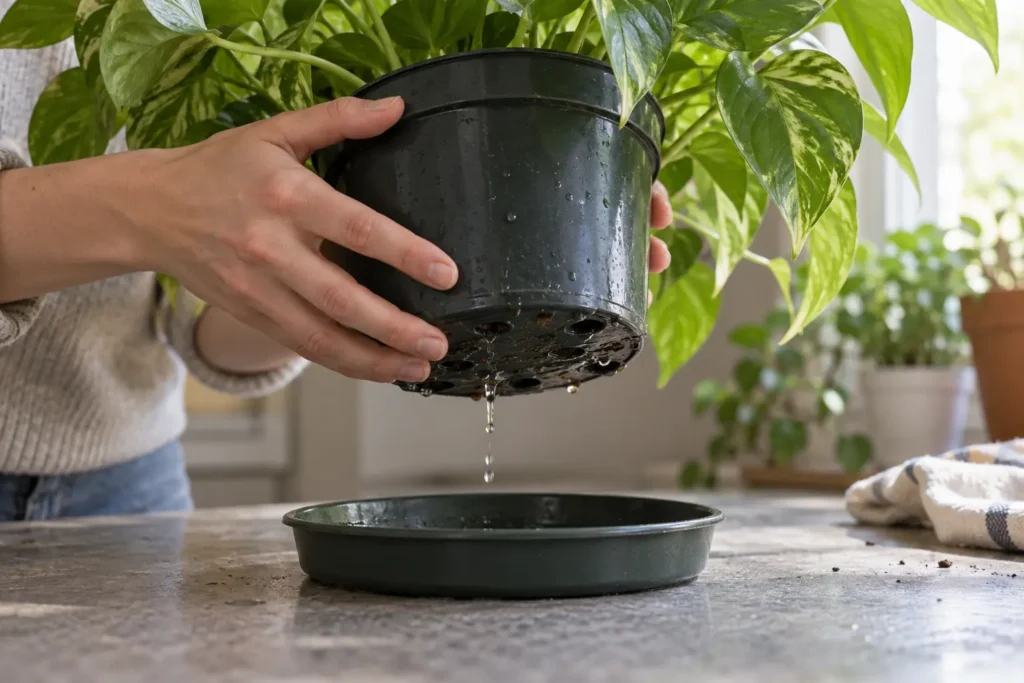
Clear obstructed openings and empty retained water where the plant’s container arrangement allows it. If the pot remains wet for an unusually long interval, assess its size and growing medium before repotting. drainage in potted plants affects the lower root zone as well as the surface where flies are easiest to notice.
Larval control reaches the growing medium, as the Colorado State University Extension recommendations specify. That focus helps keep the treatment away from unrelated leaf symptoms. Yellowing leaves can reflect several conditions; a fungus gnat product will not restore rotten roots or compensate for low light and excessive watering. If the plant keeps declining after drainage improves, obtain a plant diagnosis before choosing another intervention.
Measure Progress by the Source Pot and Plant Response
Track a few repeatable observations for each affected container: larval presence, adult card activity over a stated interval, recent watering, and changes in the plant. Include the product method and application date. A simple dated note makes it easier to distinguish a continuing source from a new infestation or a watering problem.
Inspect the same accessible areas during follow-up. If the first check sampled one part of the pot and the next checks sample another, acknowledge that difference. Household observations show a trend; they do not produce a controlled efficacy percentage. Keep expectations tied to the signs you can actually observe.
Fewer larvae with continued flying adults calls for checking other containers and allowing for overlapping stages. Persistent larvae in the treated source calls for reviewing the matching label directions and confirming the insect. Declining foliage with a saturated pot calls for root-zone attention. These situations need different next actions even when all three include flies.
Contact local Extension or the manufacturer when the product’s use site is uncertain, identification remains unresolved, or correctly carried out treatment and moisture corrections fail to reduce activity. Bring the label, application dates, photographs, and pot observations. Those details make the question more answerable than a report that the product failed after one watering.
Keep unused product in its original closed container. The specimen label prohibits disposing of unused product down an indoor or outdoor drain. Follow its instructions for partly filled containers and used granules. Cleaning up after application is part of finishing the job, especially when the work happens on a household potting surface.
Conclusion
A useful follow-up inspection leaves you with identifiable source pots, fewer signs of larval activity, and plants that are no longer standing in retained water. Keep the package directions and dated observations together. When flies return, you can inspect the changed container or moisture condition before preparing another treatment.
Frequently Asked Questions
Can I use Mosquito Dunks with the same quantities?
Use the directions for that product. A shared Bti ingredient does not make a briquet and loose granules interchangeable by spoonful or soaking time.
Should I repot every plant that has fungus gnats?
Repot when the medium or roots need correction. Flies alone do not establish a need for repotting. Inspect roots and drainage first; changing soil without addressing moisture or another source pot may leave the problem active.
Can I use the mosquito claim of control within 24 hours?
Do not apply a standing-water mosquito timing claim to a houseplant fungus gnat result. Check larvae, adults, and plant response over the labeled treatment sequence without promising a fixed clearance date.