
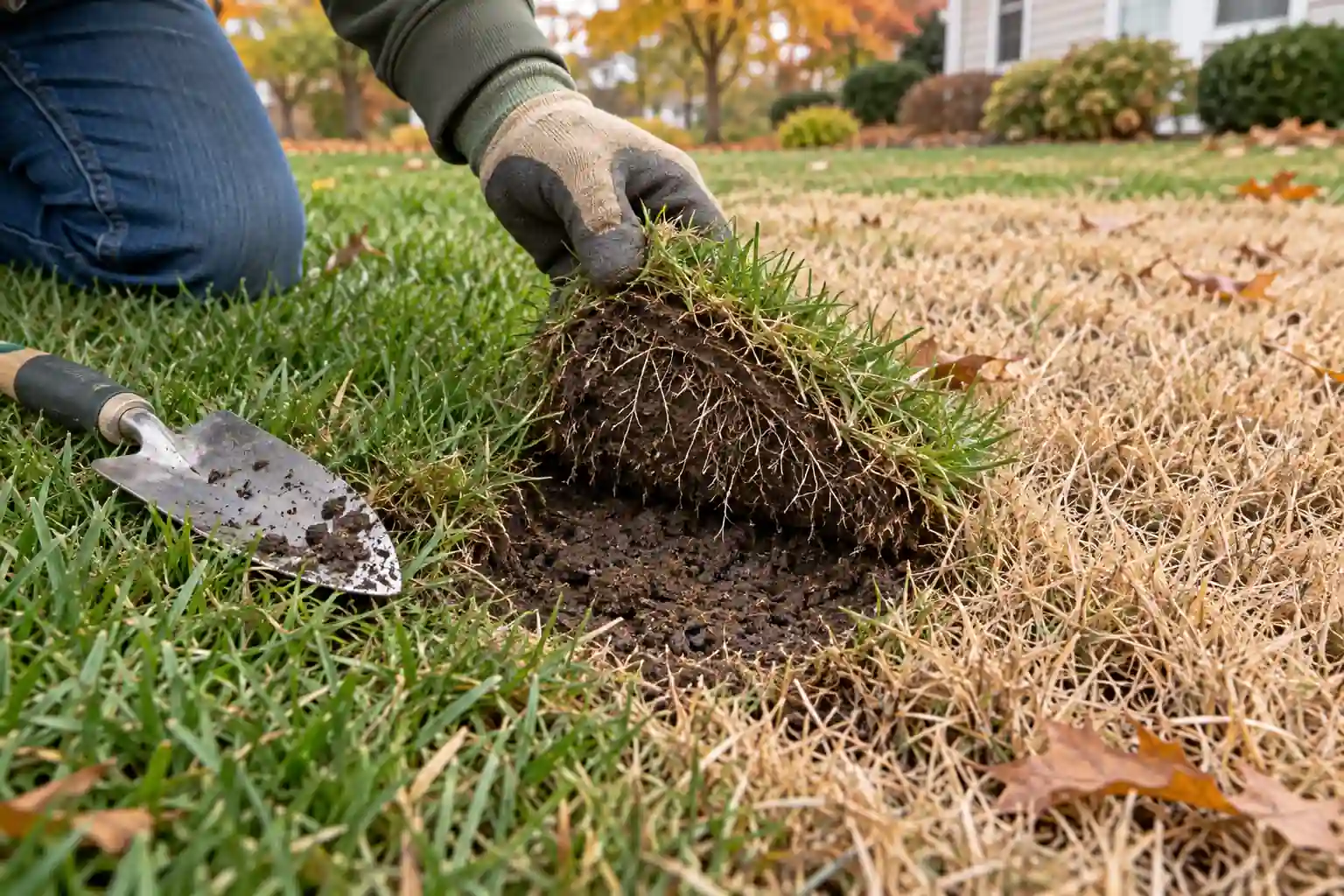
Grubs in lawn soil become a treatment question when live beetle larvae, root loss, and deteriorating grass occur together. A brown patch alone cannot identify them. Lift the turf along the edge where green grass meets the damaged area: roots that release with little resistance and several living grubs give you something concrete to investigate. A single grub uncovered during planting tells you much less.
Counts also need context. Large larvae, stressed grass, and an active feeding period can change the amount of injury a lawn tolerates. The same count may lead to different recommendations in Colorado, Maryland, or Georgia. Before buying a treatment, collect several comparable samples, note the condition of the roots, and identify the likely beetle group. That record helps separate an insect problem from drought, another turf disorder, or digging animals that are feeding on something else.
Use the roots and samples to choose the next step
Brown grass; roots still hold: Investigate water and other stresses. Color alone is weak evidence for a grub treatment.
Loose sod; living C-shaped larvae: Sample several damaged edges, record counts per square foot, and compare the remaining roots.
Animal digging; no root-loss pattern: Investigate the animal separately. Disturbed soil cannot establish a damaging grub population.
Confirmed feeding; worsening turf: Use local species and seasonal guidance to decide between monitoring, control, and grass repair.
Key Takeaways
- Inspect roots along damaged edges before buying a treatment.
- Count living larvae in several equal-size turf samples.
- Identify the beetle group when treatment timing depends on it.
- Use local thresholds together with grass vigor and root loss.
- Separate insect control from lawn repair and animal activity.
Table of Contents
Confirm Grubs in Lawn by Looking for Root Loss
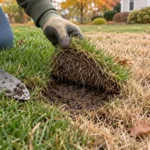
Root feeding reduces the grass’s ability to take up water. The patch may dull, wilt, or turn brown even when its watering schedule has not changed. Underfoot, badly damaged turf can feel loose or spongy. A section that peels back easily deserves inspection, especially where living grass borders an expanding patch.
Check the underside before assigning a cause. Healthy turf has roots holding the grass to the soil. A weakened mat with few roots and live larvae nearby fits grub injury more closely than browning alone. Drought, disease, and other damage can still contribute, so compare the affected edge with a healthier part of the same lawn.
Root loss and seasonal stress often occur together. Grass with limited roots has less capacity to recover during heat or dry weather. A plant that cannot draw enough water can resemble a lawn that simply needs irrigation. Adding water without inspecting the root mat can delay finding the feeding insects.
The connection between root feeding and loosely attached sod is part of University of Maryland Extension’s white grub diagnosis and monitoring guidance. Use that sign to choose a sampling site. It does not establish how many insects are present throughout the lawn or which species caused the damage.
A dead center can be less informative than the living edge. Root injury may already be complete there, and larvae can be unevenly distributed. Record where the patch is spreading and inspect more than one point along that transition. Photograph the grass, underside of the sod, and insects before putting the turf back.
The Brown Head and Thoracic Legs Help Identify White Grubs
Typical scarab beetle larvae have a pale, segmented body that curls into a C, a brown head capsule, and three pairs of legs clustered near the head. Look closely enough to separate those legs from roots or soil fragments. A grub can straighten as it moves, so a momentarily uncurled body does not exclude that group.
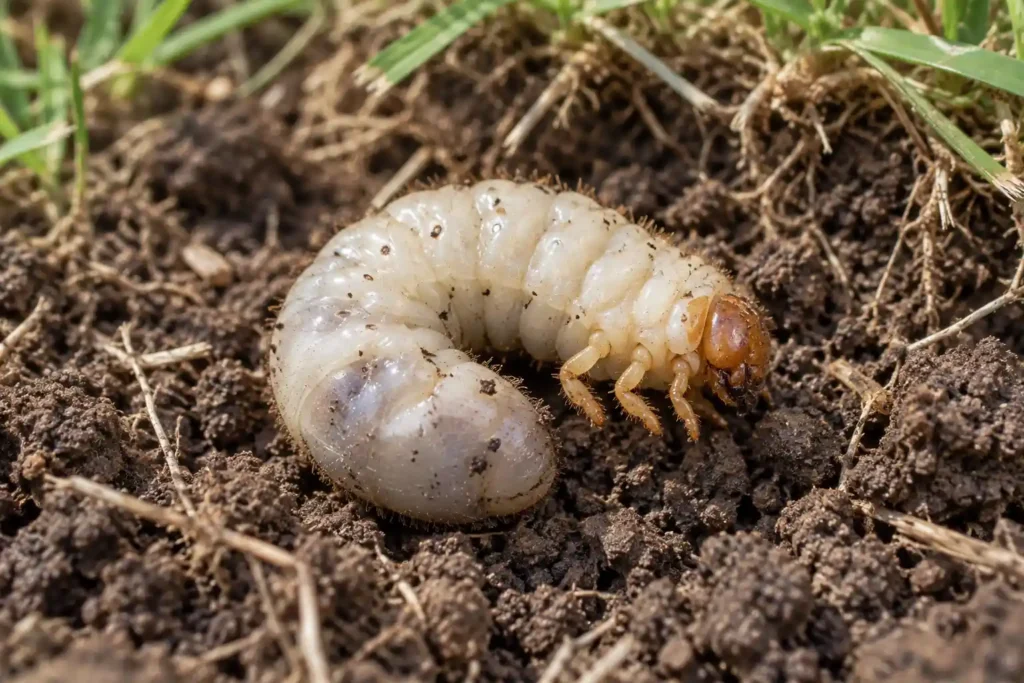
Small white turf larvae can belong to other insects. Billbug larvae lack legs and can feed in grass stems and crowns. The distinction changes which pest and life stage a treatment needs to reach. Inspect the actual specimen and its location before treating every pale larva as the same lawn problem.
Even within the scarab group, food and behavior vary. Some larvae found in compost use decaying organic material. Green June beetle grubs can disturb turf by moving soil, making a mound a different clue from a mat of severed roots. University of Georgia Extension’s regional descriptions distinguish these feeding and burrowing patterns.
Species-level identification often uses the arrangement of hairs and spines on the underside near the rear of the larva, called the raster. A general lawn photograph rarely shows it well enough. Take clear photographs from more than one view and ask local Extension how to submit a specimen when identification changes the control decision. Grub size by itself is unreliable because age also affects size.
Record habitat as well as appearance. A larva beneath injured turf and one in a compost pile come with different surrounding evidence. That location helps a diagnostician interpret the insect without assuming that every beetle larva on the property is damaging grass.
Sample Equal Areas to Compare Root-Zone Activity
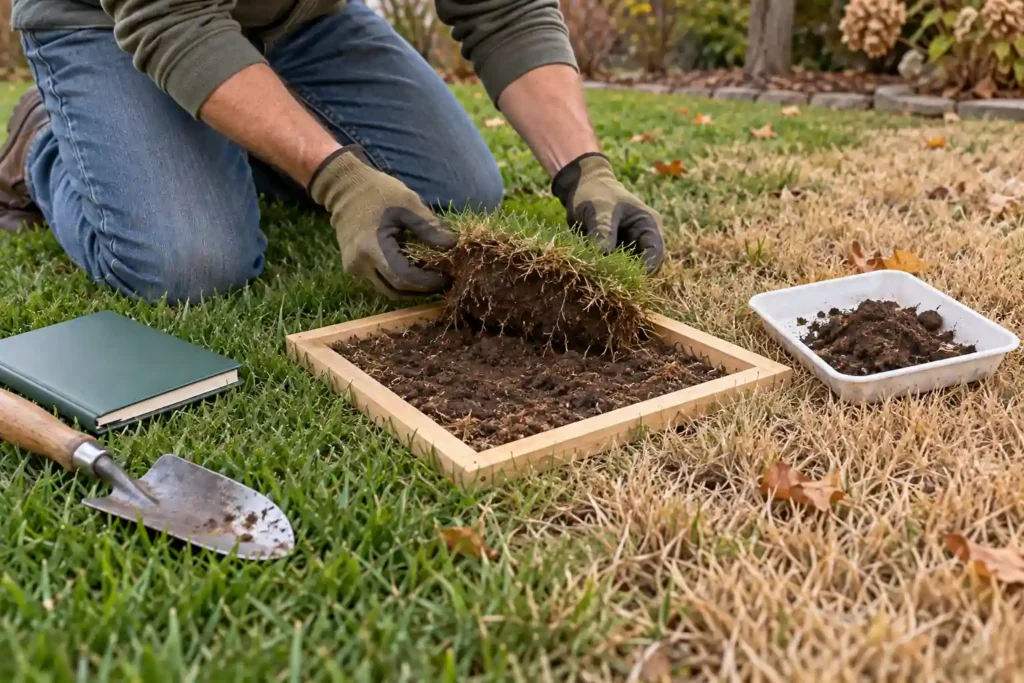
Use a spade or trowel to lift roughly one square foot of sod at an active damage edge. A 12-inch by 12-inch patch gives you a count in a unit used by many lawn recommendations. Keep the area comparable between samples so a larger excavation does not appear to have a higher density merely because you searched more soil.
- Choose several points along injured edges and at least one healthier reference area.
- Mark the sample area, loosen its sides, and lift the turf with the root zone attached.
- Inspect the roots and soil carefully. Count living grubs and note their size and visible features.
- Record the sample location, area, soil moisture, root condition, and count.
- Return the soil and sod, press it back into contact, and water the disturbed patch appropriately.
Search depth needs local context. Larvae may occupy the root zone during active feeding and move deeper as soils cool or dry. A shallow sample containing no insects cannot establish that the whole profile is clear. Note hard, dry soil or cold conditions when interpreting a negative result, and ask local Extension whether deeper sampling is appropriate.
Keep individual counts in your notes. A heavily populated edge and a nearly empty reference area can reveal patchiness that one combined total would hide. Compare those observations with missing roots and ongoing injury. Repeatedly finding insects in turf with damaged roots carries more weight than one isolated high count in a healthy corner.
The sampled sod should remain usable afterward. Avoid leaving it folded in the sun or digging a large hole just to collect more insects. Press the restored turf onto the soil so the surviving roots retain contact. A damaged sampling site can otherwise create another brown patch that confuses later inspection.
Grass Vigor and Beetle Species Change the Treatment Threshold
A count becomes useful when you know what the grass is tolerating. Vigorous turf with functioning roots can absorb some feeding. Stressed turf with a weak root system has less reserve. The larvae also differ in size, feeding behavior, and life cycle, which is why regional recommendations do not give one nationwide trigger.
| Regional example | Published interpretation | How to use it |
|---|---|---|
| Maryland | About 5-10 grubs per square foot can indicate a need for control; grub and grass species change the decision. | Combine several samples with actual injury and local identification. |
| Minnesota, Japanese beetles | Healthy turf can tolerate around 10 grubs per square foot in the described situation. | Do not transfer Japanese beetle guidance to every beetle species. |
| Colorado, some May/June beetles | Some large grubs can injure turf at fewer than five per square foot. | Identify large larvae before dismissing a low count. |
The Minnesota example applies to Japanese beetles in healthy grass, the conditions specified in University of Minnesota Extension’s guidance. These examples are separate regional situations. Averaging the numbers would erase the differences that make them useful. The Colorado State University Extension billbug and white grub recommendations distinguish local beetle groups, including larvae with longer life cycles. Size, activity, and location affect the decision.
Irrigation adds another condition. Georgia Extension distinguishes tolerance in differently maintained turf; a well-rooted, adequately watered lawn can respond differently from grass already under moisture stress. That does not justify watering every lawn heavily. Assess current root function and soil moisture before changing irrigation.
For a useful local question, report the number of samples, each count, grass type if known, root loss, and county. Include photographs of the larvae. A question framed only as finding six grubs leaves out whether six came from one square foot, several holes, or an entire garden excavation.
Hatch Timing and Soil Cooling Change Which Controls Can Work
Preventive control targets the period when eggs hatch and susceptible young larvae begin feeding. Curative or rescue control addresses larvae that are already present and accessible. The products, persistence, and permitted timing can differ. Finding damaged grass in October does not establish that a preventive application will address the current larvae.
Cooler soil can change where some larvae sit in the profile. In Colorado examples, movement into deeper soil reduces their accessibility to a root-zone treatment. That regional behavior does not create a nationwide October cutoff. Southern species, local weather, and different beetle life cycles can leave a different pattern of fall activity.
Inspect the lawn on its own terms: are living larvae close to the damaged roots, is feeding injury increasing, and what do local recommendations say about that species now? Air temperature on one afternoon is a poor substitute for understanding the insects in the soil. Keep sample conditions with the counts so a later comparison has context.
Spring feeding also requires a fresh decision. Larger overwintered larvae and the approach to pupation can alter what a treatment can accomplish. A product bought for summer hatch timing should not be assumed suitable for a spring rescue. Check the current lawn label, target, stage, and local guidance before applying it.
Some May/June beetles have multi-year development, and different ages can complicate a simple annual calendar. This is another reason to retain specimens or clear photographs. A local diagnosis can turn an ambiguous month-based question into a decision about the insects actually occupying the root zone.
Choose Control and Turf Repair as Separate Jobs
When samples confirm damaging larvae and the lawn continues to deteriorate, ask which locally appropriate control reaches that pest at its current stage. Read the actual product label for the lawn site, target, timing, application, watering, and precautions. Broadly treating intact turf because insects were found in one damaged patch needs its own justification.
Biological products also have specific targets. The Bti used in Mosquito Bits for fungus gnats is not a substitute for a labeled beetle-grub treatment. A microbial ingredient’s name does not make every formulation suitable for every soil insect. EPA product labeling and the particular pest determine the permitted use.
Other biological options need species and environmental matching. Milky spore and different beneficial nematodes cannot be treated as universal remedies for all grubs. Local evidence about the target beetle, product storage, soil moisture, and application timing should guide that choice. A natural label alone does not answer whether a treatment will reach the larvae in this lawn.
Protect pollinator activity when evaluating any lawn product, including the presence of flowering weeds. Follow the product’s restrictions and local advice. The IPM approach to pest control includes a no-treatment option when the evidence does not show unacceptable injury.
Then assess recovery. Grass with living crowns and some functioning roots may improve under appropriate growing conditions. Dead turf requires a separate establishment plan. In a suitable cool-season lawn, dormant seeding can be one repair option when its soil and temperature conditions are met. Warm-season grass or a different climate may need another timing and method.
Control cannot rebuild roots immediately. Track active insect pressure and grass recovery separately so slow greening does not prompt unnecessary repeat pesticide applications. Keep foot traffic off loosely attached turf where practical, and adjust care to the surviving grass and soil conditions.
Digging Animals Do Not Establish the Cause of Root Injury
Birds, skunks, and raccoons can disturb turf in search of food. Their holes identify a place to inspect; they do not measure the grub population or establish which larvae are present. Check the soil and roots before tying animal damage to an insect-control decision.
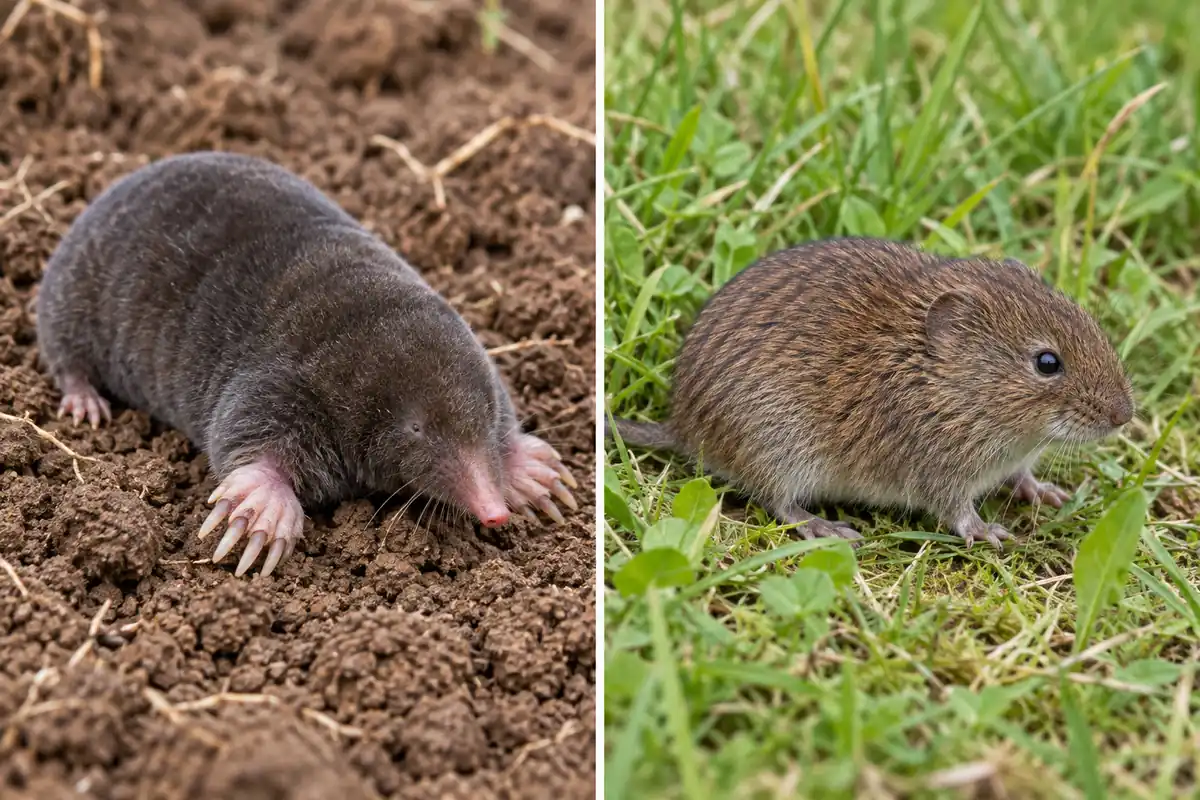
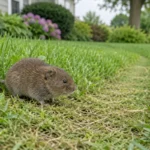
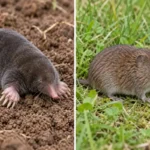
Moles can eat grubs and other soil prey. Removing one possible food source does not guarantee that a mole will leave. Turf with raised tunnels may therefore need an animal identification assessment even after the grass-feeding insects have been evaluated. The shapes of mole tunnels and vole runways provide clues for that separate investigation.
Chewed vegetation along surface paths, lifted soil ridges, torn sod, and clipped roots are different kinds of evidence. Photograph the pattern before raking it flat. Keeping those observations separate from grub counts prevents one conspicuous sign from driving every treatment on the property.
If samples show intact roots and only a few larvae, continue evaluating the animal and other lawn stresses. If root damage and damaging larvae are confirmed, manage that turf problem according to local guidance and still assess continuing digging on its own. Neither result requires promising that one treatment will solve both.
Conclusion
The most useful inspection leaves you with sample counts, recognizable larvae, and a clear view of the remaining roots. Restore the sampled turf and keep those records. An improving root mat and recovering grass tell you more about the lawn than a pesticide date or the number of animals passing through it.
Frequently Asked Questions
Do adult beetles on nearby plants mean the lawn needs treatment?
Adult beetles are a reason to stay observant, not proof of damaging larvae beneath the turf. Sample the lawn and check root injury before choosing control.
Can a lawn have more than one grub species?
Yes. Several beetle species can share a lawn, and their larvae can look similar. Photograph or retain more than one specimen when local identification is needed.
What if I find no grubs in a dry or cold sample?
Record the conditions and sample additional relevant locations. Some larvae may be deeper or unevenly distributed; an empty shallow sample cannot establish the whole lawn is clear.