Comparing moles vs voles starts with raised soil, clipped grass and feeding damage, because both animals leave signs long before you see them. Moles mainly hunt worms and other soil invertebrates. Voles mainly eat plants. That difference explains why a ridge through the lawn and a chewed tree base need separate checks, even when they appear in the same corner.
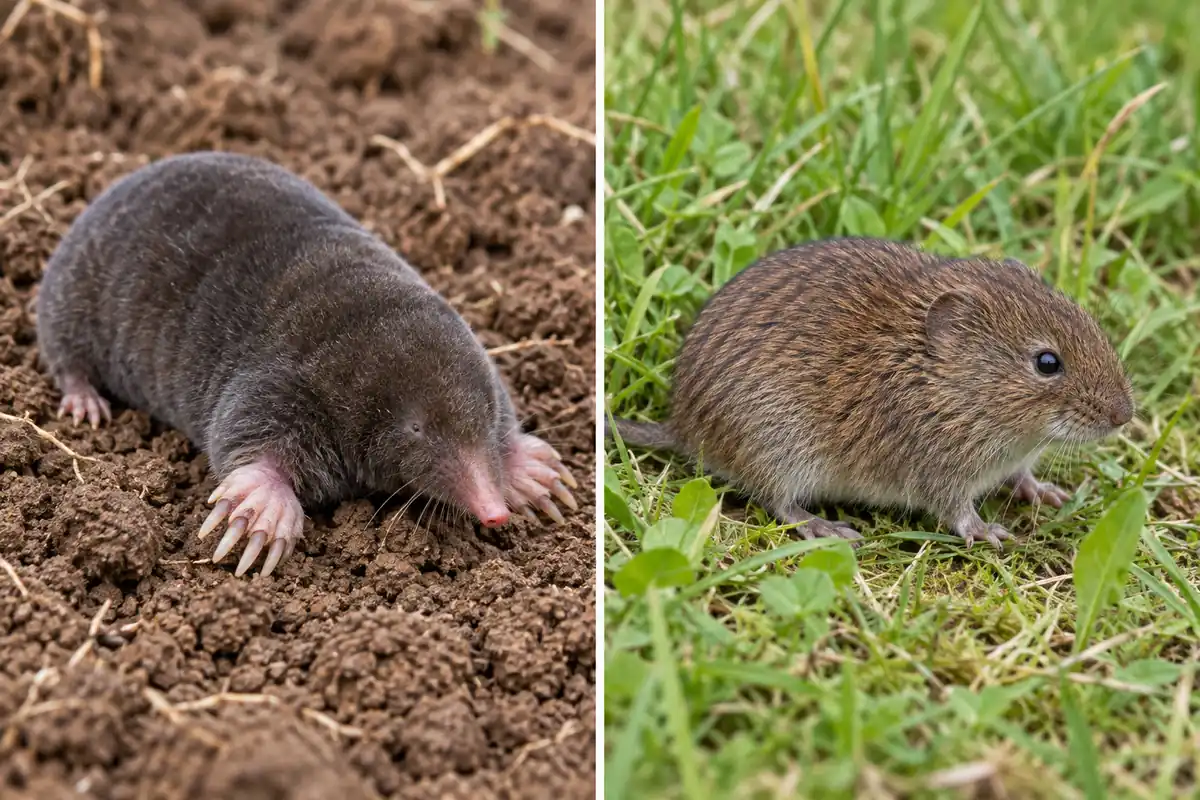
A mole typically has a pointed nose and broad digging forefeet; a vole looks more like a compact, short-tailed mouse. You may never get that clear view. Instead, follow the damage: soil pushed upward, grass clipped into a flat trail, roots actually eaten, or bark gnawed near the ground. One sign can mislead. Voles can use mole tunnels, some voles feed mostly underground, and other wildlife can leave similar holes. Combine the shape of the disturbance with evidence of recent feeding before choosing control.
Follow the sign, then check the cause
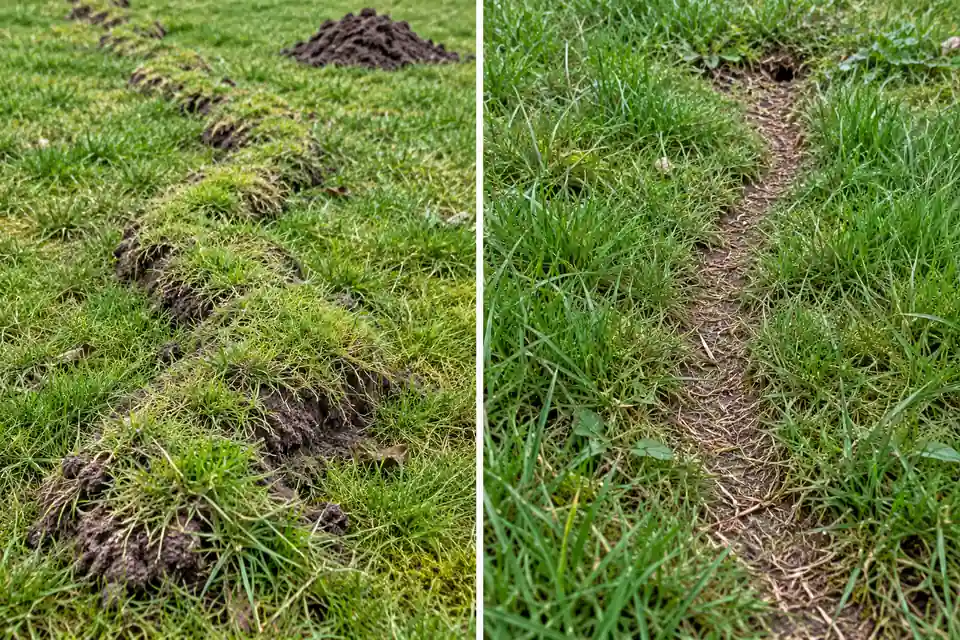
Soil lifted into a winding ridge
More consistent with mole tunneling. Check whether a small flattened section rises again.
Flat trail with freshly clipped grass
More consistent with meadow vole feeding. Inspect nearby stems and sheltered routes.
Chewed roots, bulbs or lower bark
Look for a plant-eating animal. A nearby mole tunnel does not identify the feeder.
Fan-shaped mound or torn sod
Consider regional pocket gophers or other wildlife. Neither sign automatically means a mole or vole.
Key Takeaways
- Compare raised soil with flat trails of clipped grass.
- Look for broad mole forefeet or a vole’s blunt nose.
- Separate chewed plant tissue from roots displaced by tunnels.
- Check fresh activity before blaming an old lawn scar.
- Consider other animals when the signs do not match.
Table of Contents
Moles vs Voles: Compare Feeding and Body Shape
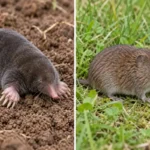
A mole’s front feet are built to move soil. They spread outward, with broad surfaces and prominent claws. The nose is long and pointed. The small eyes and ear openings are difficult to see through the fur. Those features fit an animal that travels underground to search for worms and other invertebrates.
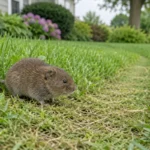
A typical meadow vole has a rounded, mouse-like body, short legs and a blunt nose. Its small ears and eyes are more noticeable than a mole’s, though the ears may be partly hidden in fur. The tail is short. A long-tailed mouse seen briefly beside a shed should not be labeled a vole from its brown color alone.
| Feature | Typical mole | Typical meadow vole |
|---|---|---|
| Forefeet | Broad, outward-facing digging feet | Small feet without the mole’s paddles |
| Nose | Long and pointed | Shorter and blunt |
| Main food | Worms and other invertebrates | Grasses and other plant tissues |
| Common lawn sign | Soil pushed into ridges or mounds | Clipped surface paths without lifted soil |
Diet is a useful guide, not an absolute rule covering every species and meal. Worms, grubs and other invertebrates are preferred mole food in Oregon State University Extension’s comparison; grass and gnawed stems fit vole feeding. A vole may occasionally eat an insect; that does not make it the likely cause of a network of raised feeding tunnels.
Do not catch an animal to compare these features. If you happen to see one, observe from a distance or take a photograph without approaching. A blurred image of a head rarely shows enough detail. Combine the animal’s shape with the landscape signs, and have a local specialist check an uncertain identification before using a trap.
Raised Tunnels and Clipped Runways Form Differently
A shallow mole passage lifts soil as the animal pushes through beneath the turf. From a low viewing angle, the route may look like a winding seam with grass riding on top. Loose, crumbly soil can show through breaks in the surface, and the raised turf may feel soft under light pressure. Deeper excavation may leave a pile of soil without a continuous visible ridge.
A meadow vole runway follows the ground surface through vegetation. Repeated travel and feeding leave a narrow lane where stems are clipped or grass is worn away. The lane can connect small openings and sheltered feeding spots. It often becomes conspicuous when snow melts and exposes routes that were hidden during winter.
Check what is raised
Loose grass across a vole trail can resemble a low ridge. University of Minnesota Extension’s turf diagnostic distinguishes that loose material from soil lifted by a mole. View the track from the side and inspect its structure gently. A tangle of dry, brittle blades over firm, level soil is different from turf pushed up over a passage.
Observation: A flat, worn lane may contain sharp green stem ends beside straw-colored debris. That contrast can support recent clipping; mowing or other feeding can also cut grass. Follow the lane to nearby cover and plant injury before assigning a cause.
Runway width is less useful than the combination of structure and feeding. Rain can soften a ridge; foot traffic can flatten it; a mower can scalp its crest. Likewise, new grass can partly close an old vole path. Those changes explain why a photograph taken weeks later may not resemble a textbook example.
Both animals can occur in the same yard. Unused mole passages may shelter voles and other small mammals, as described in University of Maryland Extension’s comparison of lawn tunnels and feeding signs. A raised ridge and clipped vegetation nearby can have two causes. Record each sign separately to allow for more than one cause.
Root Loss and Bark Wounds Need a Feeding Diagnosis
Start with the tissue that has changed. A root severed or eaten, a bulb with rough missing edges and a lower stem with tooth grooves suggest feeding. Grass drying over a lifted ridge can result from displaced roots losing soil contact. Both situations can leave a brown patch through different mechanisms.
Separate root disturbance from plant consumption
Mole tunneling can disrupt roots and create air spaces around them, an indirect injury described in University of California IPM’s mole guidance. A raised strip may dry faster or be cut too short by a mower. A struggling plant beside that strip still needs inspection: intact roots and displaced soil do not support the same diagnosis as a crown eaten away.
Voles can consume bulbs, roots and stems. Pine voles complicate the familiar surface-trail pattern because they spend much of their time underground. This belowground feeding is described in Clemson Cooperative Extension’s mole and vole feeding comparison. An absence of clipped grass routes does not rule out underground plant feeding.
Inspect only what you can reach without damaging the plant. Loose debris can be moved to reveal a crown or exposed root. Do not excavate a healthy tree’s roots to search for an animal. A collapsed perennial with clearly missing root tissue offers stronger evidence than wilt alone; drought, waterlogging and disease also cause wilt.
Read lower-trunk injury in context
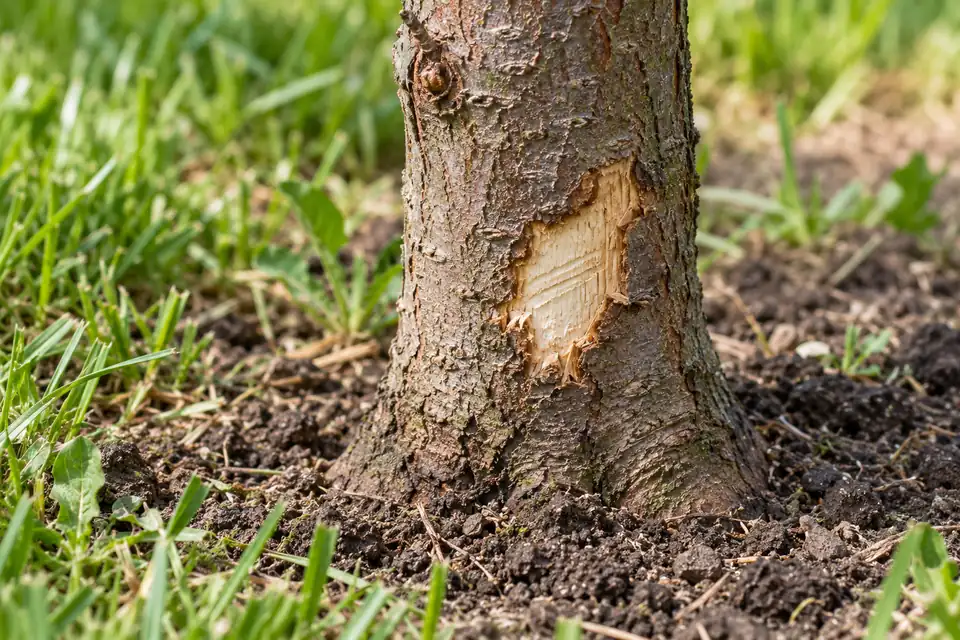
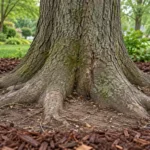
Fine grooves across pale, rough exposed wood, especially beside a sheltered route, raise concern about rodent feeding. Rabbits and mice can also remove bark. Snow changes the height animals can reach, so wound height by itself is a weak way to identify the culprit.
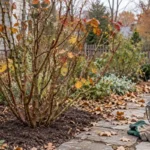
Move loose mulch away from the stem to see the trunk’s root flare and the full extent of any wound. Do not scrape attached bark. A root pressing into a trunk and bark removed by teeth require different assessments, even though both can affect the tree’s living tissues.
If damage goes around the trunk, seek an arborist’s assessment promptly and protect nearby susceptible stems. Complete bark loss can interrupt transport between foliage and roots. The risk to the tree matters before you have a perfect photograph of the animal.
Other Yard Animals Change the Diagnosis by Region
A lawn hole is not automatically a mole or vole hole. Different animals excavate for food, construct nests or move through soil. Geography narrows the possibilities, and the arrangement of disturbed soil often tells you more than the size of one opening.
Consider pocket gophers where they occur
A fan-shaped soil deposit with an off-center plugged opening is more consistent with a pocket gopher than the rounded mound commonly associated with a mole. Oregon State University Extension uses that distinction for Oregon gardens. Gophers also eat plant roots and bulbs, making them a relevant alternative when plant loss accompanies substantial soil piles.
This is a regional branch of the diagnosis. Do not assume every US garden has the same burrowing species. Send a local Extension office photographs of the mound, the affected plants and the broader site if you do not know which animals occur there. Repeatedly opening a plugged tunnel before taking pictures can remove useful evidence.
Separate digging for food from continuous travel routes
Clusters of individual cone-shaped pits or chunks of sod lifted overnight can indicate foraging by larger animals. Skunks often leave scattered pits; raccoons can peel or lift sections of turf. Their digging may overlap enough that the damage alone cannot settle the identification.
University of Maryland’s lawn-damage guidance separates those patterns from mole and vole runways. It also calls for checking actual grub abundance before applying grub control. Digging animals can eat worms and other food, and grubs may be concentrated in one patch with few elsewhere.
Small soil bumps can have smaller causes. Minnesota’s turf diagnostic includes ant activity and nightcrawler castings alongside mammal damage. A tiny opening surrounded by loose granules, without a lifted route or clipped feeding lane, deserves that alternative check. Watch from a distance for insects before assigning the mound to a mammal.
Do not choose a trap by hole size. Different species need different methods, and local restrictions may apply. A useful photograph includes scale, the shape of the soil deposit and the relationship to damaged plants. Those details help a specialist assess the cause without relying on a close-up of an anonymous opening.
Test Recent Activity Without Destroying the Evidence
A trail tells you an animal traveled there at some point. It does not establish that the route is still used. Before changing the lawn, photograph several representative signs and record the date, weather and nearby feeding injury. Include one close view and one wider view showing where the route leads.
Check a small raised section
For a suspected shallow mole runway, gently flatten a short section and inspect it again on following days. A section pushed up again supports continuing tunnel use. Choose a small area away from vulnerable roots; there is no need to collapse the whole network to make this check.
Do not interpret an unchanged section as proof that all moles have left. Soil moisture, temperature and food can change the routes being used. A deeper passage may remain active even when a surface route is quiet. The check is a way to detect use of that location, not a population count or a test with guaranteed accuracy.
Pro Tip: Put a temporary marker beside the section and take each photograph from the same angle. Without a fixed reference, a neighboring ridge can easily be mistaken for the one you flattened.
Look for fresh feeding along a flat lane
For a suspected vole route, compare clipped stem ends and plant wounds over time. New green cuttings, fresh gnawing and a lane connecting cover to injured plants strengthen the case for ongoing activity. Grass beginning to close the route suggests a different situation, though it does not prove the whole yard is unoccupied.
Droppings may be present. Do not handle them or use their absence as a deciding test. Rain and vegetation can hide or disperse signs. A small animal may use more than one route, and a feeding site can shift after mowing or clearing.
Choose the tool to match the observation. A flexible lawn rake can move loose grass after photographs are taken; a rigid garden rake can disturb soil and erase the ridge you meant to inspect. Keep cleanup to a minimum until you establish whether the sign is changing.
Which feature changed since your last visit: the soil height, the clipped vegetation, or the plant wound? Record that change separately. It is more informative than calling the entire corner active because one old track remains visible.
Match the Next Action to the Damage You Confirmed
Identification should lead to a proportionate response. A few raised passages without lasting plant injury may need monitoring and turf repair. Repeated root feeding or new bark loss needs plant protection. An uncertain mound with no feeding evidence needs another look before a control product is selected.
For likely meadow vole activity, reduce dense cover immediately beside vulnerable plants and keep mulch off the bark. Appropriate mulch placement can preserve soil protection and leave the stem base visible. A guard around a susceptible trunk may be warranted; a complete vole-control plan depends on ongoing feeding and the site.
For likely mole activity, distinguish uneven turf from plants actually being eaten. Restoring soil contact and adjusting lawn repair may address the damage without trying to remove every animal. Moles feed on several kinds of invertebrates, so treating grubs alone does not reliably remove their food supply.
Keep a separate record if you suspect more than one cause. A lawn ridge that reappears and a newly chewed bulb can reflect mole excavation plus vole feeding. Resolving the ridge does not necessarily protect the bulb. Monitoring damage before escalating control helps you judge each problem on its own evidence.
Repair old grass scars once you know what is continuing to change. Superficial vole feeding may leave crowns capable of regrowth; more severe bare patches may need seed or sod. New holes appearing during recovery are a reason to reassess the signs, not proof that every previous action failed.
When photographs and feeding patterns remain ambiguous, send the evidence to local Extension or a qualified wildlife professional. Include your state, dates, affected plant and the shape of the route or mound. Do not use poison, flood passages or set a generic trap before the animal is identified.
Conclusion
Find one raised route, clipped trail or injured plant and photograph it before cleanup. Check whether soil was lifted or vegetation was eaten, then look for a second sign that supports the same animal.
Protect a trunk with continuing bark loss promptly. For old lawn tracks without new injury, monitor and plan repair. When the signs conflict, keep the possibilities open until local evidence supports the next action.
Frequently Asked Questions
Does cold weather mean moles and voles are inactive?
No. Both can remain active through the year. Weather and soil conditions can change where their activity is visible, so an absence of new surface signs during cold weather does not prove the animals have left.
Can I estimate the number of animals from the number of tunnels?
A tunnel network is not a reliable head count. Routes can remain after use stops, and other small mammals can use old mole passages. Track the location of fresh damage to judge what needs protection.
Will a sound repeller help identify which animal I have?
No. Whether a sound device appears to change activity cannot distinguish a mole from a vole. Maryland Extension also describes sound and scent deterrents as unreliable. Use body features, feeding injury and the structure of the disturbance for identification.