
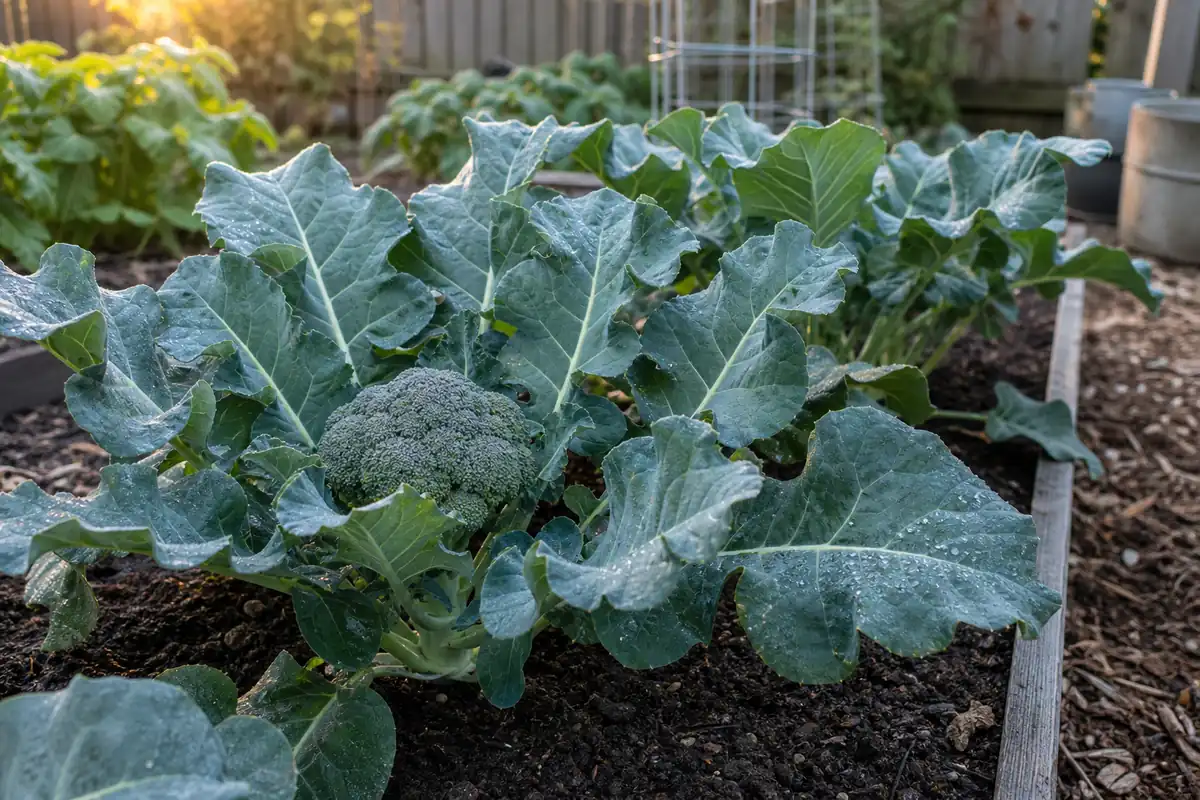
How to grow broccoli well comes down to giving the plant enough cool time to build leaves before it starts making the head. A broccoli transplant can look sturdy in the tray, with blue-green leaves and a thick stem, then produce a tiny button-sized head after one stretch of cold stress or heat pressure. The failure usually starts before the head is visible.
Broccoli is a cool-season brassica with a narrow comfort zone. It wants rich soil, even moisture, enough nitrogen to build a wide leaf canopy, and cool weather as the flower buds tighten into a harvestable head. Spring crops can work in mild regions. Fall crops often give the plant a calmer path: warm soil for establishment, cooling weather for head formation, and fewer sudden swings at the wrong stage.
Choose The Crop Window Before You Plant
For firm broccoli heads, plant so the leaf-building weeks stay cool and the head forms before heat climbs. Fall is usually safer in hot-summer gardens; spring works best where the crop can finish before regular 80 F days.
Key Takeaways
- Time transplants before heat pushes loose flower buds.
- Grow broad leaves before expecting full heads.
- Avoid old seedlings that button after transplant shock.
- Check moisture twice weekly during head formation.
- Harvest tight beads before yellow petals open.
Table of Contents
Broccoli Needs Leaf Size Before Head Size
The edible broccoli head is a cluster of unopened flower buds. Before the plant can feed that cluster, it needs a strong frame of leaves. Those leaves are the engine. Small, pale, root-bound, or drought-stressed plants often move into reproductive growth before they have enough leaf area to make a full head.
That is why head size is decided earlier than many gardeners expect. A transplant that sits cold in a cell pack for too long may survive perfectly and still carry a hidden problem. Once it goes into the garden, the plant may respond by making a small head quickly before building more leaves. The result is buttoning: a tight little head on a plant that never filled its space.
Start with stocky transplants that are about 4 to 6 weeks old, dark green, and actively growing. The stem should feel firm, the roots should hold the plug, and the plant should have no yellow lower leaves or woody stem. Very large transplants look tempting at the store, and those plants are often older than they look and more likely to stall.
The separate broccoli growth stages from seedling to tight green head are useful when you want to read what the plant is doing week by week. In a grow-and-care decision, the main lesson is simpler: do not let the plant feel finished before the leaves are big enough to support a real head.
Spring And Fall Timing Change The Buttoning Risk
Spring broccoli has a compressed season. The plant leaves the seedling stage during cold nights, then races toward head formation as days lengthen and heat builds. A well-timed spring crop can be excellent, with crisp stems and dense heads. A late spring crop often meets warm weather before the head finishes.
Fall broccoli usually gets a kinder sequence. Seeds start in summer, transplants grow in warm soil, and the head forms as weather cools. The plant does not have to recover from cold soil at the same time it is trying to size up. In hot-summer regions, fall broccoli often makes heavier heads with less drama than spring broccoli.
For spring, transplant 2 to 4 weeks before the average last frost date if the seedlings are hardened off and the bed drains well. For fall, count backward from the first expected frost. Many home gardens need seed starting 10 to 12 weeks before first frost, with transplanting roughly 6 to 8 weeks before that frost date. The timing overlaps with other cool-season planning in the spring planting guide by growing window, though broccoli is less forgiving than quick greens.
| Crop window | Best move | Failure signal |
|---|---|---|
| Early spring | Use hardened 4- to 6-week transplants | Plants sit purple and still for two weeks |
| Late spring | Choose early varieties and plant only if heat is mild | Loose beads form before heads reach size |
| Fall | Start seed during late-summer warmth | Plants stay too small before frost |
| Mild winter regions | Grow broccoli through fall, winter, or early spring | Warm spells stretch heads before harvest |
A soil thermometer helps more than the seed packet calendar. Broccoli seed germinates faster in warm soil, and transplants establish best when the root zone is cool enough to avoid stress and warm enough for growth. The broader soil temperature for planting rules are especially helpful when spring air feels pleasant and the bed is still slow and cold.
Prepare Soil For Moisture, Nitrogen, And Strong Roots
Broccoli asks more from soil than many quick vegetables. The plant must build a large leafy body before it makes the edible head, so shallow fertility or erratic moisture shows up later as small heads, hollow stems, or bitter, fibrous stalks. A bed that grew weak greens without trouble may still be too poor for broccoli.
Work in finished compost before planting, then use a balanced fertilizer based on soil test results or label rates for vegetable gardens. Broccoli grows best in fertile, well-drained soil with a slightly acidic to neutral pH. A pH range around 6.0 to 6.8 for broccoli and other cole crops keeps major nutrients available without pushing the plant into excess leaf at the expense of head quality.
Give each plant enough room to make a wide leaf canopy. Most home gardens do well with 18 to 24 inches between plants and 24 to 36 inches between rows, depending on variety and access. Crowding makes small heads more likely because leaves shade each other and roots compete in the same topsoil. Crowded plants also hold humidity, which keeps caterpillar damage and foliar disease harder to see.
Side-dress after the plants begin active new growth. A modest nitrogen boost at that point feeds leaf expansion before head formation. Pushing too much nitrogen late can leave loose, leafy growth around the head, so the timing matters. Feed during the leaf-building stage, before the head is already tightening.
Water Evenly During Head Formation
Broccoli has a shallow, active root system compared with the size of the plant above ground. When the top few inches dry hard, the leaves can dull and cup before the gardener notices any head problem. During head formation, that moisture swing can make beads separate, stems toughen, and the plant rush toward flowering.
Aim for about 1 to 1 1/2 inches of water per week from rain and irrigation, adjusted for soil and weather. Sandy beds need smaller, more frequent watering. Clay beds need slower watering that actually moves into the root zone. The surface should dry between waterings, and the soil below the mulch should feel cool and evenly damp.
Mulch helps once the soil has warmed enough for active growth. A 2- to 3-inch layer of straw, shredded leaves, or fine bark reduces evaporation and keeps roots cooler during warm spells. Pull mulch a little away from the stem so the crown stays dry. A broccoli stem that stays wet at soil level becomes more vulnerable to rot and pest hiding places.
Watch the leaves in late afternoon. A slight droop on a hot day can recover by evening. Leaves that stay limp in the morning mean the root zone has gone too dry or the plant has root damage. During head formation, morning stress is a warning worth acting on the same day.
Prevent Buttoning Before The Tiny Head Appears
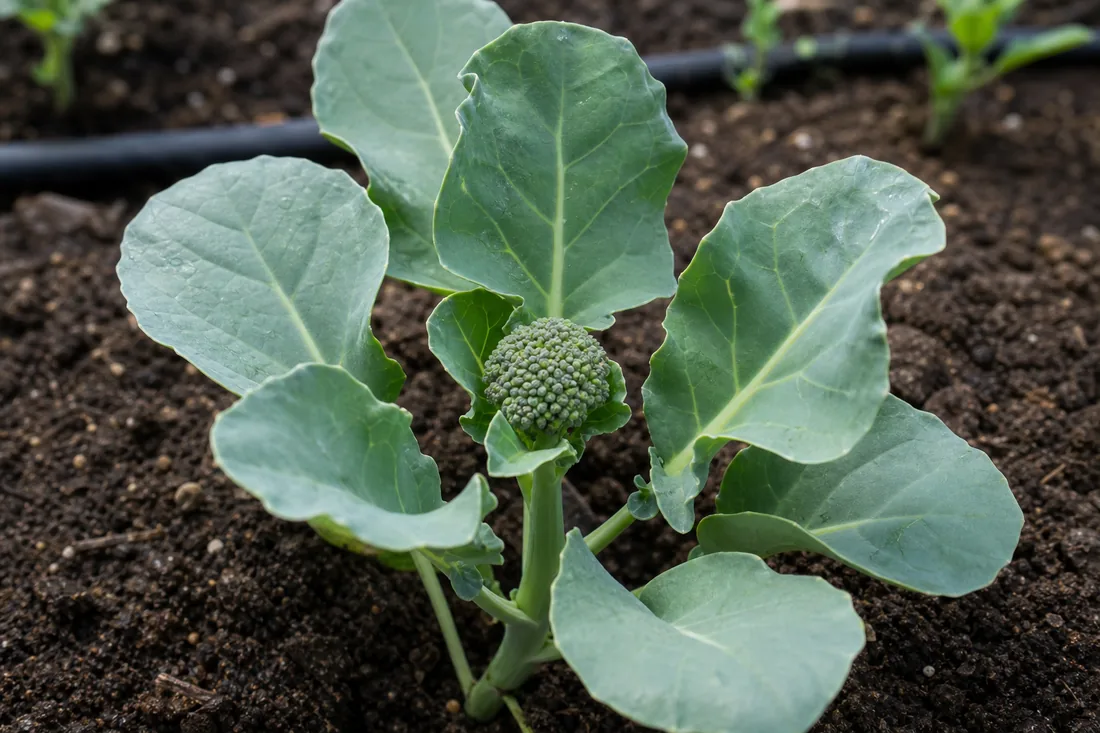
Buttoning is broccoli’s early exit. The plant forms a small, tight head on a body that never reached full size. By the time the button is visible, the decision has already happened inside the plant. Cutting it off will not create a normal main head later.
The most common triggers are old transplants, cold shock after planting, drought, low fertility, crowding, and heat arriving before the plant builds enough leaves. Stress from poor growing conditions can lead to small broccoli heads, especially when cool-season growth is interrupted. That pattern matches what gardeners see in the bed: a plant that pauses too long after transplanting often heads too soon.
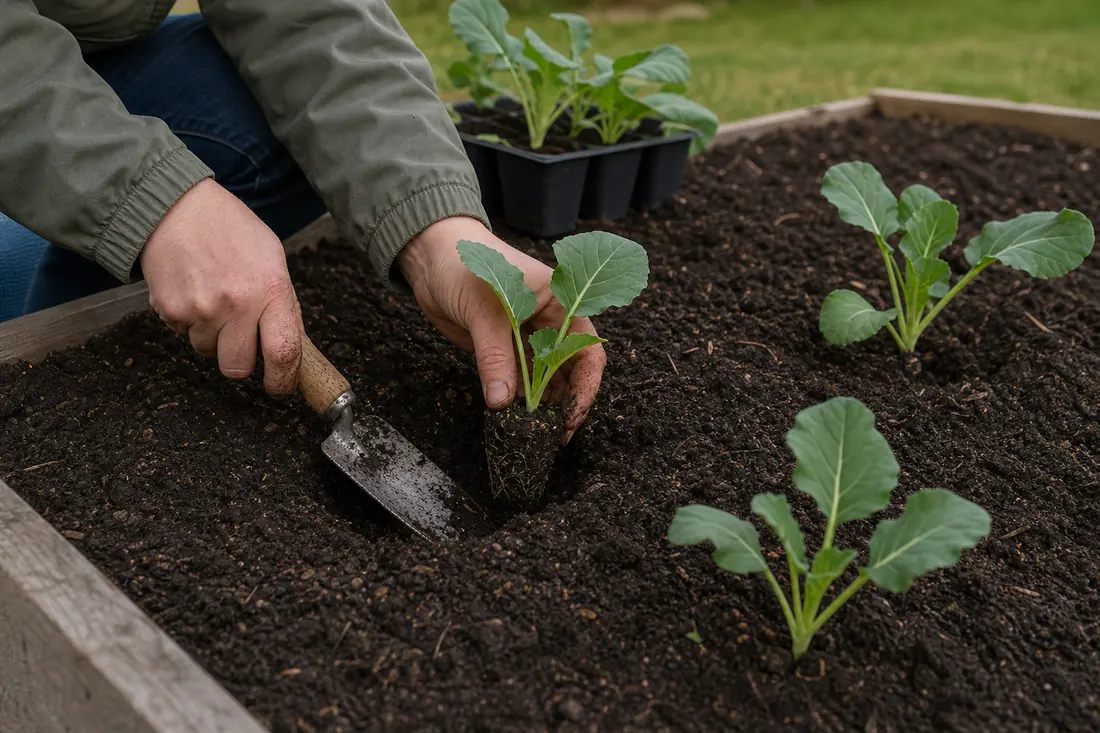
Prevention starts before transplant day. Harden seedlings gradually for 5 to 7 days, keep the root ball moist, and plant on a cloudy day or late afternoon when possible. Set transplants at the same depth they grew in the cell pack, then water deeply to settle soil around the roots. A dry pocket around the plug can stall growth even when the surrounding bed looks damp.
Row cover can protect spring plants from cold wind and cabbage butterflies. Remove or vent it when warm days build underneath. A covered bed can heat faster than expected. The fabric that saved the transplant in April can stress the head in May if it traps too much heat.
Manage Heat Before Heads Loosen
Broccoli heads are clusters of flower buds, so heat changes the harvest quickly. Tight green beads can swell, loosen, and show yellow petals in a few warm days. Once the buds begin opening, texture gets grainy and flavor turns stronger.
Heat management begins with timing, then continues with shade and harvest speed. In spring, choose early-maturing varieties if your region warms fast. In fall, choose varieties with enough days to mature before hard frost. Where afternoon heat spikes during head formation, a light shade cloth over hoops can keep the crop from jumping from tight head to yellow bloom.
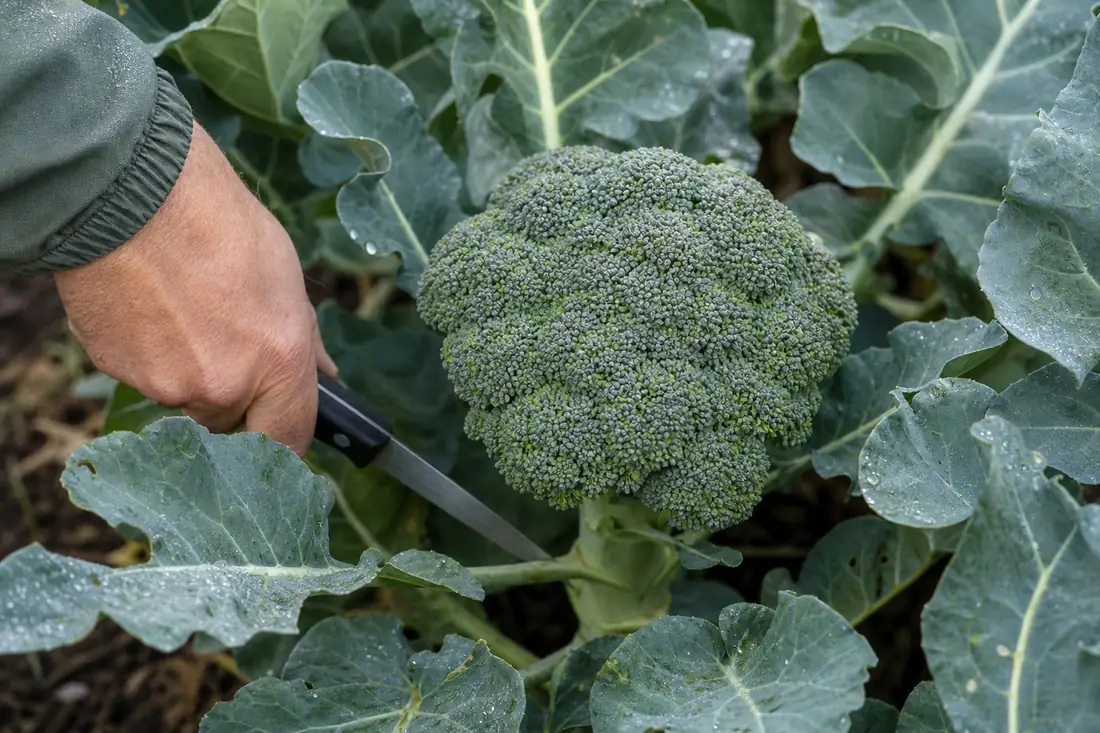
Do not wait for grocery-store head size if the weather is turning. Homegrown broccoli may be smaller than supermarket crowns and still be at peak quality. Harvest when the head is firm, the beads are tight, and the outer buds have not stretched. A sharp knife should cut the main stem cleanly with a faint wet crunch.
The same cool-season logic applies to nearby crops such as peas. The recent pea planting window works from a similar principle: plant early enough to let cool weather do the important work before heat changes the crop.
Scout Caterpillars And Aphids On Young Leaves
Broccoli leaves attract cabbageworms, loopers, flea beetles, and aphids. Damage often starts as small holes, pale specks, or curled new growth. By the time caterpillars are large, their droppings collect deep in the leaves and the head becomes harder to clean.
Inspect the undersides of leaves twice a week, especially after butterflies appear. Imported cabbageworm eggs are small and pale, and young larvae blend almost perfectly with the leaf. Imported cabbageworm larvae feed on cole crop leaves and can contaminate heads when populations build.
Floating row cover works best when installed right after transplanting, before moths and butterflies lay eggs. Seal the edges with soil, boards, or pins. Remove the cover during hot spells if trapped heat becomes the larger threat. In fall, pest pressure often drops as nights cool, which makes fall broccoli easier in many gardens.
Aphids cluster in protected new growth and inside loose heads. A strong water spray can knock down early colonies, and removing badly infested leaves keeps the problem from moving inward. Avoid heavy late nitrogen if aphids are active; lush soft growth gives them more feeding sites.
Harvest The Main Head And Keep Side Shoots Coming
The main head is ready when it feels firm and the beads are still closed. Cut early in the day if possible, before sun warms the head. Leave 5 to 6 inches of stem attached and angle the cut so water sheds away from the remaining plant.
Do not pull the plant after the main harvest unless the weather is about to turn hot or disease is spreading. Many broccoli varieties produce side shoots after the main head is removed. They are smaller, often sweeter, and useful for several extra pickings. Keep watering and feeding lightly if the plant still looks vigorous.
Harvest side shoots before the buds open. A side shoot with tight green beads is worth cutting even when it is only a few inches across. Waiting for size often trades tenderness for yellow flowers. The plant tells you when quality is ready, not the ruler.
For gardeners arranging a broader vegetable season, choosing vegetables by season and climate helps place broccoli beside faster greens, beans, and root crops without forcing every crop into the same calendar.
Start With The Broccoli Crop That Fits Your Season
In short, cool coastal or northern gardens can often grow a strong spring crop. Hot-summer gardens should treat fall broccoli as the main crop and spring broccoli as a narrower opportunity. Mild winter regions may grow broccoli through the cool months and avoid summer entirely.
Containers need extra caution. A pot warms and dries faster than an in-ground bed, so broccoli in containers buttons more easily when the plant is underfed or cramped. Use a large container, keep moisture even, and choose compact varieties if bed space is limited.
If you have one chance, choose the season that gives the head cool weather. That single decision prevents more broccoli problems than any later correction. A plant that grows wide leaves in comfortable weather and heads up before heat arrives usually gives the dense green crown gardeners were aiming for from the start.
Conclusion
Broccoli succeeds when the calendar protects the head before it appears. Give the plant 4- to 6-week-old transplants, fertile soil, even moisture, and enough cool weather to build a broad leaf canopy. If spring heat comes fast, shift the main effort to fall and let cooling weather carry head formation.
Watch for the early warnings: transplants stalled in cold soil, lower leaves yellowing, afternoon wilt that remains in the morning, and beads starting to loosen. The best harvest feels dense under the knife, with tight green buds, crisp stem tissue, and side shoots already waiting behind the main crown.
Frequently Asked Questions
Is broccoli easy to grow?
Broccoli is manageable, and it is less forgiving than lettuce, peas, or bush beans. The plant needs fertile soil, even moisture, and cool weather during head formation. Most failures come from timing stress more than difficult daily care.
What month do you plant broccoli?
Planting month depends on climate. Many spring crops go out 2 to 4 weeks before the last frost, and fall crops are started 10 to 12 weeks before first frost. In mild winter regions, broccoli may be planted in fall for winter or early spring harvest.
Does broccoli grow better in spring or fall?
Fall broccoli often grows better in hot-summer areas because the head forms as weather cools. Spring broccoli can work well where heat arrives slowly. If regular 80 F days come early, fall is usually the safer crop.
Why did my broccoli make a tiny head?
A tiny head usually means buttoning. Old transplants, cold shock, drought, crowding, low fertility, or heat can push the plant into early head formation before it has enough leaves. Once buttoning happens, that main head will not become full-sized.
How do you know when broccoli is ready to harvest?
Harvest when the head is firm, green, and tightly beaded. Yellow petals, stretched buds, or a loose grainy surface mean the plant is starting to flower. Cut the main head with several inches of stem and leave the plant for side shoots if weather stays cool.