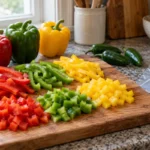
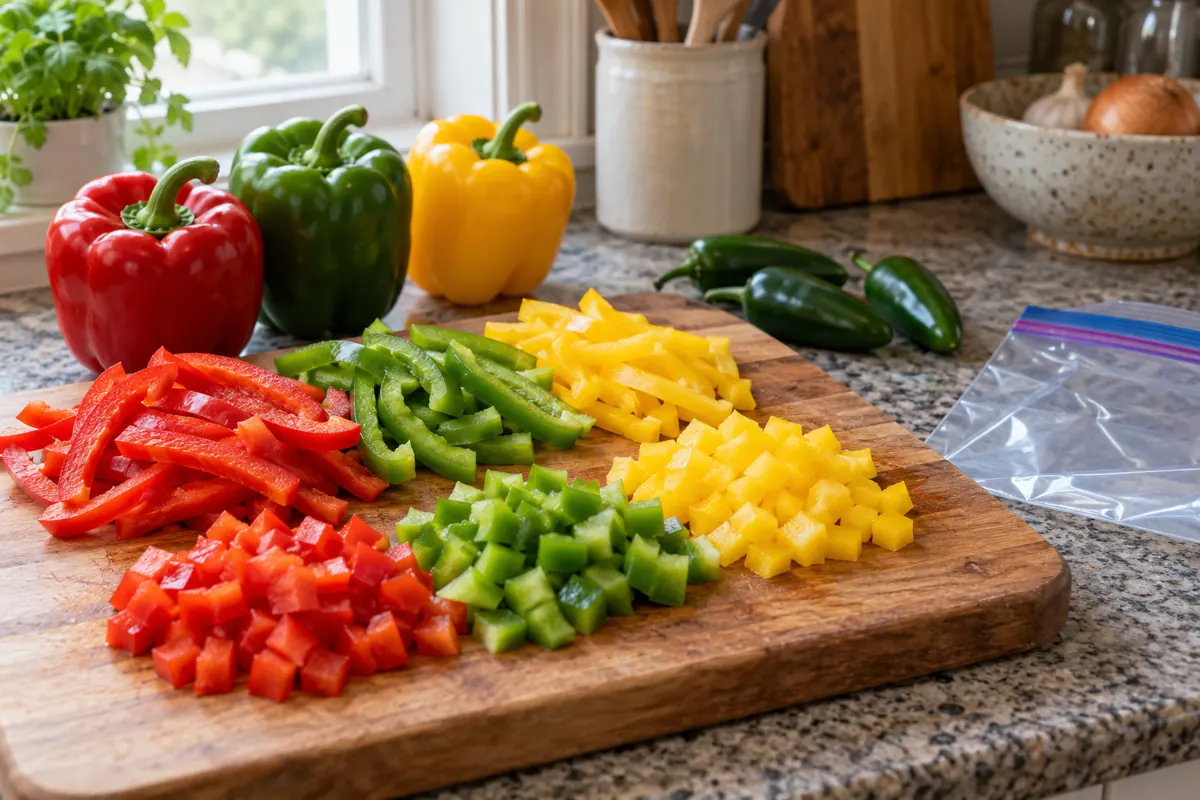
How to freeze peppers starts with washing sound fruit, choosing a useful cut, and packing it for the freezer. Bell and sweet peppers can go in raw without blanching. Cut them into strips or dice, freeze the pieces separately on a tray, then move them into a freezer bag with the air pressed out. Small hot peppers can be washed, stemmed, and frozen whole.
The choice matters when you cook. A handful of separate pepper pieces is easy to measure into a skillet; a solid bag-sized block is harder to portion. Frozen peppers also change texture. They can still go into uncooked dishes, but they may not give the firm bite of a freshly sliced bell pepper. Match the cut to the meals you make, keep the freezer at 0°F or below, and label each package before the varieties become hard to tell apart.
Choose the preparation before filling the bag
- Bell pepper strips or dice: wash, remove stems and seeds, cut, tray-freeze, then bag.
- Sweet peppers for a blanched preparation: blanch halves for 3 minutes or strips and rings for 2 minutes, cool promptly, drain, and pack.
- Whole hot peppers: wash, remove stems, and pack without blanching. Wear gloves when handling hot varieties.
- For crisp raw slices: keep fresh peppers for that meal. Freezing changes their bite.
Keep frozen packages at 0°F or below. Aim to use them within about 8 months for good quality.
Key Takeaways
- Freeze sound bell and sweet peppers raw without blanching.
- Cut peppers for their intended meals before freezing them.
- Tray-freeze loose pieces before bagging so you can remove smaller portions.
- Wear gloves and keep hot pepper residue away from your face.
- Label freezer-safe packages and distinguish quality dates from food-safety limits.
Table of Contents
Prepare Sound Peppers and Choose a Useful Cut
Start with firm peppers that are suitable to eat. A smooth, taut wall cuts cleanly; a collapsing, spoiled fruit belongs outside the freezer batch. Freezing slows deterioration during storage. It does not turn spoiled produce into sound food. Sort the harvest before washing so damaged fruit does not disappear among the good pieces. A mixed harvest of garden vegetables needs crop-specific freezer preparation; the raw pepper method does not apply to every vegetable.
Wash bell peppers under running water, using a clean vegetable brush to clean the surface. Cut out the stem, halve the fruit, and remove the seeds and pale inner membranes. The tip of a spoon can scrape the inside without requiring you to shave away the thick outer wall. Wash hot peppers by gently rubbing them under cold running water, then remove their stems.
Choose the cut when the flesh is firm enough to control with a knife. Long strips fit fajitas and skillet vegetables. Dice work in sauces, soups, and egg dishes. Halves preserve a larger piece and take more room. Separate sweet varieties from hot ones: a forgotten hot chile in a bag of bell pepper dice changes far more than the shape of dinner.
Color can help you recognize the bags later. It cannot identify every variety or its heat. Label the actual variety when you know it. Different bell pepper colors also have different flavor and ripeness characteristics; select peppers you like eating. The freezer will not improve an unwanted taste.
How to Freeze Peppers Raw Without a Solid Block
Raw freezing is a supported option for bell and sweet peppers. The preservation directions were revised by University of Georgia Extension food specialists Elizabeth L. Andress and Judy A. Harrison. The National Center for Home Food Preservation publishes both raw and heated preparations; skipping blanching is part of its sweet-pepper directions. The tray step adds convenient portioning. It keeps individual pieces from freezing together before you pack them.
Freeze the cut pieces separately first
- Wash the sound peppers, remove stems, seeds, and membranes, and cut them into the shapes you need.
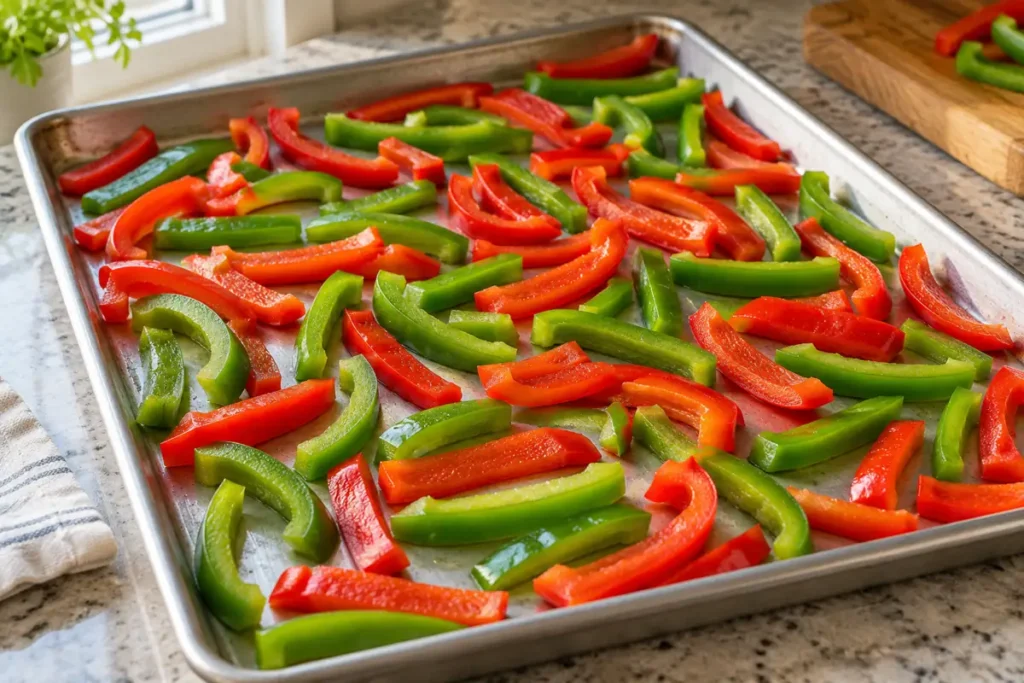
- Spread the pieces in a single layer on a clean baking sheet with sides. Avoid piling a bowlful in the center.
- Put the tray in the freezer until the pieces are frozen. University of Nebraska-Lincoln Extension gives about an hour or longer; the amount, thickness, and freezer conditions change the time.
- Transfer the frozen pieces into freezer bags. Press out as much air as possible and close the seal.
- Label the cut, variety or heat level, and freezing date. Return the bag to the freezer.
Check the condition of the pieces before bagging. A soft strip that bends freely has not reached the same stage as a firm frozen piece. If the first tray is still soft after an hour, give it longer. Wait for separate frozen pieces before bagging; the time can change between batches.
Pack for the portions you actually use
A shallow bag of loose dice fits a small freezer better than a tall container with unused space. Divide a large harvest among several bags if retrieving one portion would otherwise leave the whole supply out during cooking. When you need peppers, remove the portion, reseal the bag, and return the remainder promptly.
Plain raw packing is another option if you want the full package together. NCHFP specifies no headspace for its raw sweet-pepper method. Tray freezing is useful when separate pieces matter; it is not an extra blanching step or a requirement that makes the raw method safe.
Blanch Sweet Peppers When You Choose the Heated Method
Blanching briefly heats the vegetable before freezing. Heat changes the tissue and slows enzyme activity, which can affect stored color, flavor, and texture. Peppers differ from vegetables for which blanching is the standard freezer preparation: a raw sweet-pepper route is also published. There is no need to boil every batch just because another vegetable requires it.
For the heated sweet-pepper preparation, follow the specific bell and sweet pepper freezing directions. Water-blanch halves for 3 minutes, or strips and rings for 2 minutes. Cool promptly, drain, and package with 1/2 inch of headspace before sealing and freezing. These times apply to those sweet-pepper shapes; they are not a general roasting time or instructions for every hot pepper.
| Sweet pepper preparation | Heat step | Packing space |
|---|---|---|
| Raw halves or cut pieces | No blanching | No headspace |
| Blanched halves | 3 minutes in water | 1/2 inch |
| Blanched strips or rings | 2 minutes in water | 1/2 inch |
The cooled pieces should not carry a pool of blanching water into the container. Drain them before packing. A bag of waterlogged strips is less convenient to portion, even when you used the correct heating time. Keep the raw and blanched batches labeled separately if their texture affects how you use them.
Freeze Hot Peppers Whole and Limit Skin Contact
Hot peppers can be frozen whole without first cutting them into tiny pieces. Wash, remove stems, package without headspace, seal, and freeze. NCHFP’s separate hot-pepper directions support this method. It is useful for a handful of chiles before you have chosen the final recipe. Keep the fruit identifiable in its own bag.
Wear plastic or rubber gloves when handling or cutting hot varieties, and keep your hands away from your face. A pepper that smells like an ordinary green vegetable can still leave irritating residue on fingers. Do not use smell or appearance to decide that an unfamiliar chile needs no precautions.
After handling, wash your hands thoroughly with soap and water. Keep the cutting board and tools separate from ready-to-eat food until they have been cleaned. If you cut the chiles before freezing, label their heat level as well as the shape. A tightly filled bag of chopped hot peppers is harder to distinguish from small sweet-pepper pieces once frost covers the outside.
Saving fruit and saving the parent plant require different conditions. A final harvest may be ready for freezer bags. A healthy plant can also have a future indoors. Keep a living plant out of freezing temperatures when overwintering pepper plants; storing harvested chiles in the freezer cannot preserve its roots or stems.
Keep Air Out and Maintain a Cold Freezer
Use packaging intended for freezing. Plastic freezer bags, freezer paper, heavy-duty aluminum foil, and suitable freezer containers are among the options listed in University of Nebraska-Lincoln Extension guidance. Thin produce bags and reused spread tubs are not equivalent long-term freezer packaging. A package that closes poorly leaves more opportunity for air exposure and quality loss.
Push excess air out of a freezer bag without crushing the contents, then check the seal from end to end. A pepper piece caught in the zipper can stop it closing fully. Flatten the bag enough to store it conveniently, but do not force frozen pieces through the plastic. Move the package away from sharp freezer edges.
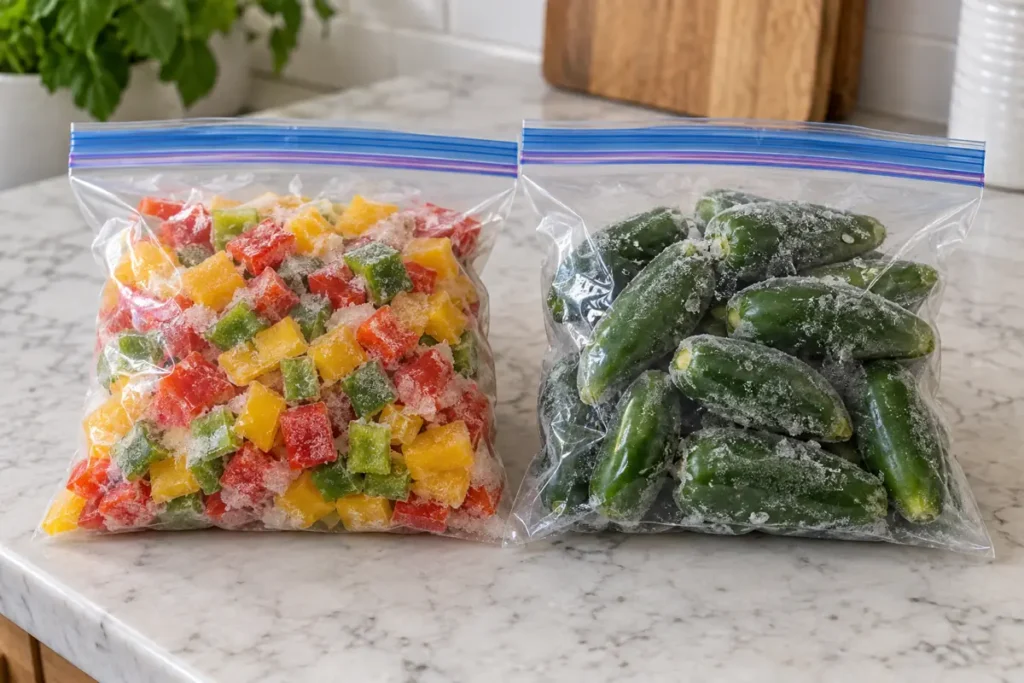
Keep the freezer at 0°F or below. The pepper preparation and freezer-storage guidance, originally written by Alice Henneman and reviewed by Kayla Colgrove, recommends using frozen vegetables within about 8 months for best quality. That gives a useful target for rotating the harvest without promising identical texture throughout storage.
Safety and quality dates describe different things. FoodSafety.gov states that food continuously kept frozen at 0°F remains safe in terms of frozen storage duration; its freezer dates concern quality. This does not make spoiled food safe or establish safety after a thawing or power-failure event. A date cannot tell you whether the package stayed frozen.
Use Frozen Portions With Their Changed Texture
Choose meals that tolerate a softer pepper. Sauces, soups, casseroles, and skillet dishes give the frozen harvest somewhere useful to go. Raw-frozen peppers may retain some firmness, but the bite can differ from a fresh pepper. Keep fresh fruit for a raw snack platter when its crisp texture is the main attraction.
Water released during thawing can also change a dish. A firm frozen strip may become flexible and wet as it warms. Allow for that moisture when deciding how many pieces to add. You can add small frozen portions to dishes that cook them through, adjusting the cooking to the recipe. There is no single extra-time rule for every meal.
Take out only what you need and close the package again. If measuring takes longer than expected, put the remaining bag back before continuing preparation. Loose tray-frozen pieces let you do this without thawing an entire block. They also let you combine different cuts without committing the whole harvest to one large meal.
Large late-season harvests are easier to use when its bags match your routine. Pepper fruit development changes the amount and ripeness arriving at the kitchen over time. Freeze useful batches as sound peppers become available. Waiting for every fruit to match can leave the first basket deteriorating.
Check Clumps, Surface Ice, and Dry Patches Separately
A bag-sized clump usually creates a portioning problem first. Pieces packed together before freezing can stick; separately frozen pieces can also bond if they soften and freeze together later. Do not infer the entire temperature history from a clump alone. Use what you know about handling and freezer conditions before deciding how to use the food.
Surface crystals and a package full of frost are different observations. Neither gives a complete safety verdict. Check whether the seal is open, whether the packaging is suitable, and whether the freezer has kept its temperature. Replace poor packaging for future batches. Brushing off ice cannot correct a known unsafe thawing event.
Pale, dry patches can signal freezer-related quality loss. Air exposure dries the surface and can leave a tougher or less appealing piece after cooking. Prevent more damage by reducing air in future bags and rotating older packages forward. An old package can remain frozen without retaining the flavor or texture you wanted.
Compare the result with the original preparation. Blanched pieces start with a heated texture; raw pieces follow another route. If you dislike a batch in an uncooked dish, use the remaining sound, correctly stored peppers in cooked food. Changing the meal can be more useful than changing every step of a supported freezing method.
Conclusion
Choose one cut you will use this week, then prepare the remaining sound peppers the same way for future portions. Give raw pieces enough tray time to freeze separately, pack them with little air, and label the bags. Keep whole hot peppers identifiable and handle them with gloves. A freezer bag is most useful when its contents suit the meal you intend to make.
Frequently Asked Questions
Do whole hot peppers need their seeds removed?
No. The published whole-hot-pepper method calls for washing and removing stems, then packaging and freezing. You can cut them and remove seeds for a later use. Seed removal is not required for freezing the whole fruit.
Can I freeze red, yellow, and green bell peppers together?
Yes, if the sound peppers receive the same preparation and you want a mixed portion. Separate them when color or flavor matters to your meals. Keep hot varieties in clearly labeled packages so a mixed sweet-pepper bag does not contain an unexpected chile.
How do I label a hot pepper when I do not know its variety?
Write that it is an unidentified hot pepper, along with the cut and freezing date. Keep it separate from sweet peppers. Do not assign a mild heat level from its color or size alone.