



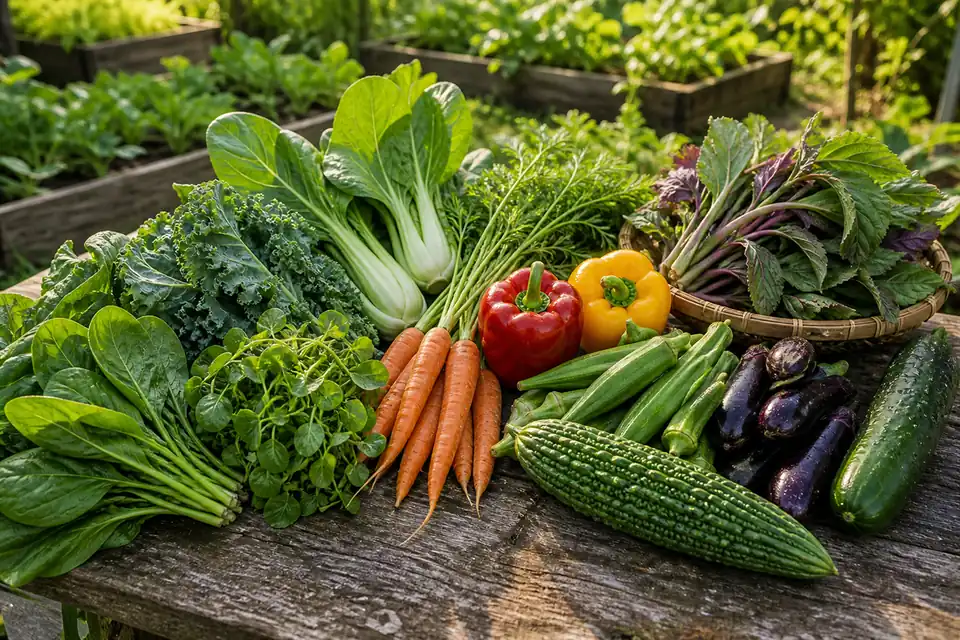
The health benefits of common and exotic vegetables come from variety first: leaves, roots, pods, fruits, stems, and flowers all bring different fiber, minerals, pigments, water, and plant chemicals to the plate. A basket with spinach, red peppers, carrots, okra, bitter melon, and bok choy looks busy for a reason. The sharp scent of cut mustard greens, the cool snap of cucumber, and the slippery gel inside okra point to different jobs in the body.
Exotic vegetables deserve attention when they add a flavor, texture, or nutrient pattern you would not get from the same three grocery-store staples. Rarity is a weak nutrition signal. A common leafy green harvested young and eaten the same day often gives more value than a costly import that sat warm, wilted, and bruised on the way home.
Pick The Vegetable By The Benefit You Want Most
No single vegetable wins every job. Use the strongest group, then rotate colors and textures through the week.
Watercress, bok choy, chard, spinach pack minerals and vitamins into very few calories.
Red peppers, broccoli, Brussels sprouts work best with quick cooking or raw use.
Carrots, sweet potato leaves, kale bring carotenoids that convert into vitamin A activity.
Cucumber, chayote, zucchini add cool crunch and water without a heavy plate.
Okra, eggplant, artichoke, kohlrabi bring soluble and insoluble fiber in different textures.
Moringa leaves, bitter melon, amaranth greens add new flavor, not miracle cures.
Key Takeaways
- Rotate leafy, orange, red, pod, and watery vegetables.
- Choose exotic vegetables for diversity, not health claims.
- Cook vitamin C vegetables briefly to limit nutrient loss.
- Avoid relying on one “king” vegetable all week.
- Harvest tender leaves before heat toughens texture and flavor.
Table of Contents
Nutrient Density Begins With Leaves And Tender Stems
A handful of leafy greens gives a different signal from a heavy root crop. Leaves are thin, active tissues full of chloroplasts, minerals, water, and protective compounds because they do the plant’s daily light work. That is why watercress, bok choy, chard, beet greens, and spinach sit near the top of the powerhouse fruit and vegetable scoring method, which compares 17 nutrients per calorie.
That scoring does not make watercress a magic food. It shows nutrient density: more qualifying nutrients packed into fewer calories. A small bowl of peppery watercress has a clean bite and a crisp snap under the teeth, and it carries vitamins and minerals without much starch. Bok choy works the same way in a milder form, with pale crunchy stems and dark leaves that cook at different speeds.
Gardeners have an edge here because leaf quality falls fast after harvest. Tender spinach, amaranth greens, and young kale lose their springy lift when respiration continues in a warm bag. Pick a leaf and bend it near the midrib; a fresh one gives cool resistance before it tears. A tired leaf folds like damp paper.
Use common greens as the base, then add exotic greens where they fit the meal. Moringa leaves taste grassy and slightly sharp when young. Amaranth greens soften quickly in a hot pan. Water spinach stays juicy in stir-fries. The health value comes from the rotation, not from treating unfamiliar leaves like medicine.
Color Shows Which Plant Compounds Dominate
Vegetable color is a practical sorting tool. Orange roots and dark green leaves point toward carotenoids, red peppers bring more ripeness-driven pigments, purple eggplant skin carries anthocyanin-type compounds, and deep green brassicas hold chlorophyll beside other protective chemistry. A cutting board with orange, red, purple, and green pieces gives the eye a quick nutrient map before the pan gets hot.
Carrots matter because beta-carotene and related provitamin A carotenoids convert into vitamin A activity in the body. That vitamin role is tied to normal vision, immune function, growth, and organ function. The garden detail is simple: deeper orange usually signals more carotenoid concentration, especially when the root has matured without becoming woody.
Red, yellow, and orange peppers bring a different advantage. As peppers ripen, their flavor changes from grassy and slightly bitter to sweet, fragrant, and fuller in color. The bell pepper benefits by color are worth separating because green peppers are immature fruit, and red peppers have had more time to build sugars and pigments.
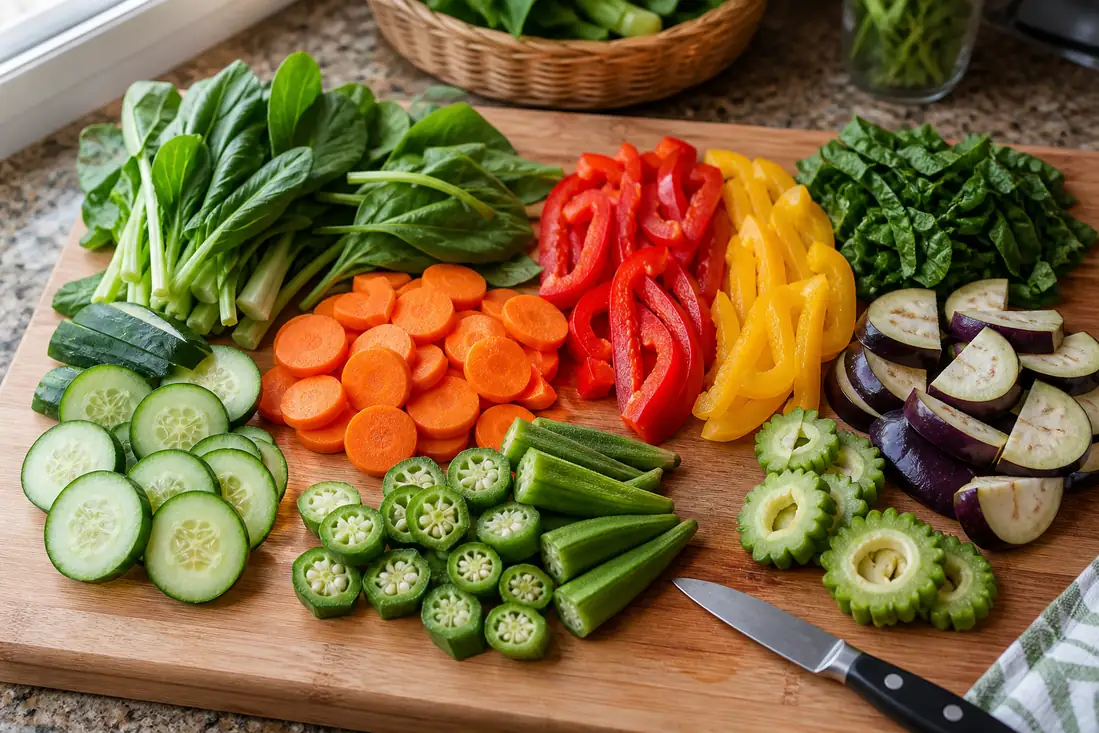
Purple vegetables need the skin treated carefully. Eggplant loses much of its visual nutrition signal when the peel is stripped away. The purple skin also protects delicate flesh that browns quickly after cutting. If the surface feels tight and glossy with slight spring under a thumb, the eggplant is young enough for fast cooking; dull skin and spongy resistance mean the seed cavity has already started to toughen.
| Color Or Texture | Common Examples | Exotic Or Less Common Examples | Best Use |
|---|---|---|---|
| Dark green leaves | Spinach, kale, collards | Amaranth greens, moringa, water spinach | Quick saute, soups, raw tender leaves |
| Orange flesh | Carrots, winter squash | Orange sweet potato leaves and stems | Roast roots, wilt greens lightly |
| Red fruiting vegetables | Red bell pepper, tomato | Red yardlong bean pods when mature | Raw, charred, or quick cooked |
| Gel-forming pods | Okra | Young roselle leaves and pods | Stews, gumbo, dry high-heat saute |
| Bitter flesh | Radicchio, mustard greens | Bitter melon, gourd shoots | Salt, blanch, or pair with acid |
Fiber And Water Change How Vegetables Feel In The Body
Some vegetables help a meal feel larger without making it heavy. Cucumber, chayote, zucchini, lettuce stems, and young gourds hold enough water that the first bite feels cool and wet against the tongue. That water changes texture, chewing time, and plate volume.
Fiber works more slowly. Insoluble fiber adds structure that moves through the digestive tract. Soluble fiber forms thicker gels or feeds gut bacteria after fermentation. Okra shows that mechanism in the hand: slice a young pod and the knife pulls a slick thread from the seed chamber. That mucilage is part of the soluble fiber texture that thickens stews and slows the meal down.
Cucumbers are useful for hydration-style eating because they are mild, crisp, and easy to eat raw. The hydration benefits of cucumbers fit hot-weather meals, especially when the fruit is picked before the seed cavity turns watery and sour. Press the blossom end; a good cucumber feels firm and cool, not rubbery.
Eggplant, kohlrabi, okra, yardlong beans, and artichokes bring more chew. Their fiber makes them better suited to meals where vegetables need to stand in for bulk. When eggplant is salted or roasted correctly, the spongy flesh collapses into a soft, savory texture before it drinks oil from the pan. That cooking change matters as much as the raw nutrient chart.
Cruciferous Vegetables Bring Sulfur Chemistry To Meals
Broccoli, cabbage, kale, bok choy, arugula, mustard greens, kohlrabi, and watercress belong to the brassica family. Their sharp scent after chopping comes from sulfur-containing glucosinolates and the enzyme myrosinase, which meet when plant cells are crushed. That is the same chemistry behind the peppery bite in watercress and the cabbage smell in an overcooked pot.
Cooking decides whether that chemistry stays lively or turns dull. Chop broccoli and let it rest for several minutes before quick cooking, and the crushed tissue has time to start the enzyme reaction. Boil it hard until the kitchen smells swampy and the florets turn olive, and both texture and flavor suffer. The stem should still give a faint squeak against the teeth.
The benefits of broccoli are strongest when the vegetable is treated as a fresh brassica, not as a limp side dish. Kale follows the same logic. Young leaves carry sweetness after cool weather. Heat-aged leaves become leathery and bitter because the plant is shifting toward survival and flowering.
Bok choy and Chinese cabbage give a gentler path into cruciferous vegetables. Their stems stay juicy, their leaves wilt fast, and the flavor remains mild enough for people who dislike strong cabbage. Watercress sits at the sharper end. It tastes peppery because the plant carries more bite in tiny leaves and stems, so a small amount changes a salad quickly.
Exotic Vegetables Add Value When They Broaden The Pattern
Rare does not mean healthier. A vegetable earns its place when it adds a nutrient pattern, texture, flavor, or growing season that common vegetables do not cover. Moringa leaves bring a dense green flavor in warm climates. Bitter melon adds bitterness that cooks beautifully with eggs, garlic, and fermented flavors. Yardlong beans keep producing in heat that slows many snap beans.
Bitter melon needs the most caution in wording and in the kitchen. It appears in many traditional food cultures, and research interest exists around blood sugar metabolism; a home meal is not a treatment plan. Slice it thin, scrape the pith, salt it briefly, and rinse if the bitterness is too sharp. The surface should feel bumpy and firm; orange splitting fruit is overmature for most savory cooking.
Okra is a better everyday example of exotic-to-some, ordinary-to-others. In hot gardens, okra keeps setting pods when lettuce has long bolted and peas have quit. Pick pods at 2 to 4 inches, when the tip snaps cleanly. A pod that bends like leather has gone too far and will cook fibrous no matter how good the recipe is.
Amaranth greens, malabar spinach, jute mallow, taro leaves, and water spinach show why cultural context matters. Some leaves require correct cooking, and some are unsafe raw or unsuitable for certain diets. Taro leaves, for example, need thorough cooking because irritating calcium oxalate crystals make raw tissue unpleasant and unsafe to eat. Exotic vegetables reward respect more than hype.
Harvest Timing And Cooking Decide The Nutrients You Keep
Vegetable nutrition changes after harvest because plant cells keep respiring. A fresh pepper still smells green and sweet at the stem. A tired one wrinkles near the shoulder, loses gloss, and feels lighter in the hand. That moisture loss changes texture first, then flavor, then cooking performance.
Vitamin C is especially sensitive to storage and heat. Red and green peppers, broccoli, potatoes, tomatoes, and several other vegetables provide vitamin C, and prolonged storage and cooking reduce it; steaming or microwaving limits some vitamin C food losses. That is why raw pepper strips and lightly cooked broccoli feel brighter than the same vegetables after a long boil.
Carotenoids behave differently. Chopping and gentle cooking break plant cell walls, and a little fat in the meal helps absorption because carotenoids are fat-soluble. That is why roasted carrots with olive oil, eggs with peppers, or greens cooked with a small amount of oil make more nutritional sense than dry, under-chewed chunks swallowed in a rush.
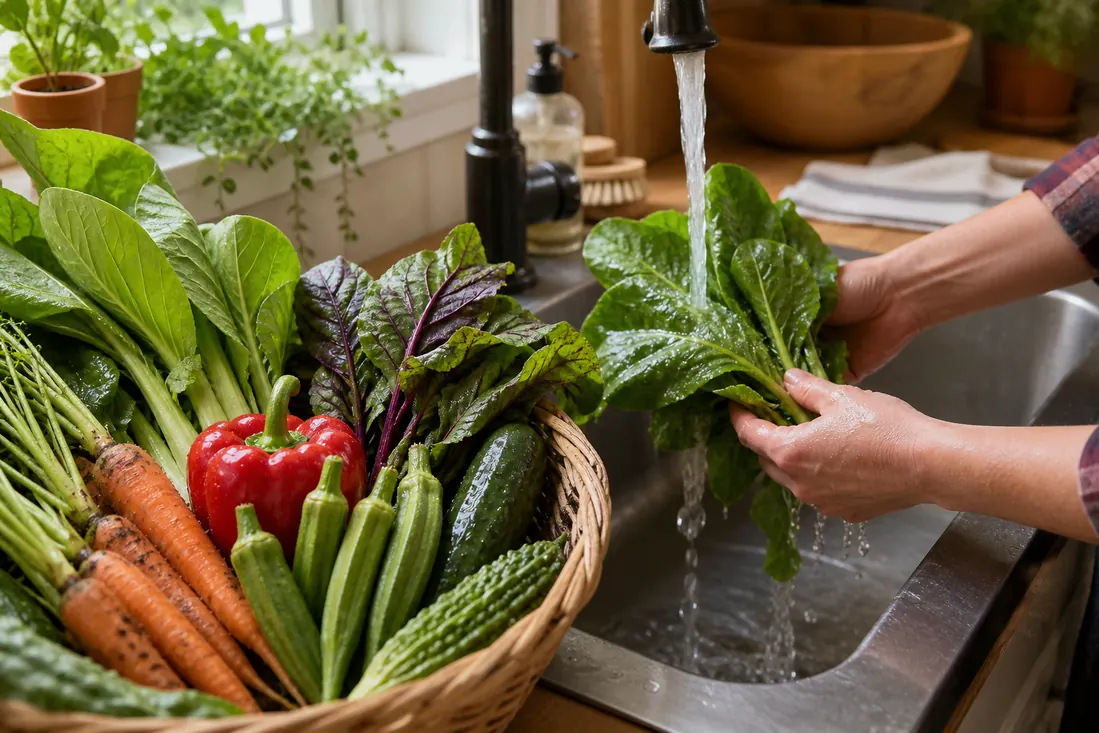
The USDA FoodData Central database is useful for checking nutrient differences by raw, boiled, cooked, or branded forms, and the kitchen still has to protect the vegetable. Rinse leaves in cool water, spin or pat them dry, and cook wet greens quickly enough that they collapse without turning gray. The smell should stay fresh and green, not sulfurous or stale.
| Vegetable Group | Best Nutrient-Saving Move | Mistake To Avoid |
|---|---|---|
| Vitamin C vegetables | Eat raw or cook briefly with little water | Long boiling and hot storage |
| Carotenoid-rich roots | Chop, cook gently, and serve with some fat | Eating large dry chunks without fat |
| Leafy greens | Harvest young and chill quickly | Leaving washed leaves warm in a sealed bag |
| Okra and tender pods | Pick small before fibers harden | Using oversized pods for quick cooking |
| Bitter vegetables | Slice thin and balance with acid, salt, or egg | Expecting bitterness to disappear completely |
Common Vegetables Still Carry The Everyday Health Load
The healthiest pattern is boring in the best way: vegetables from several subgroups, eaten often, in forms people actually enjoy. The vegetables group includes dark green, red and orange, starchy, bean and pea, and other vegetables because no subgroup covers every nutrient role.
Common vegetables win by showing up. Carrots store well, peppers slice raw, cucumbers cool a summer plate, spinach cooks in minutes, and cabbage waits patiently in the crisper. Those ordinary habits matter more than buying one rare vegetable once and letting it soften in the drawer.
A few common vegetables deserve specialist attention. The health benefits of carrots sit mostly in carotenoid-rich roots and fiber. The nutritional value of spinach comes from dark leaves that cook down dramatically, concentrating a large pile into a small serving. Beets bring nitrates and earthy sweetness, and they also carry oxalates that matter for some people with kidney stone concerns.
What would your weekly plate look like if every color had to earn its place by texture, flavor, and growing season before reputation gets a vote?
Where To Start
If your vegetable routine is mostly tomatoes, potatoes, and lettuce, add one dark leafy green and one orange or red vegetable this week. Wash the greens, dry them well, cook half, and keep the other half raw for texture contrast.
For a first exotic vegetable purchase, start with okra, bok choy, bitter melon, or amaranth greens from a market that turns produce quickly. Buy a small amount first, then cook it the same day so texture and flavor teach you what the vegetable does well.
Hot early-summer gardens need crops that keep producing when cool-season greens fade. Okra, amaranth greens, malabar spinach, peppers, and yardlong beans can carry summer meals after lettuce and spinach turn bitter.
Skeptical readers can ignore the miracle language and look at the plant part. Leaves, orange roots, red ripe fruits, sulfur-rich brassicas, watery cucurbits, and fiber-heavy pods each bring a different job to the plate.
Conclusion
Common and exotic vegetables work best as a rotation with no single winner. Put leafy greens, red or orange vegetables, cruciferous crops, watery cucurbits, and fiber-rich pods into the week, then let exotic vegetables fill gaps in flavor, heat tolerance, and texture.
Start with three reliable anchors: one dark leafy green, one bright red or orange vegetable, and one pod or stem vegetable with real chew. Add one unfamiliar crop only when you know how you will cook it within 24 hours. The plate should look varied before it tastes varied: glossy peppers, cool cucumber, firm okra, torn greens, and orange roots that still smell faintly sweet when cut.
Frequently Asked Questions
Which vegetable is the healthiest?
Watercress scored highest in the CDC nutrient-density system, followed by Chinese cabbage, chard, beet greens, and spinach. The score measures selected nutrients per calorie, so it should guide variety and keep other vegetables in rotation.
Are exotic vegetables healthier than common vegetables?
Exotic vegetables are not automatically healthier. Moringa, bitter melon, okra, amaranth greens, and yardlong beans become useful when they add flavors, growing seasons, fiber types, or leafy nutrients that your regular vegetables do not provide.
Which vegetables are high in vitamin C?
Red and green peppers, broccoli, Brussels sprouts, cabbage, potatoes, and tomatoes all contribute vitamin C. Raw use, steaming, and short cooking protect more vitamin C than long boiling or holding cooked vegetables hot for a long time.
What vegetable has the most water?
Cucumber is one of the most water-rich vegetables people commonly eat, which is why it feels cool, crisp, and light in hot weather meals. Zucchini, lettuce, chayote, and many gourds bring a similar watery texture.