


Updated April 12, 2026
Most azaleas do not fail because gardeners forget fertilizer. They fail because the shrub goes into wet soil, alkaline soil, or a hole that puts the root ball too low.
Azaleas are shallow-rooted shrubs. That makes planting depth, drainage, and mulch more important than deep digging or heavy feeding. A plant set too low in clay can decline before the first bloom cycle is even over. A plant set too close to a hot west wall can dry out faster than the gardener expects. A plant dropped into neutral soil may yellow even when it is watered well.
Use fall planting when possible, spring planting with extra watering attention, filtered shade or morning sun with afternoon shade, acidic soil, and a root ball that sits at or above grade. If one of those is missing, correct the site before planting day.
Key Takeaways:
- Fall is usually the best planting time because roots establish before heat arrives
- Azaleas should never be planted below grade
- In clay or slow-draining soil, the root ball should sit clearly above the surrounding soil
- Do not fertilize at planting time because new roots are easily injured
- If the site stays wet after rain, fix drainage first or plant somewhere else
Table of Contents
Azalea Planting At A Glance
| Decision point | Best practice | What usually goes wrong |
|---|---|---|
| Planting time | Fall is best; spring works with closer watering | Summer planting without irrigation follow-through |
| Site | Filtered shade or morning sun and afternoon shade | Hot reflected heat, wet low spots, or deep shade |
| Soil | Acidic, organic, well-drained soil | Neutral to alkaline soil or poorly drained clay |
| Planting depth | Top of root ball level with or above grade | Planting too deep and burying the crown |
| Aftercare | Water thoroughly and mulch 2 to 3 inches deep | Fertilizing at planting or letting the root ball dry out |
Azaleas are shallow rooted and do not tolerate wet, airless soil. For azalea planting depth, sandy soils need the top of the root ball about 1 inch above grade, while clay or poorly drained soils need it 2 to 4 inches above grade.
Best Time To Plant Azaleas
Fall is usually the best planting season because temperatures are cooler and top growth is slowing down while roots keep growing. By spring, the plant is better established for new growth and bloom.
Spring planting still works, and many azaleas are bought that way because gardeners want to see the flower color before planting. The tradeoff is closer watering attention through the first hot season.
Container-grown azaleas can technically be planted any time they can be watered properly, but that does not make every season equal. Summer planting raises water stress fast. Winter planting is slower in frozen or cold wet soil. Fall remains the safest default in most climates.
Choose The Site Before You Buy The Plant
If the site is wrong, the shrub will tell you later with chlorosis, weak growth, lace bug pressure, or root decline. Cool, partially shaded sites, filtered shade, or morning sun with afternoon shade usually suit azaleas better than hot, exposed placements.
Do Azaleas Like Sun Or Shade?
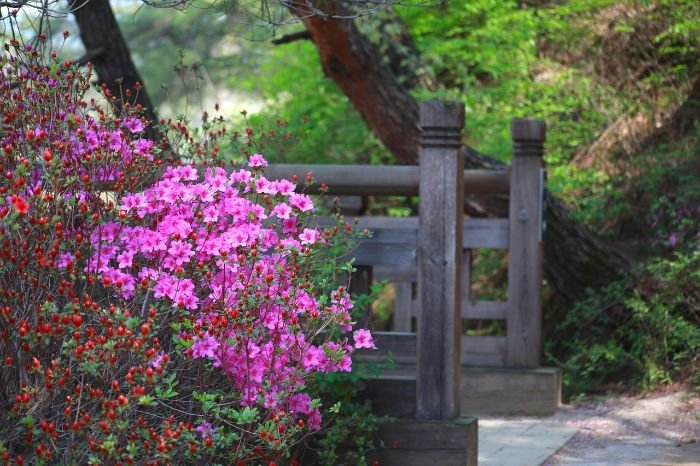
Azaleas usually perform best in filtered shade or morning sun with afternoon shade. Too much full sun shortens flower life and increases heat stress. Too much dense shade reduces bloom and weakens growth. Aim for bright light without long hot afternoon exposure.
| Site condition | Good choice or bad choice | Why it matters |
|---|---|---|
| Filtered shade under tall pines or open canopy | Good choice | Light is adequate without long hot sun exposure |
| Morning sun and afternoon shade | Good choice | Supports flowering while reducing heat stress |
| Hot west-facing wall or pavement edge | Bad choice | Reflected heat dries shallow roots and stresses foliage |
| Wet low area after rain | Bad choice | Low oxygen and root rot risk rise quickly |
| Deep dense shade | Bad choice | Flowering weakens and growth gets thin |
Also reject sites where azaleas must compete directly with shallow, aggressive tree roots. Maples, ashes, and some oaks can turn azalea planting into a moisture and nutrient competition problem instead of a shrub planting problem.
How Far Apart To Plant Azaleas
Space azaleas for mature width, not nursery size. A small plant in a 1- or 3-gallon pot can still become a broad shrub that needs room for air movement and maintenance access. If the bed is near a wall, walkway, or foundation, leave enough clearance so the mature shrub does not have to be sheared back every year just to stay in bounds.
Tight spacing weakens airflow through the canopy, makes watering and mulching harder, and turns routine pruning into permanent correction work. If the variety label is vague, err on the side of more space and follow mature size guidance from the cultivar description or nursery tag.
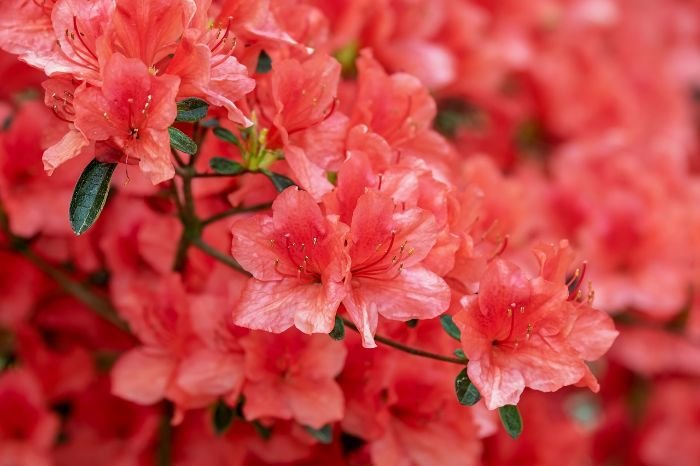
If cultivar fit is still undecided, azalea selection should happen before planting because site fit and variety fit need to be decided together.
Fix Soil And Drainage Before Planting Day
If water stands after rain, do not try to solve the problem with fertilizer or a slightly wider hole. Azaleas in wet soil lose root oxygen fast and become vulnerable to root rot. Poor drainage plus deep planting is one of the fastest ways to shorten azalea life.
Azaleas grow best in acidic soil, roughly pH 4.5 to 6.0, with high organic matter. If the site is neutral or alkaline, correct the soil before planting rather than after leaves begin yellowing. Azalea soil preparation should happen before planting if the bed still needs pH correction or organic amendment planning.
What To Mix Into Azalea Planting Soil
Azaleas do not need a deep rich hole. They need an acidic, airy root zone across the bed. Organic matter such as ground pine bark, shredded decayed leaves, or compost can be mixed through the planting soil until the blend is roughly one-third to one-half organic matter. That is enough to improve aeration, moisture balance, and root spread without creating a soft pocket inside harder native soil.
If the soil is still neutral or alkaline after testing, fix pH before planting rather than hoping mulch will solve it later. Planting should not begin until the bed already has the right acidity, drainage, and organic structure for shallow azalea roots.
Drainage Decision
| Site read | Best move | Why |
|---|---|---|
| Loamy soil that drains well | Plant in ground | The site already gives roots enough oxygen |
| Moderately heavy soil that drains slowly | Raise the root ball and broaden amendment zone | Shallow roots need more air near the top of the profile |
| Clay or poorly drained soil | Plant high or use a raised bed | Clay stays wet too long for azalea roots |
| Low spot that stays soggy | Reject the site | Root rot pressure remains high even after light amendment |
If drainage stays marginal, a raised bed is often the better option than trying to rescue the same saturated spot every year.
Step By Step – How To Plant Azaleas Properly
1. Water The Plant And Inspect The Root Ball
Water the nursery plant before planting so the root ball is evenly moist instead of dry at the center. Then remove the plant from the container and inspect the root mass. Container-grown azaleas may be root-bound. If roots are circling the outside, make three or four vertical cuts from top to bottom, about a quarter-inch deep, to encourage new roots to move outward.
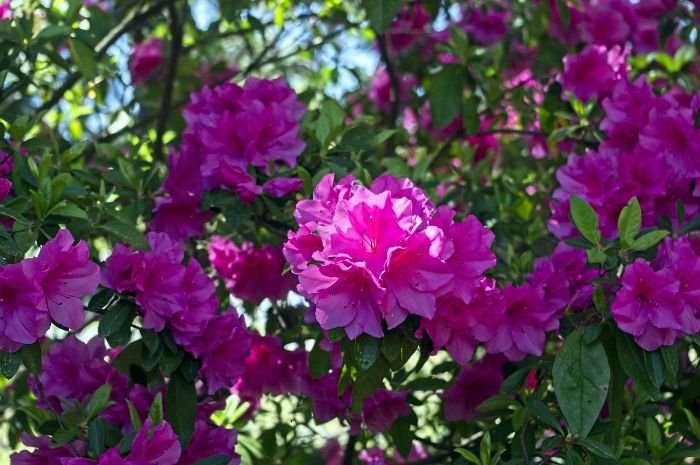
If the plant is balled and burlapped, remove wire, strings, or nylon ties. Pull natural burlap away from the upper part of the root ball and remove any synthetic burlap or plastic completely.
2. Dig A Wide Hole, Not A Deep One
Dig the hole slightly larger or about 2 to 3 times wider than the root ball, but no deeper than the ball itself. Azaleas should never be buried lower than they were in the nursery.
3. Set The Root Ball High Enough For The Soil Type
Planting depth controls whether the shallow root zone stays aerated. In sandy soils, set the top of the root ball about 1 inch above the surrounding grade. In clay or poorly drained soils, set it 2 to 4 inches above grade and slope the surrounding soil gradually up to the root ball.
That height is not cosmetic. It protects the upper root zone from oxygen starvation and gives the shrub some margin when amended soil settles.
4. Backfill With Improved Soil Around The Whole Root Zone
Backfill gently with the prepared soil and firm it by hand so the plant is stable. Organic matter such as ground pine bark, shredded decayed leaves, or compost should be thoroughly mixed into the bed soil until the mix is roughly one-third to one-half organic matter. Improve the surrounding root zone, not just the shape of the hole.
A rich pocket in poor soil behaves like a container sunk in the ground. Water collects differently, roots circle or stall at the edge, and the shrub still ends up living in the wrong site.
5. Water Thoroughly Right Away
Slowly soak the plant at planting time so water reaches both the root ball and the amended surrounding soil. Newly planted azaleas can fail quickly when the root ball stays dry even while the outer bed looks damp.
6. Mulch The Root Zone, Not The Stem
Apply about 2 to 3 inches of organic mulch, or even a little heavier in coarse materials, over the root zone. Pine straw, pine bark, shredded leaves, and similar materials all work well. Keep mulch a couple of inches away from the trunk or stem base so the crown stays dry.
Azaleas have shallow roots, so mulch is not a finishing touch. It is part of the planting system. Long-term mulching for soil health and moisture-conserving mulch practices help protect shallow azalea roots after planting.
7. Skip Fertilizer At Planting Time
Do not fertilize at planting. Fertilizer at planting can injure sensitive new roots. The first job is root establishment, not forcing top growth.
First-Year Care After Planting
Spring-planted azaleas need the most attention. Shallow-rooted azaleas may need irrigation during dry periods, especially through the first summer. In warm weather and sandy soil, the root mass may need watering more than once a week during establishment.
Water the root ball first, not just the bed surface. Mulch and surrounding soil can look damp while the original nursery root mass is already drying inside.
| Aftercare task | What to do | What to avoid |
|---|---|---|
| Watering | Check the root ball and surrounding soil, then water deeply when the upper few inches dry | Frequent shallow sprinkling |
| Mulch | Maintain a 2 to 3 inch layer over the root zone | Piling mulch against the stem |
| Sun exposure | Watch for scorch in hot western exposure | Assuming bloom sales display conditions equal landscape conditions |
| Fertilizer | Wait until the plant is established and only feed if needed | Trying to fix planting stress with quick fertilizer |
If the shrub wilts but the soil stays wet, do not automatically water more. Wet soil plus wilt can point to low oxygen and root trouble rather than drought.
Planting Mistakes That Shorten Azalea Life Fast
- Planting the root ball below grade
- Using a wet low spot because it was empty space in the landscape
- Ignoring pH and assuming compost alone will fix alkaline soil
- Planting in reflected heat beside sidewalks, driveways, or west walls
- Leaving a root-bound container plant uncorrected
- Applying fertilizer at planting time
- Mulching the stem instead of the root zone
Planting too deeply or into poorly drained soil is not a minor care issue later. It is a planting error on day one.
Final Planting Checklist
- Is the site filtered shade or morning sun with afternoon shade?
- Does the soil drain well enough for shallow roots?
- Is the pH in the acidic range azaleas need?
- Is the root ball set at or above grade for the soil type?
- Have circling roots, burlap, or ties been handled correctly?
- Will the plant be watered consistently through establishment?
If several readiness checks fail, planting now usually creates more work than waiting and correcting the site.
FAQ
When is the best time to plant azaleas?
Fall is usually best because roots establish in cooler weather before heat returns. Spring planting also works, but it needs closer watering through the first hot season.
How deep should azaleas be planted?
Never below grade. In sandy soil, set the top of the root ball about 1 inch above the surrounding soil. In clay or poorly drained soil, set it 2 to 4 inches above grade.
Can you plant azaleas while they are blooming?
Yes, especially container-grown azaleas sold in spring. The tradeoff is that bloom-season planting usually demands closer watering because the plant goes into heat stress sooner than a fall-planted shrub.
Do azaleas need acidic soil before planting?
Yes. Azaleas grow best in acidic soil, roughly pH 4.5 to 6.0. If soil is neutral or alkaline, correct it before planting rather than waiting for yellow leaves and weak growth.
Can azaleas grow in clay soil?
Yes, but only if drainage is good enough. In clay, azaleas should be planted higher than grade, and poorly drained clay often needs a raised bed or a different site.
What do you do with a root-bound azalea?
If roots are circling the outside of the root ball, make several shallow vertical cuts from top to bottom before planting. That helps roots grow out into the surrounding soil instead of continuing to circle.
Do azaleas like sun or shade?
Most azaleas do best in filtered shade or morning sun with afternoon shade. Full hot afternoon sun increases scorch and stress, while deep dense shade weakens flowering.
What happens if azaleas are planted too deep?
The upper roots lose oxygen, the crown stays too wet, and decline often starts before gardeners connect it to planting depth. Deep planting is one of the fastest ways to turn an otherwise healthy azalea into a weak, chlorotic, root-stressed shrub.