


Houseplant market trends in 2026 are being shaped by a larger floriculture base, stronger foliage plant sales, and a consumer shift toward plants that feel manageable rather than disposable. The latest USDA NASS horticulture census shows foliage plants for indoor or patio use reached $931.6 million in 2024 sales, up 34.7 percent from 2019.
The market is not only about rare leaves and social media plants. Potted flowering plants for indoor or patio use reached $1.29 billion in 2024 sales, and foliage plants remained heavily wholesale-driven, with 95.0 percent of foliage value moving through wholesale sales. That mix explains the 2026 market shape: familiar plants, stronger care tools, retail-ready formats, and a buyer who wants the plant to survive after the first month.
Key Takeaways
- Use $931.6M for indoor/patio foliage sales.
- Track foliage sales growth at +34.7%.
- Count $1.29B in potted flowering indoor sales.
- Watch wholesale channels at 95.0% of foliage value.
- Separate care-confidence signals from official sales data.
Table of Contents
2026 Houseplant Market Snapshot
Source: Garden Insider calculations from the USDA NASS 2024 Census of Horticultural Specialties, released December 16, 2025. Trend signals from plant retailers and garden trend coverage are used separately from official sales statistics.
Houseplant Market Size – Foliage Sales Keep Outrunning Floriculture
The official houseplant-adjacent market starts inside USDA NASS horticulture data. In 2024, all horticultural specialty crop sales reached $18.31 billion, up 32.9 percent from 2019. Floriculture sales reached $6.80 billion, up 22.6 percent. Foliage plants for indoor or patio use reached $931.6 million, up 34.7 percent.
That growth rate matters because foliage plants grew faster than the broader floriculture category. Potted flowering plants for indoor or patio use remained larger at $1.29 billion. The foliage side is where many everyday houseplant categories sit: pothos, philodendron, dracaena, palms, aglaonema, peace lilies, ferns, bromeliads, and cacti or succulents.
| Market category | 2024 sales | 2019 sales | Change | What it means |
|---|---|---|---|---|
| All horticultural specialty crops | $18.31 billion | $13.78 billion | +32.9% | Broad production-market baseline |
| Floriculture | $6.80 billion | $5.54 billion | +22.6% | Plant, flower, and bedding/garden plant base |
| Potted flowering plants for indoor or patio use | $1.29 billion | $1.20 billion | +7.2% | Blooming indoor/patio plant segment |
| Foliage plants for indoor or patio use | $931.6 million | $691.5 million | +34.7% | Core houseplant foliage segment |
| Indoor/patio flowering plus foliage | $2.22 billion | $1.89 billion | +17.3% | Combined indoor/patio plant production layer |
The houseplants care hub sits on top of that market reality. The sales data shows that indoor/patio plants are not a tiny niche inside horticulture; they are a multibillion-dollar production category with a growing foliage side.
Foliage Plant Sales – Wholesale Channels Still Control The Shelf
Foliage plants are marketed to consumers through stores, garden centers, online retailers, interiorscapers, and subscription-style plant sellers. NASS production sales still show a wholesale-heavy structure. Of the $931.6 million in 2024 foliage plant sales, $885.2 million came through wholesale sales and $46.5 million through retail sales reported by producers.
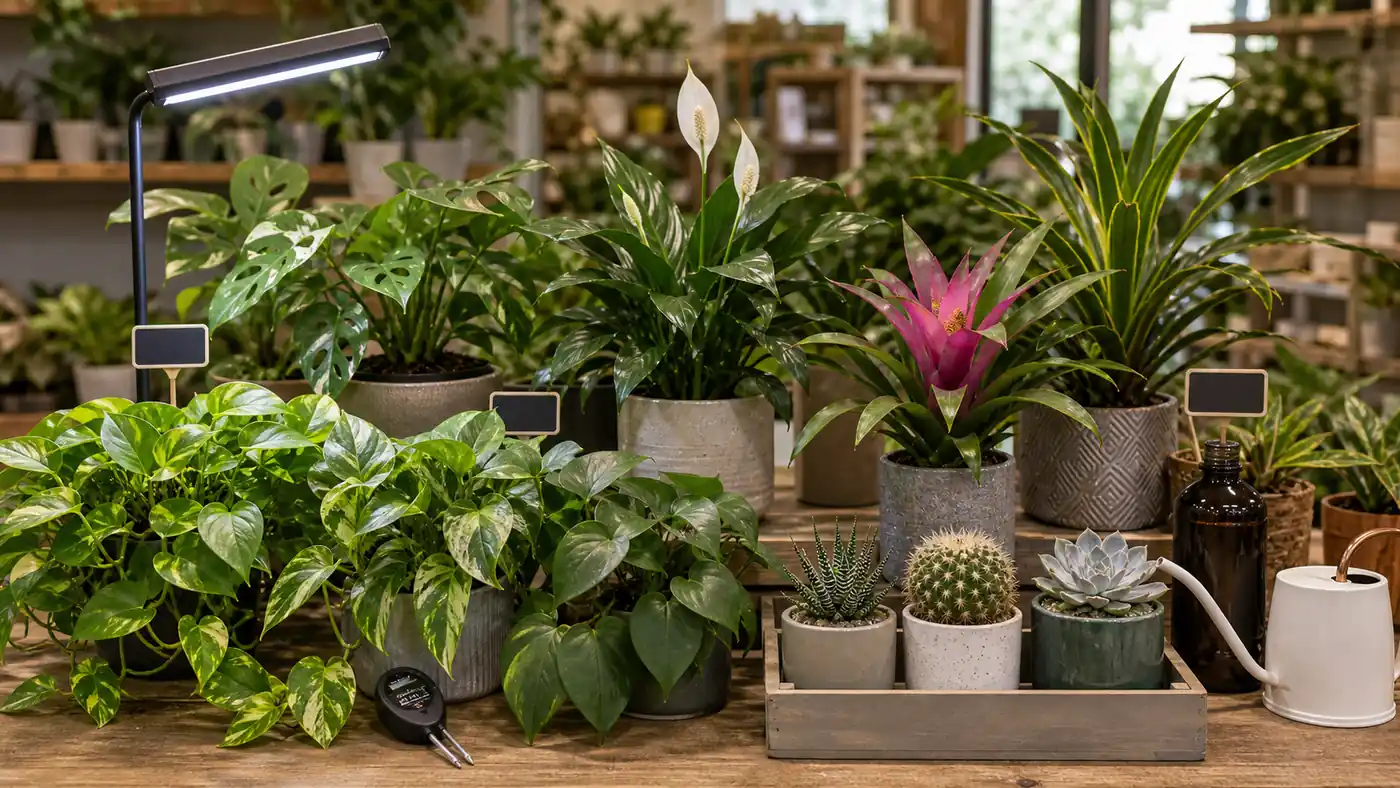
That 95.0 percent wholesale share explains why retail trends can move fast as production data stays concentrated. A shopper sees a tidy plant bench with pothos, philodendron, snake plant, bromeliads, and succulents. Behind it sits a production chain built around large wholesale volumes, standardized pot sizes, and plants that can tolerate packing, shipping, low retail light, and variable watering.
| Foliage plant sales measure | 2024 value | Share of foliage value | Reading note |
|---|---|---|---|
| Total foliage plants for indoor or patio use | $931.6 million | 100.0% | All producer-reported sales |
| Wholesale sales | $885.2 million | 95.0% | Main production-market channel |
| Retail sales | $46.5 million | 5.0% | Direct producer retail value |
| Foliage plants sold as pots | $844.4 million | 90.6% | Main finished-houseplant format |
| Foliage plants sold as hanging baskets | $87.2 million | 9.4% | Trailing and basket format |
This is why durability becomes a market trait. Pothos light requirements, dracaena placement, and philodendron soil structure matter after the sale because a plant that survives poor home conditions protects the buyer’s confidence.
Houseplant Category Mix – Foliage Is More Than One Plant Type
NASS 2024 foliage data shows a broad category, not a single trend plant. The table listed ferns at $90.3 million, cacti and succulents at $67.6 million, palms at $60.3 million, dracaena at $34.1 million, bromeliads at $29.3 million, spathiphyllum at $28.6 million, aglaonema at $27.9 million, pothos at $27.5 million, and philodendron at $18.6 million.
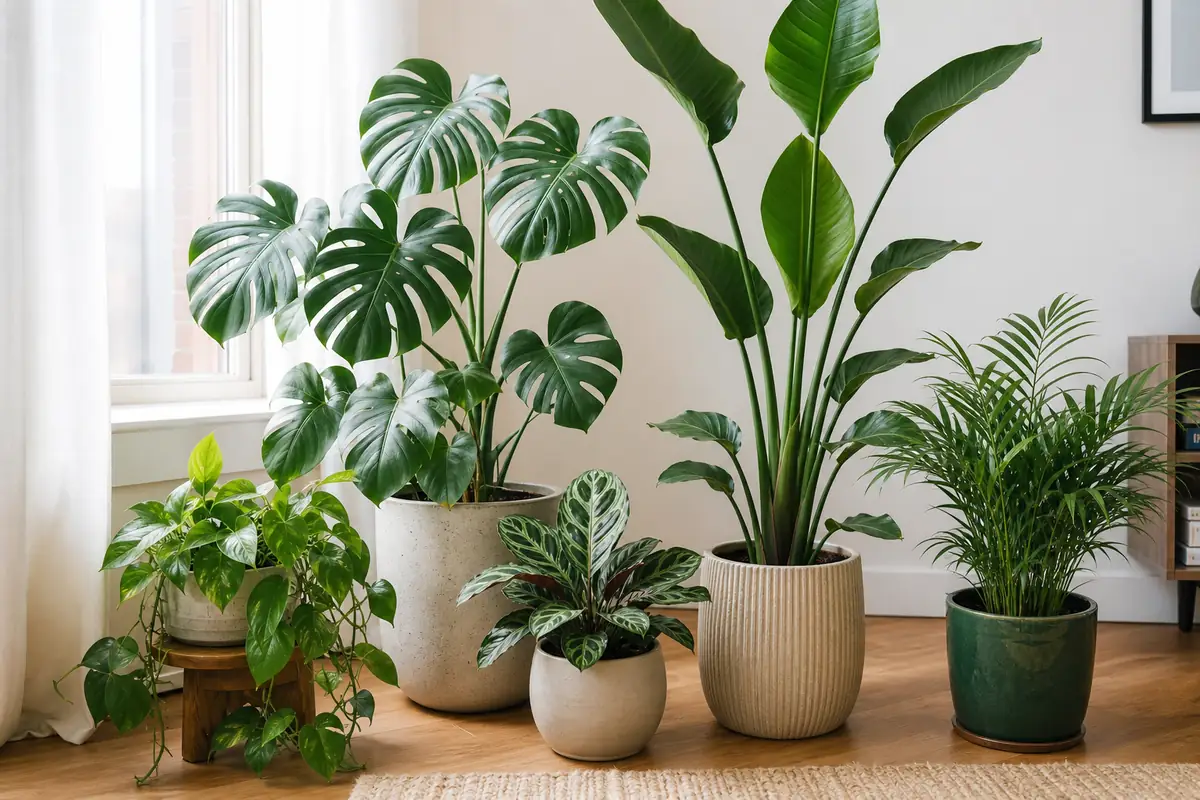
One branded or social-media plant cannot explain the whole market. Foliage sales are built from many plants that solve different retail problems: upright architecture, trailing stems, low-light tolerance, color, texture, compact gift sizing, and shipping resilience. A glossy aglaonema, a thick-leaved dracaena, and a hanging pothos basket do different jobs in the home.
| Foliage category | 2024 sales value | Share of foliage value | Market reading |
|---|---|---|---|
| Other foliage plants | $462.5 million | 49.6% | Mixed category; broad producer-reported foliage value |
| Ferns, tropical potted | $90.3 million | 9.7% | High-value texture and basket-adjacent foliage |
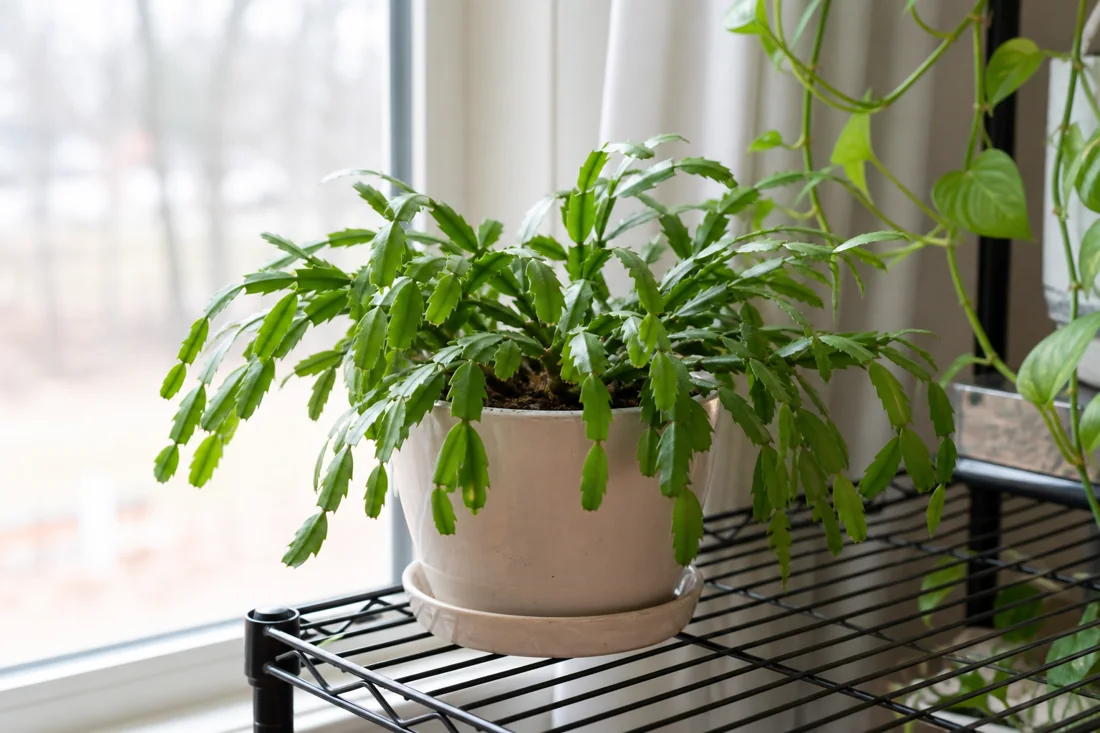
| Cacti and succulents | $67.6 million | 7.3% | Low-water, sculptural, beginner-friendly segment |
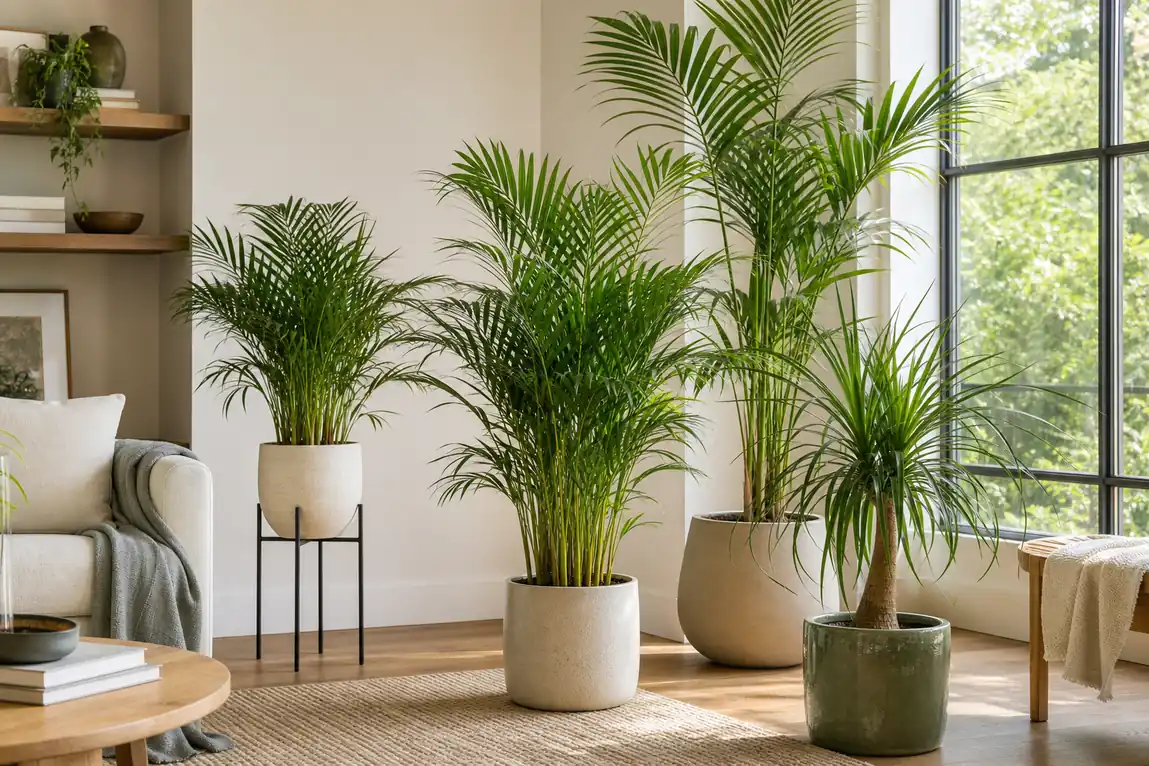
| Palms | $60.3 million | 6.5% | Large-format indoor/patio foliage |
| Dracaena | $34.1 million | 3.7% | Upright, durable indoor foliage |
| Bromeliad | $29.3 million | 3.1% | Color and structure in a foliage-adjacent format |
| Spathiphyllum | $28.6 million | 3.1% | Peace lily category with flower-and-foliage appeal |
| Aglaonema | $27.9 million | 3.0% | Patterned foliage and low-light positioning |
| Pothos | $27.5 million | 2.9% | Trailing beginner plant with strong repeat demand |
| Philodendron | $18.6 million | 2.0% | Broad genus with collectible and everyday varieties |
Plant-level care reflects that split. Dracaena variety choice, bromeliad types, and philodendron varieties all sit inside the same production-market category, and they behave differently in the home.
Care Confidence – The 2026 Buyer Wants Plants That Last
The Sill’s 2025 Plant Trend Report and 2026 predictions describe a buyer who is moving from survival anxiety toward care confidence. Its trend coverage says customers are choosing plants with purpose, including statement greens and rare varieties, and that accessories such as tailored fertilizers and grow lights are trending.
That signal fits the NASS data. A market with nearly $932 million in foliage plant production cannot rely only on novelty. The next purchase depends on whether the last plant kept its color, held its leaves, and pushed new growth. A plant that limps for months in stale potting mix teaches the buyer to pause; a plant that responds to better light and watering teaches the buyer to buy again.
| 2026 care-confidence signal | Evidence type | Market meaning | Plant examples |
|---|---|---|---|
| Tailored fertilizer interest | Retail trend signal | Buyers are treating plant care as maintenance, not luck | Pothos, philodendron, dracaena |
| Grow light interest | Retail trend signal | Indoor plant placement is becoming more technical | Low-light rooms, winter care setups |
| Repotting interest | Search and retail trend signal | Owners are trying to extend plant life after purchase | Rootbound foliage plants |
| Rare but manageable plants | Industry trend signal | Collectibility is shifting toward plants people can keep alive | Unusual cacti, euphorbias, patterned foliage |
| Low-maintenance sculptural plants | Industry trend signal | Design and care simplicity are merging | Cacti, succulents, sansevieria, agave |
For Garden Insider readers, this is the place where market trend meets practical care. Philodendron soil mix and drainage decisions matter because the market is no longer only selling leaves. It is selling the confidence that those leaves will still look alive next season.
Retail Channels – Houseplants Sit Inside A Wider Horticulture Network
NASS marketing-channel data is reported for horticultural specialty crops broadly, not houseplants alone. It still shows the retail network that indoor plants move through. In 2024, U.S. horticultural specialty crops sold $6.33 billion through wholesale channels, $2.19 billion through home improvement, discount, and chain stores, and $2.17 billion through retail florists, garden centers, or nurseries.
Mail order and internet channels reached $507.4 million across horticultural specialty crops. That channel matters for houseplants because online retail changes the plant bench. A plant that ships well, photographs well, and arrives with a clear care plan has a better shot at turning a first purchase into a second one.
| Marketing channel | 2024 sales value | Source scope | Houseplant market reading |
|---|---|---|---|
| Wholesale | $6.33 billion | All horticultural specialty crops | Production supply chain remains central |
| Home improvement, discount, and chain stores | $2.19 billion | All horticultural specialty crops | Mass retail is a major plant-distribution path |
| Retail florists, garden centers, or nurseries | $2.17 billion | All horticultural specialty crops | Specialty retail remains nearly as large as chain retail |
| Landscape contractors | $2.09 billion | All horticultural specialty crops | Less houseplant-specific, but important to total market |
| On-site direct sales | $1.81 billion | All horticultural specialty crops | Producer direct sales still matter |
| Supermarkets | $1.44 billion | All horticultural specialty crops | Impulse plant and gift channels remain visible |
| Mail order or internet | $507.4 million | All horticultural specialty crops | Online plant commerce is measurable, though not houseplant-only |
The channel data should not be read as houseplant-only revenue. It is useful because houseplants rely on the same production and retail system: wholesale growers, chain stores, garden centers, online sellers, and direct-to-consumer plant brands.
Low-Maintenance And Sculptural Plants – Succulents Still Have A Clear Role
Cacti and succulents accounted for $67.6 million in 2024 foliage plant value in the NASS indoor/patio foliage table. A separate cacti and succulents state table listed 40.7 million plants sold and $65.0 million in sales value. The table scopes differ, and both point to the same market role: low-water sculptural plants are a measurable piece of the houseplant mix.
The Sill’s trend coverage said unusual cacti and euphorbias were having a major moment, with category interest more than doubling year over year. That is an industry signal, not national production data. It explains why the succulent story has changed from tiny novelty pots to sculptural, design-forward plants that still feel manageable for newer plant owners.
| Succulent market signal | Value or claim | Source type | How to read it |
|---|---|---|---|
| Cacti and succulents in foliage table | $67.6 million | NASS 2024 sales data | Indoor/patio foliage category value |
| Cacti and succulents state table | 40.7 million plants sold | NASS 2024 sales data | Separate table for state-level cacti and succulent sales |
| Cacti and succulents state table value | $65.0 million | NASS 2024 sales data | Closely aligned with foliage-table value |
| Unusual cacti and euphorbias | Interest more than doubled year over year | The Sill trend signal | Retail interest shifting toward sculptural and collectible plants |
Care promises have to stay honest. Succulents can tolerate dry spells, and they still fail in dense, wet soil and dim rooms. Low-maintenance means the plant gives a wider margin when light, potting mix, and watering are matched correctly.
Source And Methodology Notes – Official Data Versus Trend Signals
Official market figures come from the USDA NASS 2024 Census of Horticultural Specialties, released December 16, 2025. The most relevant official categories are foliage plants for indoor or patio use, potted flowering plants for indoor or patio use, and cacti and succulents.
Trend sources are used only for directional signals. The Sill provides retailer-observed plant preference and care-accessory signals. Homes & Gardens’ precision gardening coverage describes data-informed plant care and site-specific decision-making. Those sources help explain buyer behavior; they do not replace NASS sales data.
| Source | Latest period used | Evidence type | How it is used |
|---|---|---|---|
| USDA NASS Horticultural Specialties | 2024, released Dec. 16, 2025 | Official census data | Houseplant-adjacent market size, sales growth, wholesale/retail split |
| NASS foliage plants table | 2024 | Official sales data | Foliage plant value, pots, hanging baskets, category mix |
| NASS potted flowering plants table | 2024 | Official sales data | Indoor/patio flowering plant value and units sold |
| NASS marketing channels table | 2024 | Official sales data, all horticulture | Retail and wholesale channel context, not houseplant-only revenue |
| The Sill Plant Trend Report | 2025 report with 2026 predictions | Retail trend signal | Care confidence, rare manageable plants, grow lights, fertilizers, cacti/euphorbia interest |
| Homes & Gardens precision gardening trend | 2026 trend coverage | Industry trend coverage | Data-informed care, site-specific decisions, moisture and plant-selection tools |
Where To Start
Market-size citations should start with NASS foliage plant sales. Use $931.6 million in 2024 sales and the 34.7 percent increase from 2019.
Retail-channel points should start with the wholesale split. Foliage plants were 95.0 percent wholesale by producer-reported sales value in 2024.
Product-mix points should separate foliage from flowering indoor plants. Potted flowering indoor or patio plants were larger at $1.29 billion, and foliage plants grew faster over the 2019-2024 period.
Behavior points for 2026 should cite trend signals as trend signals. Care confidence, grow lights, tailored fertilizers, rare manageable plants, and sculptural succulents are retail-observed signals, not NASS market totals.
Conclusion
The 2026 houseplant market is strongest when official sales data and consumer behavior are read together. NASS shows a $931.6 million foliage plant category that grew 34.7 percent from 2019 to 2024. Trend coverage shows buyers becoming more interested in care tools, manageable novelty, sculptural plants, and plants with a clear purpose in the home.
The useful signal is the market’s reward for plants that look good, ship well, fit retail formats, and survive ordinary rooms. A healthy pothos vine, a firm dracaena cane, or a succulent that stays compact on a bright sill tells the market story better than a shelf full of impulse buys that fail by next month.
Frequently Asked Questions
How big is the U.S. houseplant market?
The closest official production category is foliage plants for indoor or patio use, which reached $931.6 million in 2024 sales in the USDA NASS horticulture census. Potted flowering plants for indoor or patio use added $1.29 billion.
Are houseplant sales still growing?
Yes, in the latest official foliage category. Foliage plants for indoor or patio use grew from $691.5 million in 2019 to $931.6 million in 2024, a 34.7 percent increase.
Which houseplant categories have the strongest sales data?
The strongest NASS foliage categories include tropical potted ferns at $90.3 million, cacti and succulents at $67.6 million, palms at $60.3 million, dracaena at $34.1 million, and pothos at $27.5 million in 2024 sales value.
Why are care tools part of the 2026 houseplant trend?
Care tools matter because buyers are trying to keep plants alive longer. The Sill’s 2026 prediction coverage points to rising interest in tailored fertilizers, grow lights, and repotting behavior as plant owners become more confident.
Are rare houseplants still trending?
Yes. The signal is shifting toward rare plants that feel manageable. The Sill described rare varieties and unusual cacti or euphorbias as gaining interest, which fits a market where buyers want novelty without constant failure.