


Last Updated June 06, 2026
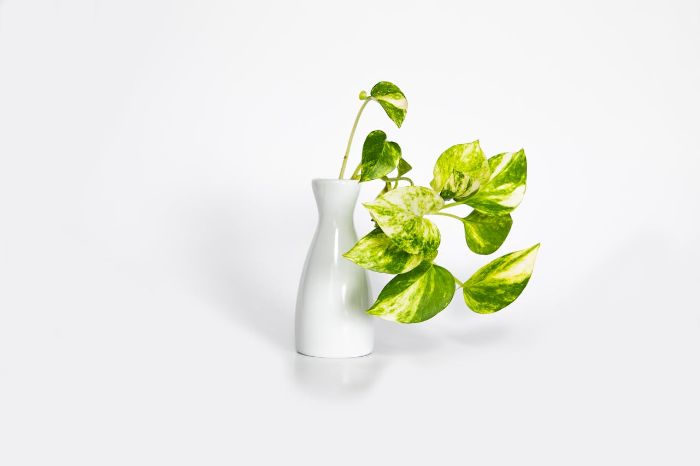
A pothos can stay alive in a dim corner for a long time and still look tired. Vines stretch, new leaves shrink, variegation fades, and the pot stays wet longer after watering. The room is giving the plant survival light instead of the brighter light needed for active growth.
Pothos grows fastest in bright, indirect light. In a real home, that usually means an east-facing window, a north window with the plant close to the glass, or a south or west window softened by distance, blinds, or a sheer curtain. Low light can keep pothos alive; fuller vines, larger leaves, and stronger variegation need more usable daylight.
Good pothos placement is less about memorizing a phrase and more about reading the plant, the window, and the season together. A plant that was happy in April can scorch in July or stall in December. Once the light position is right, watering, pruning, and growth become much easier to manage.
Key Takeaways
- Pothos grows best in bright, indirect light, not deep shade and not harsh afternoon sun.
- Low light keeps pothos alive; growth slows, leaves shrink, vines stretch, and variegation can fade.
- East windows are often easiest; south and west windows usually need distance or filtering.
- White-heavy pothos varieties need brighter indirect light than green or lightly variegated types.
- Grow lights can fix dark rooms when they run long enough and sit close enough to the foliage.
Table of Contents
Choose The Right Pothos Light Position For Your Room
Start with the room before moving the plant. A pothos in a bright kitchen window has a different growth ceiling than one on a bookshelf across from a small north window. One plant can adapt to both positions and give two very different results.
Pothos prefers bright, indirect light and can survive for long periods in low light. That difference matters. Survival light keeps leaves functioning. Growth light gives the plant enough energy to produce fuller vines, tighter leaf spacing, better color, and faster recovery after pruning.
| Room Situation | What It Means For Pothos | Best Move | Expected Growth |
|---|---|---|---|
| Bright room with no sunbeams on leaves | Strong indirect light | Place the pot within a few feet of the window | Fastest normal indoor growth |
| Morning sun through an east window | Gentle direct light followed by bright indirect light | Keep pothos close to the window and monitor summer heat | Full vines and good color |
| South or west window with direct afternoon sun | High scorch risk near the glass | Move the plant back, use a sheer curtain, or place it to the side | Strong growth if leaves avoid hot sunbeams |
| North window | Low to medium light indoors | Keep pothos close to the glass and rotate often | Healthy, slower growth |
| Interior shelf or hallway | Often below growth light | Add a grow light or move the plant nearer to a window | Survival growth unless supplemented |
| Windowless office | Artificial room light only | Use an LED grow light on a timer | Depends on light strength and duration |
A simple rule helps indoors: if the plant cannot see a bright patch of sky from its leaves, the light is probably weak. A pothos across the room from a window may be visible to you and too dim for active plant growth.
Define Bright Indirect Light In Real Homes
Bright indirect light is strong daylight that reaches the leaves without a hot, sharply defined sunbeam sitting on them. The room feels bright during the day. You can read comfortably near the plant. A hand held between the window and the leaves casts a soft or blurred shadow, not a dark-edged one.
Light drops quickly as distance from the window increases. Moving a pothos from one foot to six feet from the glass can change the plant’s growth more than changing fertilizer. Window size, screen mesh, overhangs, nearby buildings, trees, and the season all change the final light level.
A light meter can help, and a phone app can still reveal relative differences between spots even when the absolute reading is imperfect. Measure at leaf height during the brightest part of the day and compare several positions before moving the plant.
Indoor light readings work best as ranges because window size, glass, season, distance, shade, curtains, screens, and reflected surfaces can change the number at leaf height.
| Light Level | Rough Indoor Reading | Pothos Response | Care Adjustment |
|---|---|---|---|
| Dim survival light | Under 100 foot-candles | Very slow growth, small leaves, sparse vines | Use a grow light or move closer to a window |
| Low maintenance light | 100 to 300 foot-candles | Plant stays alive, growth remains slow | Water less often and prune leggy vines |
| Medium indoor light | 300 to 500 foot-candles | Usable growth for green and golden pothos | Rotate the pot and watch variegated types |
| Bright indirect growth light | 500 to 1,000 foot-candles | Fuller vines, better leaf size, stronger color | Water as dry-down speeds up |
| Direct hot sun | Often above 1,000 foot-candles through glass | Bleached patches, scorch, crispy areas | Filter the light or move the plant back |
If you already measure sunlight for garden assessment, use the same habit indoors: measure where the leaves actually sit, not where the window looks bright from across the room.
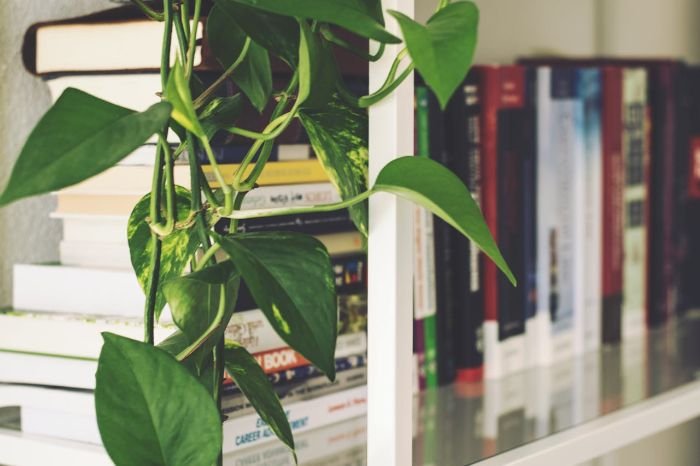
Match Window Direction To Pothos Growth
Window direction changes the type of light a pothos receives. Morning light is usually gentle. Afternoon light through glass can be hot enough to scorch. Winter light can be welcome from a window that would be harsh in July.
| Window Direction | Best Pothos Placement | Watch For | Best Use |
|---|---|---|---|
| East-facing window | On or near the sill if heat is mild | Summer morning heat in very warm climates | Fast growth with low scorch risk |
| North-facing window | Close to the glass | Slow growth and wet soil in winter | Golden pothos, jade pothos, low-maintenance displays |
| South-facing window | A few feet back or filtered by sheer fabric | Midday sunbeams on leaves | Variegated pothos if direct sun is softened |
| West-facing window | Side of the window, farther back, or behind a curtain | Hot afternoon sun and fast dry-down | Bright growth with careful filtering |
| Skylight or sunroom | Bright side light or filtered overhead light | Heat spikes and sudden scorch | Climbing pothos and fuller hanging baskets |
| Room with blinds | Angle slats so light spreads across the room | Striped burn marks from narrow sun lines | Softening strong exposure without moving the pot |
Do not move a pothos from a dim shelf straight into the brightest window. Give it a week or two in medium light first, then move it closer if the leaves stay firm and green. Sudden light jumps can bleach older leaves before the plant has time to adapt.
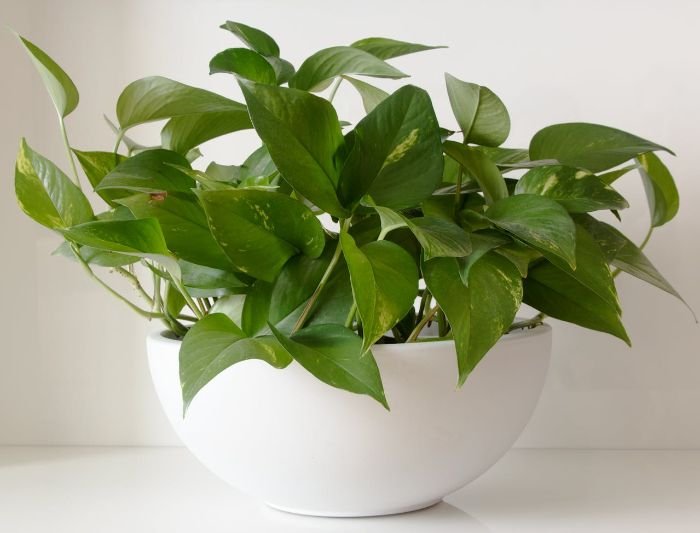
Use Light To Control Growth Speed, Leaf Size, And Variegation
Light controls the plant’s energy budget. A pothos in brighter indirect light can make more sugars, push more nodes, and support larger leaves. A plant in low light spends more energy maintaining existing leaves and less energy making new growth.
Variegation raises the stakes. White and cream leaf sections contain less chlorophyll than green tissue, so highly variegated pothos needs brighter indirect light to hold its pattern. A green pothos can look acceptable in lower light for longer.
| Pothos Type | Light Need | Low-Light Risk | Best Position |
|---|---|---|---|
| Jade pothos | Medium to bright indirect light | Slow growth more than color loss | North window, east window, or bright shelf near a window |
| Golden pothos | Medium to bright indirect light | Less yellow marbling and longer spaces between leaves | East window or close to a north window |
| Neon pothos | Bright indirect light for best color | Chartreuse leaves may darken in dim rooms | East window or filtered south exposure |
| Marble Queen pothos | Bright indirect light | Slower growth and greener new leaves | Bright window with no harsh afternoon sun |
| N’Joy, Pearls and Jade, Manjula, Snow Queen | Bright indirect light | Weak growth, small leaves, fading contrast | Filtered south or west light, or good grow light support |
| Cebu Blue pothos | Bright indirect light, especially when climbing | Small leaves and weak mature growth | Bright wall, shelf, or pole near a window |
If you are choosing a plant for a low-light room, a lower-variegation type is safer. If you already have a white-heavy variety, move it toward brighter indirect light before judging its growth. A deeper pothos variety choice should include the room’s light level, not only leaf pattern.
Diagnose Pothos Light Problems Before Moving The Plant
Pothos light problems often look like watering problems at first. Low light keeps the mix wet, then wet roots cause yellow leaves. Too much sun dries the pot fast, then the leaves wilt or crisp. The fix depends on reading the whole pattern.
| Symptom | Likely Light Cause | What To Check | Best Fix |
|---|---|---|---|
| Long bare spaces between leaves | Light is too weak for compact growth | Distance from window and direction of vine stretch | Move closer to bright indirect light and prune back leggy vines |
| New leaves are smaller than old leaves | Low energy or plant trailing without support | Light level, root crowding, and pruning history | Increase light and consider a trellis or pole |
| Variegation fades | Plant is compensating for low light | New leaf color compared with older leaves | Move to brighter indirect light; prune fully green reverted vines if needed |
| Bleached patches or crispy tan areas | Direct sun or grow light too close | Sunbeams touching leaves during midday or afternoon | Filter the window, move the plant back, or raise the light |
| Yellow leaves with wet soil | Low light slows water use | How long the pot stays damp after watering | Move brighter and let the mix dry more before watering |
| Plant leans strongly one way | One-sided light source | Window direction and shelf position | Rotate the pot every one or two weeks |
| No new growth for months | Low light, cold room, or winter rest | Day length, temperature, and leaf-level brightness | Move brighter, add a grow light, or wait for spring conditions |
Check watering only after checking light. A pothos in low light may need much less water than the same plant in a bright window. The broader link between sunlight exposure and watering needs applies indoors too: brighter foliage uses water faster, and dim rooms hold moisture longer.
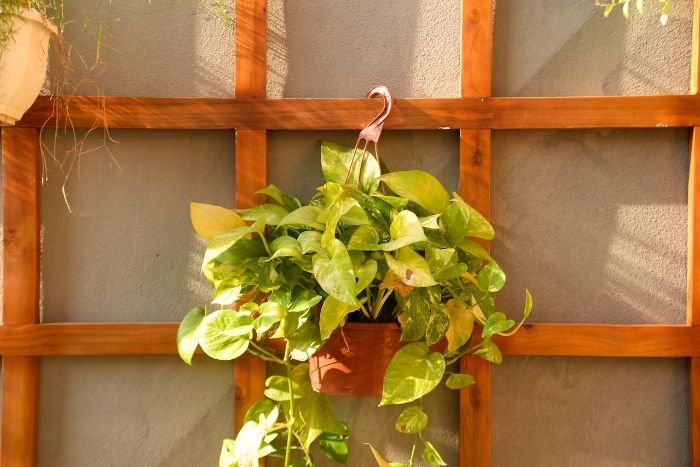
Add A Grow Light When The Room Cannot Support Growth
A grow light is useful when the plant has no bright window, sits too far from daylight, or needs more light through winter. Pothos does not need an expensive fixture for normal houseplant growth. It needs enough light at leaf level for enough hours.
| Grow-Light Setup | Good Use | Distance Cue | Timing Cue |
|---|---|---|---|
| Clip-on full-spectrum LED | Single pot on a desk, shelf, or plant stand | Usually 8 to 18 inches from leaves, depending on strength | 10 to 12 hours daily |
| LED strip under shelf | Trailing pothos on shelves | Keep foliage close enough that the shelf surface looks bright | 12 to 14 hours daily |
| Tube-style LED | Several plants in a row | Set above the canopy and rotate pots | 10 to 14 hours daily |
| Standard room lamp | Visual light for people | Often too weak unless close and bright | Useful only if plant response improves |
Leaves tell you if the light is placed correctly. New growth that tightens and sizes up means the setup is working. Bleached, curled, or hot leaves call for more distance or lower intensity. Stretching vines point to weak light, excess distance, or too few hours.
Use a timer. Consistent light beats occasional long sessions. A pothos on a dim wall under a grow light for twelve hours usually grows better than one moved to a sunny windowsill for a few unpredictable afternoons.
Adjust Pothos Placement Through The Seasons
Indoor light changes through the year. Summer sun is stronger and higher. Winter days are shorter, and nearby trees may lose leaves or buildings may cast longer shadows. A pothos position should be checked at least a few times per year.
| Season | Light Change | Pothos Move | Care Note |
|---|---|---|---|
| Spring | Light increases and growth resumes | Move slightly brighter if winter growth was sparse | Begin pruning and feeding only after active growth appears |
| Summer | South and west windows can become harsh | Filter direct sun or move the pot back from hot glass | Check dry-down more often in warm rooms |
| Fall | Day length falls and sun angle changes | Move closer to a bright window if growth slows | Reduce watering as the pot dries more slowly |
| Winter | Short days and cool rooms reduce growth | Use the brightest safe window or a grow light | Avoid soaking a cold, dim pot |
If a pothos spends summer outdoors, keep it in full shade, filtered porch light, or gentle morning sun only after gradual acclimation. Indoor leaves can scorch quickly outdoors. Bring the plant inside before nights become cool.
Keep Light, Water, And Pruning Working Together
Light is the main growth lever, and it works with the rest of care. A brighter pothos uses water faster, grows more leaves, and responds well to pruning. A dim pothos dries slowly, grows sparsely, and should not be pushed with heavy fertilizer.
| Light Condition | Watering Pattern | Pruning Response | Fertilizer Caution |
|---|---|---|---|
| Bright indirect light | Soil dries at a useful pace | Pruned vines usually push new growth well | Light feeding during active growth can help |
| Medium light | Moderate dry-down | Prune lightly and rotate for balanced growth | Feed gently, not heavily |
| Low light | Mix may stay wet for many days | Prune leggy vines; expect slower regrowth | Do not fertilize as a substitute for light |
| Direct sun stress | Pot may dry fast as leaves scorch | Remove damaged leaves after moving plant | Wait for stable new growth before feeding |
Drainage matters more in dim rooms because wet soil lingers. If a decorative cachepot traps water, low light can turn a forgiving pothos into a root-rot problem. Improving pot drainage is part of light management when the plant sits away from a bright window.
Dust also reduces usable light. Wipe leaves with a damp cloth every few weeks, especially near kitchens, vents, and busy rooms. Clean leaves read the room better and make the plant’s response easier to judge.
Conclusion
Pothos light requirements become clearer when survival and active growth are treated as separate outcomes. The plant can survive in dim rooms, but its best indoor growth comes from bright, indirect light, even moisture timing, and a position that changes with the season.
Place green and golden pothos in medium to bright indirect light. Give white-heavy varieties brighter filtered light or a grow light. Protect all pothos from hot afternoon sun, slow watering in dim rooms, and use the plant’s new leaves as the final report card. Larger leaves, tighter spacing, and stronger color mean the light is working.
FAQ
What light is best for pothos growth?
Bright, indirect light is best for pothos growth. The room should feel bright during the day, with no harsh sunbeams sitting on the leaves. East windows and filtered south or west windows usually work well.
Can pothos grow in low light?
Pothos can survive in low light; growth slows. Leaves may become smaller, vines may stretch, and variegated varieties may lose contrast. Low light also slows soil dry-down, so watering should be reduced.
Can pothos take direct sunlight indoors?
Pothos can handle a little gentle morning sun in many homes. Hot midday or afternoon sun through south or west glass can bleach or scorch leaves. Filter strong windows with a sheer curtain or move the plant back.
How far should pothos be from a window?
Near an east or north window, pothos can usually sit close to the glass. Near a south or west window, place it a few feet back or filter the sun. The right distance depends on heat, season, window size, and whether direct sun touches the leaves.
Do variegated pothos need more light?
Yes. Marble Queen, Snow Queen, N’Joy, Pearls and Jade, and Manjula pothos need brighter indirect light than green types to maintain strong variegation. Low light often produces greener, smaller, slower leaves.
Can pothos grow under LED lights?
Yes. Pothos can grow under full-spectrum LED grow lights when the light sits close enough to the foliage and runs long enough, often 10 to 14 hours per day. Watch new growth to judge whether the setup is strong enough.