

Last Updated June 03, 2026
Chrysanthemum varieties look simple at the garden center because most arrive as tight domes of color in September. The difference shows up later. One plant settles into the border and returns from underground shoots. Another blooms hard in a porch pot, then disappears after winter. A third has a spectacular spider or quill flower that fits a cutting bed better than a low-maintenance fall border.
Those differences matter before the plant goes in the cart. Flower form, hardiness, bloom timing, plant habit, and intended use decide whether a mum works as a perennial, a seasonal container, a cut flower, or a showpiece. The label color tells only part of the story.
For garden planting, the most useful chrysanthemum types are hardy garden mums with compact habits, earlier bloom timing, and small to medium flowers. Exhibition and florist types can be beautiful; many need greenhouse timing, disbudding, staking, or winter protection to perform well outside.
Key Takeaways:
- Choose hardy garden mums for repeat fall borders
- Use bloom form to predict maintenance and garden fit
- Pick early-blooming types in short fall climates
- Avoid treating florist mums like reliable perennials
- Match plant habit before falling for flower color
Table of Contents
Chrysanthemum Varieties – The Garden Mum Difference
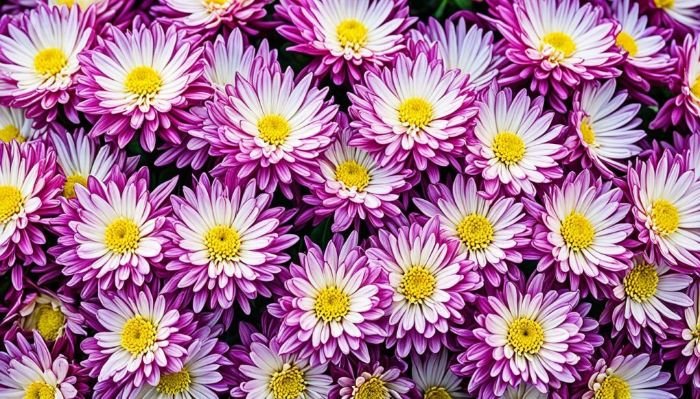
The best garden mum is usually the least dramatic plant on the sales table. It has a compact mound, many buds, smaller flowers, and a crown that can produce new shoots near the soil line. That underground behavior matters more than one oversized bloom.
Hardy garden mums persist through winter by forming stolons, the short underground shoots that send up new growth the next season. Nonhardy florist mums often produce few or no stolons, bloom too late, or fail when soil freezes and thaws around the crown. Survival habit matters more than flower color.
Run a finger along the foliage of a healthy mum and the leaves give off a sharp, green, slightly resinous scent. The stems should feel firm, not hollow or rubbery. A garden-ready plant has buds at several stages, from tight peas to showing color. A plant already covered in fully open flowers has spent a large part of its display before it reaches the bed.
Chrysanthemums also respond to day length. As nights lengthen in late summer, flower initiation begins through photoperiod signaling in the plant. Streetlights, porch lights, and security lights can interrupt that dark period enough to delay or weaken bloom. A border mum planted under a bright exterior light may stay leafy; the same cultivar can bloom well ten feet away.
Choose by garden behavior before choosing by bloom shape. The chrysanthemum selection process works better after the outdoor-survival question is settled. Climate, size, and color can narrow the choice after the plant is identified as a garden mum, seasonal pot, cutting type, or show form.
Chrysanthemum Types By Bloom Form
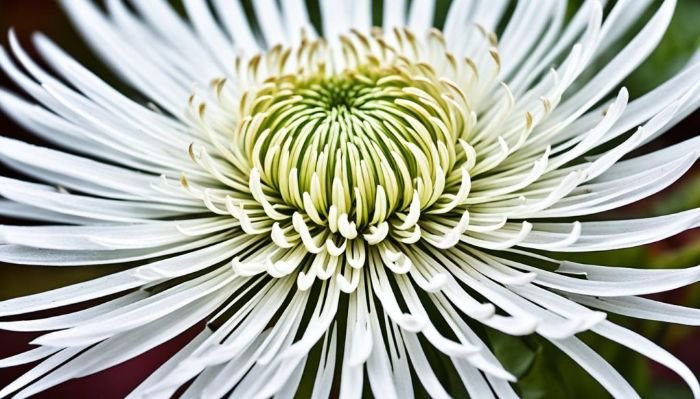
Chrysanthemum flower types are built from florets. The petal-like parts most gardeners notice are ray florets, and the central eye on daisy-like forms is made from disk florets. Once you see those pieces, the forms make sense: some rays lie flat, some curve inward, some reflex backward, some roll into tubes, and some stretch into long hooked strands.
The National Chrysanthemum Society bloom finder uses thirteen classes, including incurve, reflex, decorative, pompon, single, anemone, spoon, quill, spider, brush, and exotic forms. Home gardeners do not need every show-bench detail. The classes still explain why one mum forms a low border mound and another needs staking like a cut-flower crop.
| Bloom Type | What You See | Best Garden Use | Care Reality |
|---|---|---|---|
| Cushion | Low dome covered with many small to medium blooms | Fall borders, edging, mass planting | Usually the easiest garden form |
| Single and semi-double | Daisy-like flowers with a visible center | Pollinator-friendly fall beds, informal borders | Often hardier and less fussy |
| Anemone | Raised cushion center with outer ray florets | Mixed borders, containers, close-up planting | Good visual detail without show-level care |
| Pompon and button | Small rounded blooms on many stems | Containers, edging, cut stems | Useful where wind knocks larger flowers around |
| Decorative | Full, layered flowers with curved or reflexed rays | Feature clumps, cut flowers, containers | Large forms may need support |
| Spider | Long tubular rays with hooked or curled tips | Cutting gardens, specimen containers | Few are reliable low-care border plants |
| Quill and spoon | Tubular rays or spoon-shaped tips | Novelty beds, pots near seating, arrangements | Best where flowers can be seen up close |
| Incurve and reflex | Large formal flowers curving inward or backward | Shows, cutting beds, protected displays | Often grown as disbuds with more handling |
Large incurves and show reflex mums can stop a person in their tracks. They also shift the job from border planting to flower production. Staking, disbudding, shelter from heavy rain, and careful timing become part of the plant. For most home beds, cushion, single, semi-double, anemone, pompon, and smaller decorative mums give the best return for the least fuss.
Hardy Garden Mums, Florist Mums, And Exhibition Mums
The word “mum” hides three different expectations. Garden mums are bred for outdoor performance. Florist mums are bred for controlled production and sale in bloom. Exhibition mums are grown for flower form, size, and display quality. Confusing those groups is the fastest way to be disappointed.
A hardy garden mum should show foliage mass, low branching, and crown structure beneath the bloom coverage. The buds should be carried across the mound, and the crown still matters after flowering because next year’s shoots need to emerge from it.
Florist mums often look perfect in the store because their light, temperature, pinching, and feeding have been managed for that sales window. Many are rootbound by the time they arrive on a porch. Slide one from the pot and the root ball may feel like a tight felted mat, with dry edges and white roots circling the outside. That plant can still decorate a step beautifully. It should not be judged as a failed perennial if winter kills it.
Exhibition and cut-flower mums deserve respect on their own terms. They produce forms that ordinary bedding mums cannot: big incurves, long spiders, quills, cascades, and disbud blooms. The tradeoff is handling. A single show bloom often comes from removing side buds so the terminal flower receives more energy. Disbudding puts the plant in a different maintenance rhythm from a mass of cushion mums along a walkway.
For outdoor establishment, the timing for planting chrysanthemums matters because spring and early summer planting gives roots months to anchor before cold weather. Fall planting can work in mild areas. A fully blooming pot dropped into cold soil is mostly a seasonal display.
Chrysanthemum Colors And Bloom Timing
Color is the reason most people reach for a mum. Timing is the reason that color either matters or gets frozen before it opens. A late purple spider mum can be stunning in a long, mild fall and nearly useless in a garden where frost arrives before Halloween.
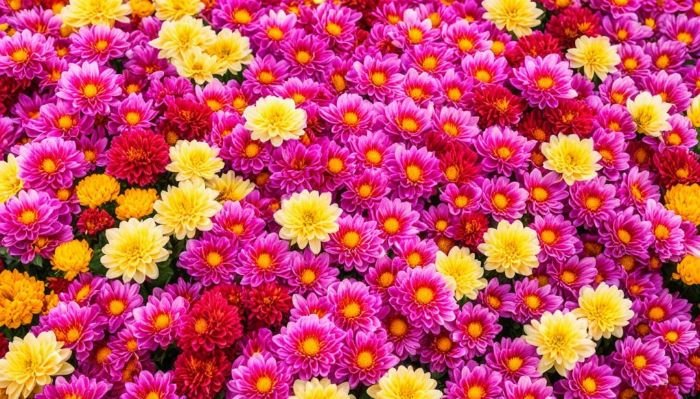
Chrysanthemum colors run through white, cream, yellow, gold, bronze, orange, red, pink, lavender, purple, and green. Bronze and gold read warm beside ornamental grasses and late seedheads. White and pale pink brighten shaded entries. Deep red and purple need enough light around them or they can disappear visually from a distance.
Early, midseason, and late bloom timing matters more than color labels in cold climates. Cultivars open on different response windows, so short-season areas need early or midseason mums. Late-season show forms fit milder climates, protected cutting beds, or containers that can be moved under cover.
Light pollution changes timing too. Mums need uninterrupted dark periods as nights lengthen. Porch lights, garage lights, and streetlights can keep a plant vegetative longer than expected. If one side of a planting blooms and the other stays green, look up before blaming fertilizer.
Use color as the final filter. First choose hardy habit, bloom window, and plant size. Then pick the bronze, red, white, lavender, or yellow that fits the bed. A reliable bronze cushion mum beats a late show flower that never opens before frost.
Named Chrysanthemum Varieties Worth Recognizing
Named chrysanthemum varieties should be read through the same garden filters as bloom types: hardiness, flowering window, stem strength, flower form, and intended use. A cultivar name does not automatically mean the plant will overwinter in a border or hold up outdoors in wet fall weather.
| Variety Or Cultivar | Typical Look | Best Garden Use | Main Caution |
|---|---|---|---|
| Clara Curtis | Soft pink, daisy-like hardy mum | Perennial borders, cottage-style beds, pollinator-friendly fall planting | Needs space to spread and a site where the loose flower form fits the planting style |
| Sheffield | Pale apricot-pink, single to semi-double flowers | Hardy fall borders and naturalistic plantings | Flower color can read softer than nursery-tag photos in low light |
| Mary Stoker | Warm yellow to apricot daisy-like flowers | Hardy mixed borders and late-season color near grasses | Best judged by habit and bloom timing, not color alone |
| Anastasia Green | Green spider-style bloom with long narrow rays | Cut flowers, protected containers, novelty display | Better treated as a specialty flower than a low-care border mum |
| Allouise Pink | Large formal pink bloom | Show work, cutting beds, protected display | Often needs staking, disbudding, and weather protection |
| Fireglow Bronze | Warm bronze fall color | Autumn borders, containers, color pairing with grasses and seedheads | Check bloom timing before relying on it in short fall climates |
| Matchsticks | Spoon or quill-style bicolor petals | Containers, close-up beds, entry displays | Novelty form works best where flowers are seen up close |
| Bolero | Bright warm-toned garden mum | Seasonal containers and fall color blocks | Do not assume perennial reliability from color or retail display alone |
Choose The Right Chrysanthemum Type By Garden Use
A front border needs a different mum from a cutting row. Place the garden use first and the flower form second. That order prevents the common mistake of buying a dramatic bloom that needs a kind of care the bed cannot give.
| Garden Use | Best Chrysanthemum Types | What To Look For | What To Avoid |
|---|---|---|---|
| Perennial fall border | Cushion, single, semi-double, anemone | Compact branching, many buds, early to mid bloom | Late florist pots already in full bloom |
| Containers by an entry | Pompon, button, decorative, cushion | Dense bud set, firm stems, color at several stages | Dry root balls and top-heavy plants |
| Cut flower bed | Decorative, spider, quill, incurve, reflex | Long stems, strong necks, room for staking | Low cushion mums with short stems |
| Pollinator-friendly fall planting | Single and semi-double | Visible centers and open flower structure | Overly packed flowers with hidden disks |
| Small garden edge | Button, pompon, cushion | Low habit and many small blooms | Large decoratives that flop into paths |
| Specimen or show display | Spider, quill, incurve, reflex, exotic | Distinct flower form and room for support | Expecting low-care perennial behavior |
Containers have their own logic. A porch pot can carry a florist mum for seasonal color even if the plant never overwinters. In a permanent garden bed, the same choice becomes frustrating. If you want mums to return, buy earlier, plant before fall, and use types that branch low and root strongly.
Design use also changes plant spacing and companion choices. Low cushion mums make a clean fall edge. Taller decoratives look better behind asters, sedum, or ornamental grasses where a stake will not show. Designing with chrysanthemums works best after the type and habit are already chosen.
Reading Chrysanthemum Labels Without Getting Misled
A mum label can be honest and still incomplete. “Hardy” may describe possible performance, not the way the plant was grown, shipped, and sold. “Perennial” may be true in one zone and unreliable in another. “Garden mum” may describe habit better than winter survival.
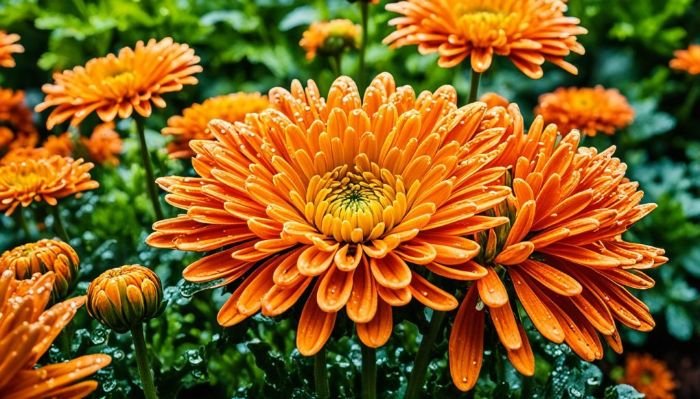
Look for four details before buying: bloom timing, mature height, flower form, and hardiness information. A tag that lists only color and pot size is selling a seasonal display. That may be fine. It just should not carry the expectation of a long-lived border plant.
Inspect the plant with your hands. The pot should feel evenly moist, not feather-light and dry at the edge. Stems should resist a light pinch without folding. Buds should outnumber fully open flowers if you want the display to last. The root ball should hold together without being a hard white coil.
Leaves tell their own story. Yellow lower foliage can come from age, crowding, dry roots, or poor light inside a packed sales bench. Sticky leaves point toward aphids. Fine webbing under leaves points toward mites. A plant with disease or pest pressure is a poor bargain even if the flowers are bright.
After the right type is chosen, care still decides the result. Water management, pinching, and deadheading shape the season plan, especially for plants expected to return. Chrysanthemums with shallow roots dry quickly in pots, and a clean watering rhythm for chrysanthemums keeps buds from aborting during warm fall weather.
Chrysanthemum Types Worth Knowing First
Beginners do not need to memorize every exhibition class. Start with the types that change garden decisions.
Cushion mums are the practical workhorses. They make rounded plants, cover themselves in bloom, and fit borders, edging, and containers. When sold as hardy garden mums, they are usually the safest choice for repeat outdoor planting.
Single and semi-double mums look closer to daisies, with a visible center. They bring a looser, more natural look to fall beds and are easier for insects to use than heavily packed flowers. The central disk should be visible, not buried under petals.
Pompon and button mums carry small round flowers that hold up well in containers and windy spots. Their scale makes them useful near paths, steps, and patios where large flowers would look heavy or fall apart after rain.
Anemone mums have a raised center, often darker or denser than the outer petals. They reward close viewing and work well beside seating areas or entry beds. Decorative mums bring fuller flowers and more visual weight, especially when the plant is used as a focal clump.
Spider, quill, spoon, incurve, and reflex mums are the forms that make people stop and ask what they are. Use them where detail matters: a cut-flower row, a protected container, a show plant, or a bed near a path. In rough weather and cold climates, they ask more from the gardener than a cushion mum does.
If the plant will be pinched, deadheaded, or disbudded for a specific effect, match the type to the method. The difference between pinching for branching and disbudding for a large terminal flower is covered in pruning and deadheading chrysanthemums, and it matters most for decorative, spider, quill, and show forms.
Conclusion – Choose Mums By Habit Before Color
Chrysanthemum varieties become easier to understand when the plant’s job comes first. Perennial borders need hardy garden behavior. Porch pots need dense seasonal color. Cutting beds can justify tall stems, staking, and unusual bloom forms. Show plants need attention that an ordinary flower bed will not give.
Pick up the pot, read the label, and look beyond the color. Bud stage, plant habit, bloom timing, root condition, and flower form point the mum toward a fall border, a container, a cutting row, or a protected display. The right type looks good in October and still makes sense when the flowers are gone.
FAQ
What Are The Main Chrysanthemum Types For Gardens?
The main garden-friendly types are cushion, single, semi-double, anemone, pompon, button, and smaller decorative mums. Spider, quill, incurve, reflex, and exotic forms are more often grown for cut flowers, show plants, protected containers, or close-up display.
What Is The Difference Between Garden Mums And Florist Mums?
Garden mums are bred for outdoor habit, branching, and better winter survival. Florist mums are grown for controlled bloom and short-term display. A florist mum can decorate a porch beautifully. Cold winter soil may still end its life after one season.
Which Chrysanthemum Varieties Are Most Hardy?
Hardy garden mums with compact habits, early to midseason bloom, and stolon-forming crowns are the best candidates for returning. Cushion, single, semi-double, and anemone types often fit garden use better than large exhibition forms.
Are Spider Mums Good For Garden Beds?
Spider mums can grow in garden beds. Many work better in cutting gardens, sheltered containers, or protected displays. Their long tubular rays can be damaged by heavy rain and wind, and some varieties are less hardy than common garden mums.
What Chrysanthemum Color Should I Choose?
Choose color after checking hardiness, bloom timing, and plant habit. Bronze, gold, orange, and red give a warm fall look. White and pale pink brighten entries and shaded edges. Purple and deep red need enough surrounding light to stand out from a distance.
Can Chrysanthemums Come Back Every Year?
Hardy garden mums can come back when planted early enough to root, grown in well-drained soil, and matched to the climate. Fall-purchased florist mums often behave like seasonal plants because they are rootbound, late-planted, or bred for display ahead of winter survival.