


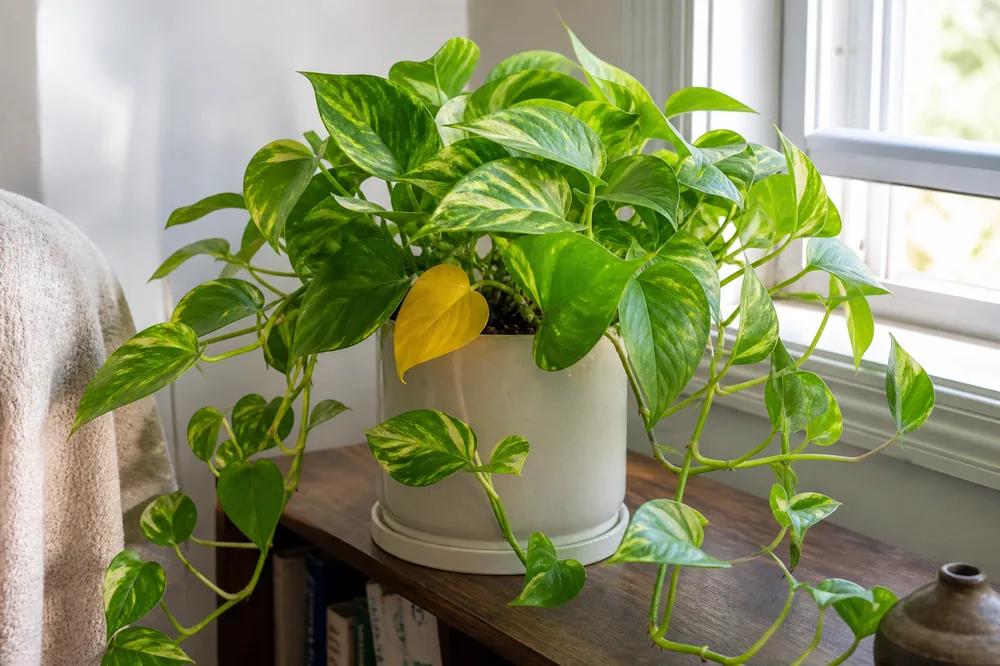
Pothos yellow leaves usually come from one of three patterns: an old lower leaf aging out, roots staying wet too long, or a light change the vine cannot use well. The leaf tells you where to start. A single yellow leaf near the soil line has a different meaning from several soft yellow leaves on wet stems, pale vines stretched in a dim room, or scorched patches near hot glass.
Do not water, fertilize, or repot first. Lift the pot, touch the yellow leaf, check the soil two inches down, and look at where the yellowing started. That small pause often separates a harmless old leaf from a root problem that needs action today.
Fast Pattern Check For Yellow Pothos Leaves
Match the leaf position, texture, and soil feel before choosing a fix.
Normal aging. Remove it if the rest of the vine is firm and growing.
Wet roots. Stop watering, check drainage, and inspect roots if the pot stays heavy.
Low light. Move closer to bright indirect light and prune weak runners.
Sun scorch. Pull back from direct glass and remove badly damaged leaves.
Pests or residue. Check undersides, rinse leaves, and isolate before treating.
Key Takeaways
- Check leaf position before changing the watering routine.
- Lift the pot before watering yellowing pothos again.
- Remove old yellow leaves that stay firm at the stem.
- Inspect roots when yellow leaves feel soft or limp.
- Avoid feeding a stressed pothos before roots recover.
Table of Contents
Read The Yellow Leaf Pattern Before You Change Care
A pothos leaf can yellow for ordinary reasons and still make the whole plant look wrong. The useful clues are position, texture, speed, and soil condition. One yellow leaf on an older lower node points in a different direction than five yellow leaves scattered across a vine in the same week.
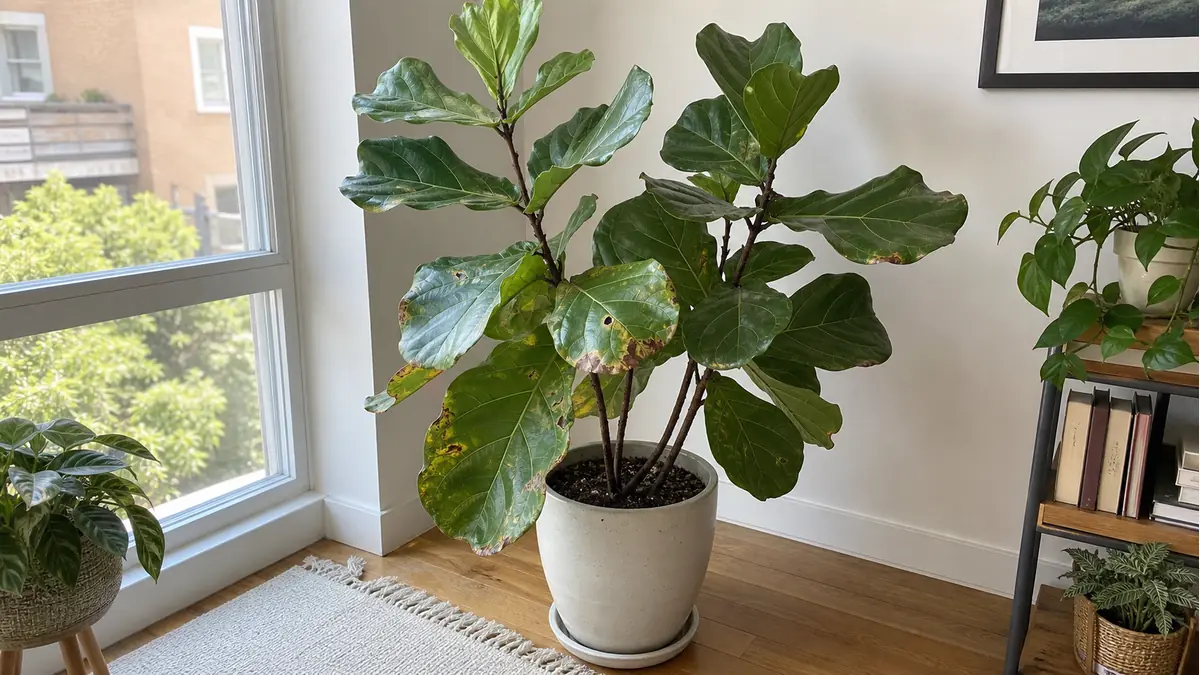
Start with touch. A normal aging leaf often turns yellow as the stem stays firm and the rest of the vine keeps its waxy green surface. An overwatered leaf usually feels softer, cooler, or slightly limp, and the pot may still feel heavy days after watering. Light stress can look more papery, especially when the yellow area is flat, bleached, or burned along a window-facing edge.
Then look at the soil and the plant’s location. Pothos grows best in bright, indirect light and tolerates lower light better than many houseplants; tolerance is not the same as active growth. The Epipremnum aureum plant profile lists medium light and well-drained soil as normal indoor conditions, which fits what yellowing often reveals: roots and leaves both fail when water and light stop matching each other.
Ask one practical question before doing anything: did the yellowing start at an old leaf, at the wettest part of the pot, or on the side facing the window? That answer usually points to the fix faster than a calendar watering schedule.
One Old Lower Leaf Usually Means Normal Aging
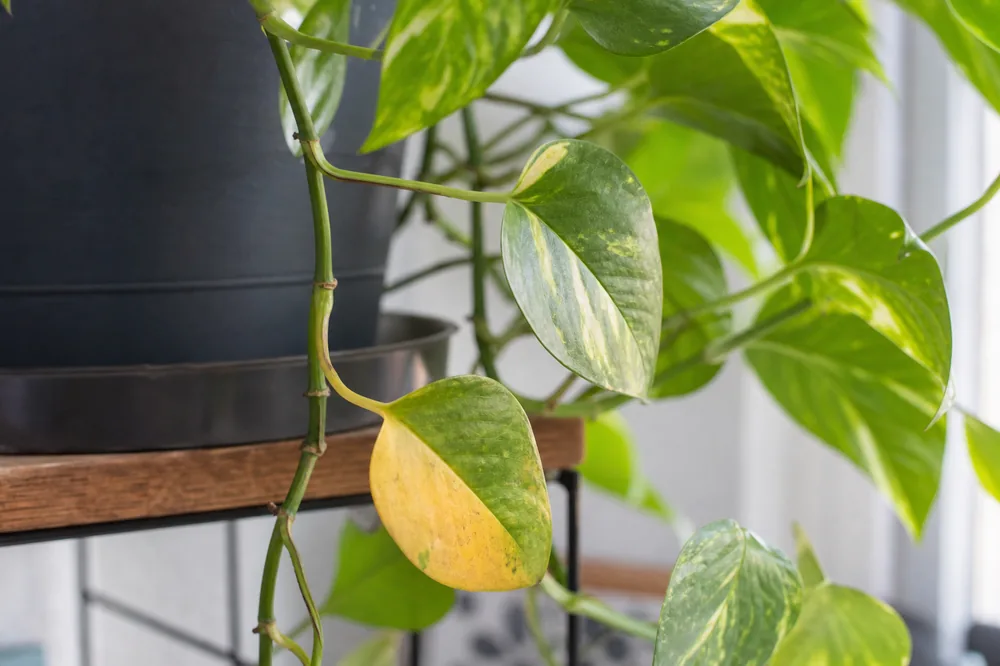
A single yellow lower leaf is often the least serious pattern. Pothos vines shed older leaves as new growth pulls energy toward the tip, especially after a move, a season change, or a stretch of lower winter light. The leaf fades evenly from green to yellow, then softens as it finishes dying back.
The stem is the deciding clue. If the node and vine feel firm, the next leaves look green, and the pot is not staying wet, remove the yellow leaf and keep watching. A clean tug or a small snip near the petiole is enough. Leaving the leaf on the plant will not turn it green again.
Normal aging becomes less likely when many leaves yellow at once, when yellowing climbs quickly up several vines, or when the leaf stem feels mushy where it meets the node. That pattern moves the diagnosis away from age toward roots, light, pests, cold, or salts.
Variegated varieties can also confuse the read. Golden pothos, marble queen, neon pothos, and other types naturally carry yellow, cream, or chartreuse tissue. Natural variegation is part of the leaf from the start and usually has clean edges. Sudden yellowing spreads through tissue that was previously green. Variety traits belong in the background here; broader pothos variety choices matter mainly when the original leaf pattern is being mistaken for damage.
Soft Yellow Leaves Point To Wet Roots And Low Oxygen
Several yellow pothos leaves on damp soil should make you slow down. Pothos roots need air between waterings. When the potting mix stays wet long enough to fill those pore spaces, roots lose oxygen, fine root tips die back, and leaves yellow because the vine can no longer move water cleanly through the plant.
The visible pattern usually starts below. Lower leaves yellow first, the pot feels heavy, the soil smells sour or swampy, and stems near the mix may feel soft. Sometimes the plant wilts in wet soil, which feels backward until you inspect the roots. Dead roots cannot supply the vine even when water surrounds them.
Pull the nursery pot from a decorative cachepot if one is being used. Standing runoff can keep the lower inch wet for days. Check the drainage hole, lift the pot, and push a finger or wooden skewer two inches into the mix. If the surface looks dry and the center feels cool and wet, hold water and improve airflow around the pot.
Indoor watering works best when the root ball is watered thoroughly and excess drains away; indoor plant watering guidance from University of Maryland Extension makes that drainage point clear. For a yellowing pothos, let the root zone breathe before adding another sip.
When To Unpot The Plant
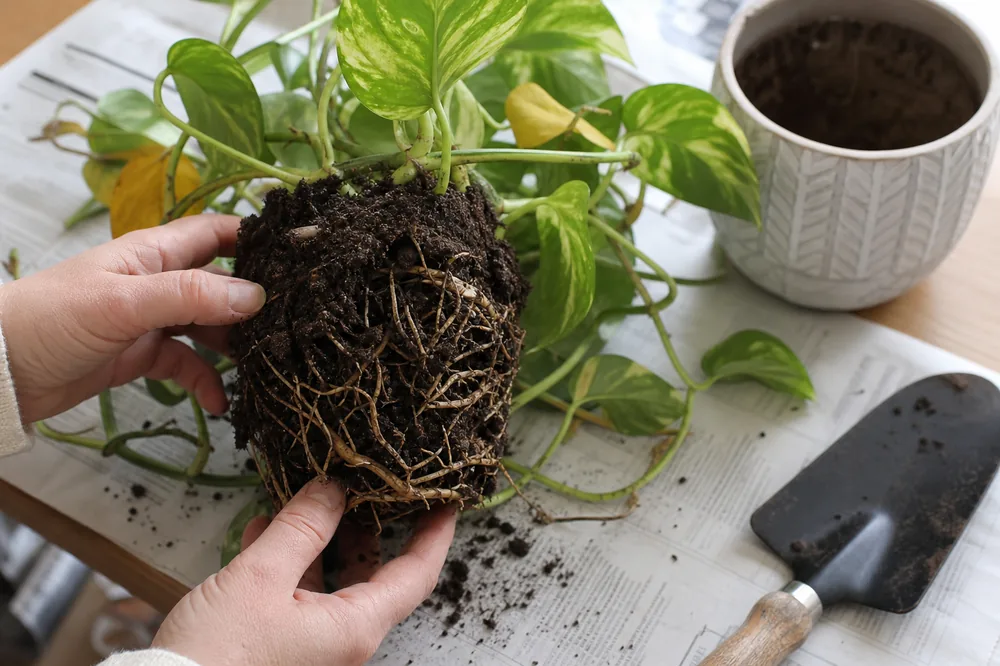
Unpot the pothos if the pot stays heavy for several days, if yellow leaves feel limp and soft, or if the soil smells sour. Healthy pothos roots are usually pale, tan, or light brown and hold together when touched. Rotten roots are dark, stringy, hollow, or slimy enough to slide apart.
Trim dead roots with clean scissors, remove leaves with soft petioles, and repot only firm vines into fresh, airy mix. A rescued pothos does not need a larger pot unless the healthy roots fill the old one. Extra empty mix holds moisture the plant cannot use, a problem that gets worse after root loss. The same pot-size logic behind watering frequency in containers applies strongly after root pruning.
| What you find | Likely cause | Best first fix | Do not do this |
|---|---|---|---|
| One lower yellow leaf, firm vine | Normal leaf aging | Remove the leaf and keep care stable. | Repot a healthy plant for one old leaf. |
| Many soft yellow leaves, wet mix | Overwatering or poor drainage | Stop watering, inspect roots, and refresh soggy mix. | Add fertilizer to force new growth. |
| Pale yellow vines with long gaps | Low light | Move into brighter indirect light over a week. | Place it suddenly in direct afternoon sun. |
| Bleached yellow patches on window side | Sun scorch | Move back from hot glass or filter the light. | Keep rotating damaged leaves toward the sun. |
| Yellow speckling, sticky residue, webbing | Pests | Isolate, rinse, and inspect undersides. | Treat without checking nearby plants. |
Pale Yellow Vines Often Come From Low Light Or Weak Growth
Low light does not always make pothos collapse. More often, it makes the plant thin. New leaves come in smaller, spaces between leaves lengthen, variegation fades on some types, and the vine spends energy staying alive before it replaces older leaves. Yellowing then appears slowly, often on the shaded interior or older sections of the plant.
A low-light pothos can also be overwatered more easily because it uses water slowly. The same watering rhythm that worked near an east window may become too wet on a shelf across the room. If the vine is pale and stretched with firm roots, fix the light before changing everything else.
Move the plant to bright indirect light, such as a spot near an east window or a few feet back from a south or west window with filtered light. Make the move gradually if the plant has lived in dim conditions for months. Leaves made in low light are thinner and can scorch when moved into stronger sun too fast.
Window direction changes how quickly the plant can use water, so pothos light requirements matter most when vines are pale and roots stay firm. For yellow leaves, the practical read is simpler: pale, sparse vines need more usable light; soft yellow leaves in wet soil need root-zone correction first.
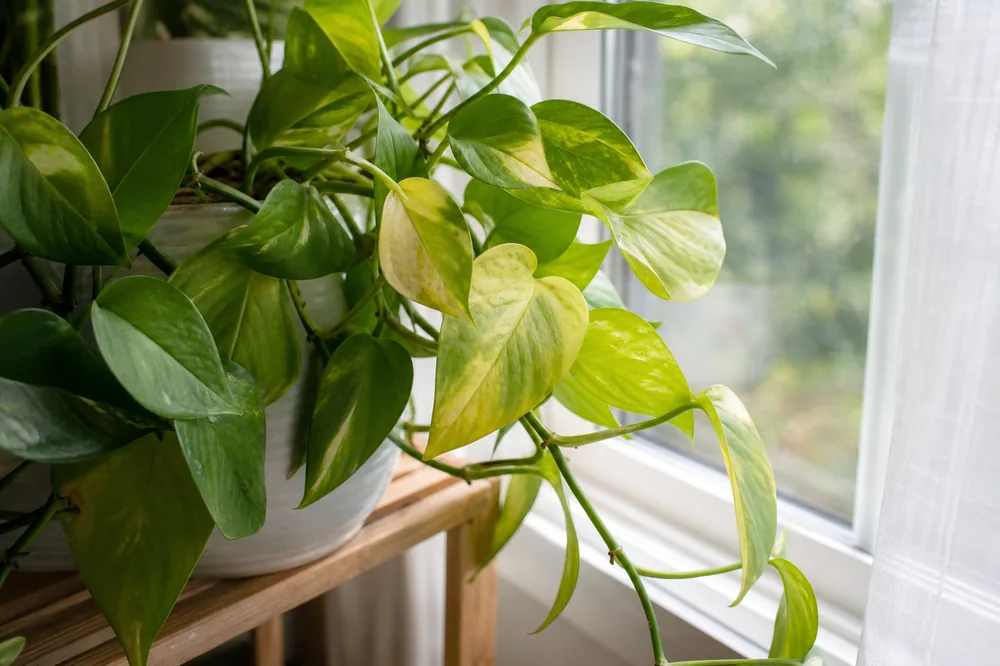
Bright Scorched Patches Mean Light Changed Too Fast
Sun scorch looks different from low-light yellowing. The yellow is often flat, pale, or bleached, with tan crispy areas where the strongest light hit the leaf. It may appear on the window-facing side as shaded leaves stay green. The damaged tissue can feel dry and thin, not soft.
This often happens after a plant is moved closer to glass, placed outside for summer, or rotated so older shade-grown leaves suddenly face direct sun. Morning light is usually easier on pothos than hot afternoon light. Glass can intensify heat at the leaf surface even in a comfortable room.
Move the plant back from direct sun or add a sheer curtain. Damaged patches will not repair. New leaves should come in cleaner if the light is right. Remove badly scarred leaves only when the plant has enough healthy foliage left to keep growing.
Observation: Scorch often appears after a well-meaning light upgrade. The plant was moved too far, too fast, and the older leaves could not adjust.
Pests, Salt, And Cold Stress Leave Smaller Clues
Some yellow pothos leaves come from smaller stress signals outside the watering routine. Spider mites can leave pale stippling before webbing becomes obvious. Scale and mealybugs can hide near nodes and leaf backs. Sticky residue on a shelf or nearby leaves points toward sap-feeding insects.
Inspect the undersides of leaves, the petiole joints, and the newest growth with bright light. Rinse the plant, wipe the leaves, and isolate it if you find pests. A yellowing plant with pests should not be fertilized first. Feeding adds growth demand as the plant is already losing sap and leaf area.
Salt buildup from fertilizer or hard water usually shows as brown tips, crust on the soil surface, or leaf edges that decline as the roots stay mostly firm. Flush the pot thoroughly if drainage is good, or refresh the top mix if crust has collected. Wait to fertilize until new growth looks normal again.
Cold stress can yellow or collapse leaves after a winter draft, a cold windowsill, or a plant ride home from the store. The damaged area may feel limp and water-soaked, especially where the leaf touched cold glass. Keep pothos away from chilly panes, exterior doors, and heating vents that dry leaves as the root zone remains cool.
Pothos is also toxic to cats and dogs if chewed. The ASPCA devil’s ivy listing treats pothos as toxic to both, so discarded yellow leaves and fresh cuttings should stay away from pets during cleanup.
The same moisture clues behind overwatering in plants still apply indoors: limp growth, wet soil, stale smell, and roots that no longer look firm. Pothos simply makes the pattern easier to see because each vine carries its own record of older and newer leaves.
Recovery Plan By What You Find
The fastest recovery starts with the cause that matches the pattern. If the plant only has one old yellow leaf, remove it and leave the rest of the care alone for two weeks. Changing water, light, pot, and fertilizer at the same time can create a new problem before the first one is understood.
If the plant is wet and yellowing, let the pot dry partway and inspect the roots if soft leaves continue. Cut dead roots, use a pot with drainage, and repot into a lighter mix with perlite, bark, or another chunky amendment. Keep the first watering modest after repotting if the mix already has moisture.
If the plant is pale and stretched, improve light first and prune the weakest runners once new growth begins. Cut above a node and keep only firm green sections. Old yellow leaves will not recover. Watch the next leaves; they should be greener, slightly larger, and closer together.
Pro Tip: Mark the pot weight after a full watering and again when the mix is ready for water. After two or three cycles, your hand will read the plant faster than a fixed schedule.
Start With The First Fix That Matches The Pattern
One lower yellow leaf with firm green vines only needs cleanup. Snip the leaf, check again in a week, and avoid turning one aging leaf into a repotting project.
Yellow leaves plus wet soil call for restraint. Empty any saucer or cachepot, hold water, and inspect roots if the pot stays heavy or the stems feel soft.
Long pale vines need better light before more water or fertilizer. Move the plant closer to bright indirect light, then judge the next flush of leaves.
Speckles, sticky leaves, or fine webbing point toward isolation and leaf inspection today. Rinse the foliage, check nearby plants, and treat only after the pest is identified.
Conclusion
Yellow pothos leaves are easier to fix when the pattern leads the decision. One old lower leaf can be normal. Several soft yellow leaves in wet soil point toward roots. Pale stretched growth asks for better light. Bleached window-side patches need protection from direct sun.
Make one correction, then watch the next two weeks of growth. A recovering pothos feels firmer at the nodes, dries more predictably between waterings, and sends out new leaves with clean green tissue rather than another yellow warning near the stem.
Frequently Asked Questions
Should I remove yellow leaves from pothos?
Yes, remove fully yellow pothos leaves because they will not turn green again. Use clean scissors if the petiole resists, and leave partly green leaves in place if the plant has lost a lot of foliage.
Can yellow pothos leaves turn green again?
Usually no. Once a pothos leaf has fully yellowed, the tissue has already lost chlorophyll. Recovery shows in new leaves, firmer stems, and a pot that dries at a normal pace.
How do I know if pothos yellow leaves are from overwatering?
Overwatering is likely when several leaves yellow at once, the pot stays heavy, the soil smells sour, and leaves feel soft or limp. Firm roots and one old yellow lower leaf point somewhere else.
How often should I water a pothos with yellow leaves?
Water only when the upper mix has dried and the pot feels lighter. In low light or cool rooms, that may take much longer than one week, especially in a large or decorative pot.
Can too much light make pothos leaves yellow?
Yes, direct sun can bleach or scorch pothos leaves, especially after a sudden move from low light. Scorch usually appears as pale yellow or tan patches on the side facing the window.