

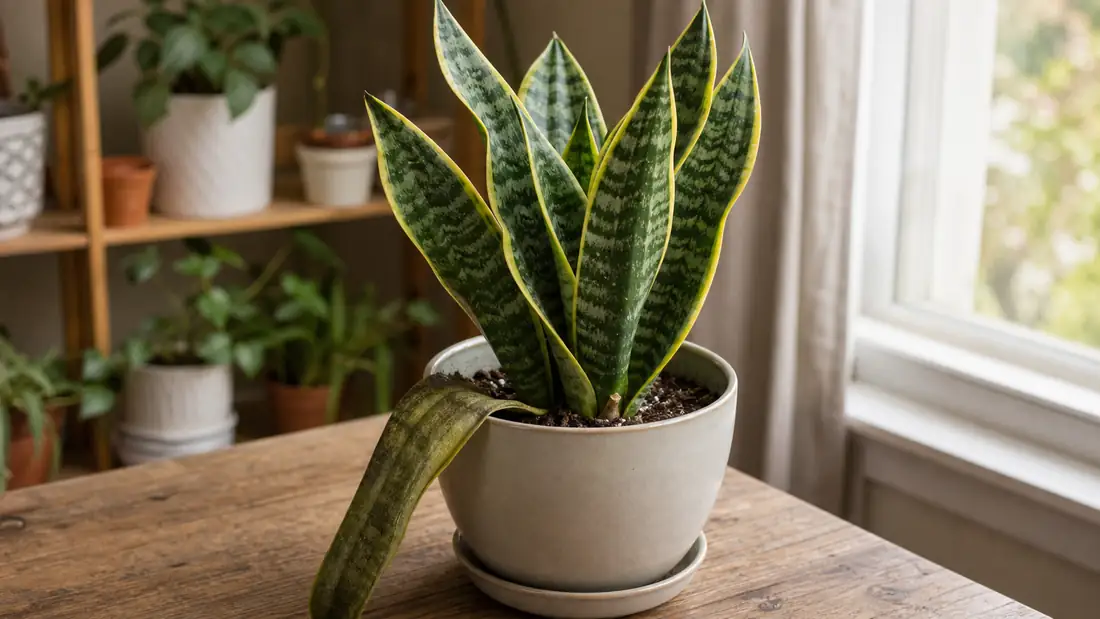
Snake plant mushy leaves usually mean water has stayed around the roots or leaf base long enough to soften the tissue. The first clue is often physical: a blade that once felt stiff starts to fold, the lower edge turns translucent, or the base feels cold and slick between your fingers. A drooping leaf can recover if the roots are firm. A mushy leaf base often means the plant has already lost tissue below the soil line. The fix starts with triage, not another watering schedule.
A snake plant can sit dry for weeks and look fine, then collapse quickly after one wet stretch in a cold room or heavy potting mix. The question to answer first is simple: are the leaves bending because they are thirsty, or are they soft because roots and leaf bases are rotting?
Fast Triage For Soft Or Drooping Snake Plant Leaves
Check the leaf base, soil smell, pot weight, and root color before deciding whether to water, dry, cut, or restart.
Likely rot. Unpot today, cut black roots, remove mushy leaves, and repot only firm tissue.
Likely stress. Check dry soil, weak light, cold glass, or a loose root ball before cutting.
Oxygen is gone. Stop watering, discard wet mix, rinse roots, and inspect the rhizome.
Restart. Keep only firm rhizome pieces or healthy leaf cuts above the damaged zone.
Key Takeaways
- Unpot soft-based leaves before watering again.
- Cut black roots back to firm tissue.
- Repot into a sharper, faster-draining mix.
- Wait for firm recovery before feeding.
- Avoid saving leaves with slimy bases.
Table of Contents
Start With The Leaf Base, Soil Smell, And Root Firmness
A snake plant leaf tells you more at the base than at the tip. Brown tips, leaning blades, and wrinkled sides can come from several stresses. A soft collar at the soil line is different. That tissue has lost structure, and the rot often extends into the rhizome before the upper leaf looks fully ruined.
Press the lower inch of the leaf gently between thumb and finger. Healthy snake plant tissue feels stiff, dense, and slightly waxy. Damaged tissue feels waterlogged, rubbery, or hollow. If the leaf pulls away with a wet pop or leaves a pale, slippery pocket behind, the plant needs root inspection before surface drying.
The second test is smell. Fresh potting mix smells earthy or faintly woody. Sour, swampy, or rotten odor means the root zone has stayed wet with too little air. Indoor watering works best when water moves through the pot and drains away, a pattern explained in indoor plant watering guidance. A pot that stays heavy for days after watering usually tells the same story before the leaves collapse.
Root color confirms the diagnosis. Firm white, tan, or orange roots can recover. Brown roots may recover if they are still firm. Black, slimy roots that slide apart under light pressure should be removed. The rhizome matters most because snake plants regrow from firm underground tissue. If the rhizome is solid, the plant still has a path back.
Wet Soil And Low Oxygen Trigger The Mushy Collapse
Snake plants are built to hold water in thick leaves and rhizomes. That storage is why they survive dry apartments and forgotten watering. The same storage becomes a weakness when roots sit in wet, airless mix. Roots need oxygen to stay alive. When the pore spaces fill with water too long, root cells weaken, microbes spread, and the plant loses the lower tissue that anchors each leaf.
Several conditions create that failure even when watering feels normal. A decorative cachepot can trap runoff around the nursery pot. A wide ceramic pot can keep the root ball wet longer than the plant can use it. Dense peat-heavy mix can stay damp in the center after the surface looks dry. A cold windowsill slows water use, so the same drink that worked in July can rot roots in January.
Snake plant is commonly listed as Dracaena trifasciata, and the Dracaena trifasciata plant profile fits what growers see indoors: the plant tolerates drought far better than wet soil. That does not mean the plant should stay bone dry forever. It means the pot must dry enough for oxygen to return around the roots between waterings.
Cold damage can mimic rot because chilled tissue turns soft. A leaf pressed against winter glass may collapse on one side with the rest of the plant still firm. The difference shows below the soil. Cold-scarred leaves can have healthy roots. Rot gives you wet mix, dark roots, and often more than one failing leaf at the same crown.
Root Rot Triage: Cut, Dry, Repot, Or Restart
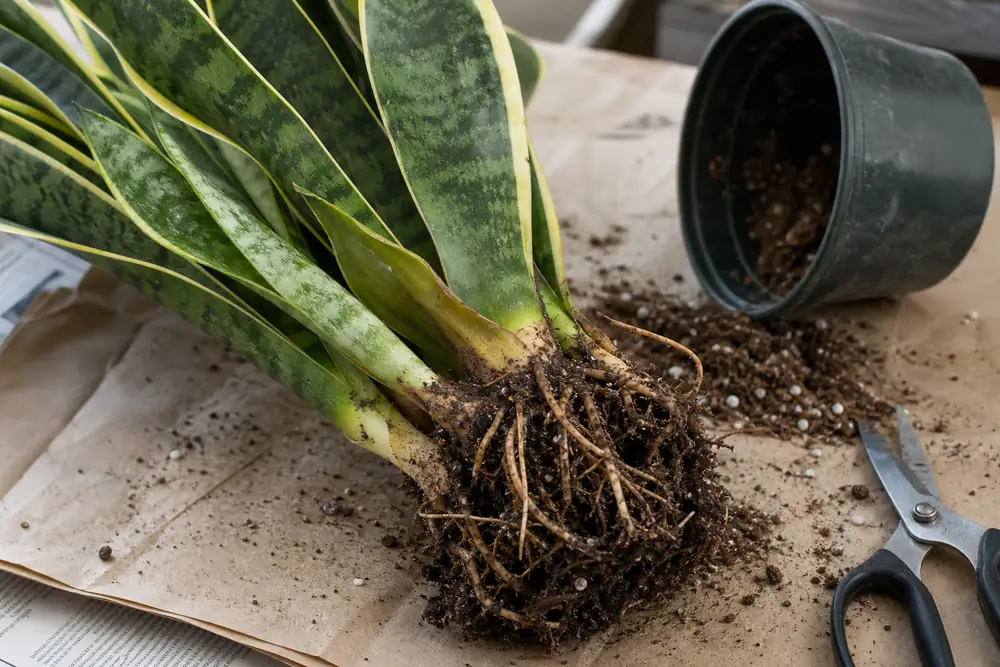
Once a snake plant has mushy leaves, the safest move is to unpot it. Drying the top of the soil as rotten roots stay buried only delays the decision. Tip the plant out, loosen the old mix with your fingers, and rinse the root ball only enough to see what is alive. Work over newspaper or a tray because rotten mix can smell sharp and sour.
Use clean scissors, pruners, or a knife. Cut roots back until the remaining tissue feels firm. Remove leaves with soft bases because they rarely tighten again. If the rhizome has one bad end and one firm end, cut back into clean, solid tissue. A healthy cut surface looks pale, cream, yellow, or orange inside. Gray, black, wet, or collapsing tissue needs another cut.
| What you find | Best action | What to avoid |
|---|---|---|
| Firm roots and one damaged leaf | Remove the bad leaf, dry the mix, and correct watering. | Repotting into a much larger container. |
| Some black roots, firm rhizome | Cut rotten roots, repot into fresh dry-leaning mix. | Leaving wet old mix around the crown. |
| Soft leaf bases, firm rhizome pieces | Divide healthy pieces and restart them separately. | Trying to prop up collapsing leaves. |
| Black, slimy rhizome through the center | Take healthy leaf cuttings above the rot if possible. | Saving tissue that smells sour or feels hollow. |
Let cut rhizome surfaces sit for a few hours before repotting if the room is dry and warm. The surface should feel less wet before it goes into new mix. Do not soak the plant after surgery. Fresh cuts and saturated mix recreate the same low-oxygen pocket that caused the collapse.
Pro Tip: Dusting is less important than clean cuts and dry timing. A sharp blade, fresh mix, and a pot that drains freely usually matter more than adding powders to a wet wound.
Drooping Leaves Need A Different Check Than Mushy Leaves
Drooping snake plant leaves are not automatically rotten. A firm leaf can lean because the plant has stretched toward light, the pot has been bumped, the root ball is loose, or the leaf grew tall and heavy. A dry plant can also fold slightly along the leaf edges before it becomes dangerously dehydrated.
Run a quick split before cutting anything. A firm leaf with dry soil from top to bottom needs one thorough watering and drainage. Firm leaves above wet soil need waiting time, brighter light, and better airflow. A soft leaf base needs root inspection immediately. General plant wilting causes overlap on the surface; snake plant tissue gives a clearer clue when you press the lower blade.
Light changes can also create leaning without rot. A plant in a dim corner may keep living as new growth angles toward the window. Move it into brighter indirect light and rotate the pot a quarter turn every week for a month. Tie or stake only as a temporary support. A leaf that cannot hold itself after better light and firmer roots may have damage inside the base.
Underwatering looks different from rot once you touch the plant. Dry stress gives firmer, thinner, slightly wrinkled leaves and a lighter pot. Rot gives soft, swollen, or translucent tissue and a heavy pot. That difference matters because watering a rotten plant makes the lower tissue worse.
Repotting Into A Sharper Mix Stops The Same Failure Cycle
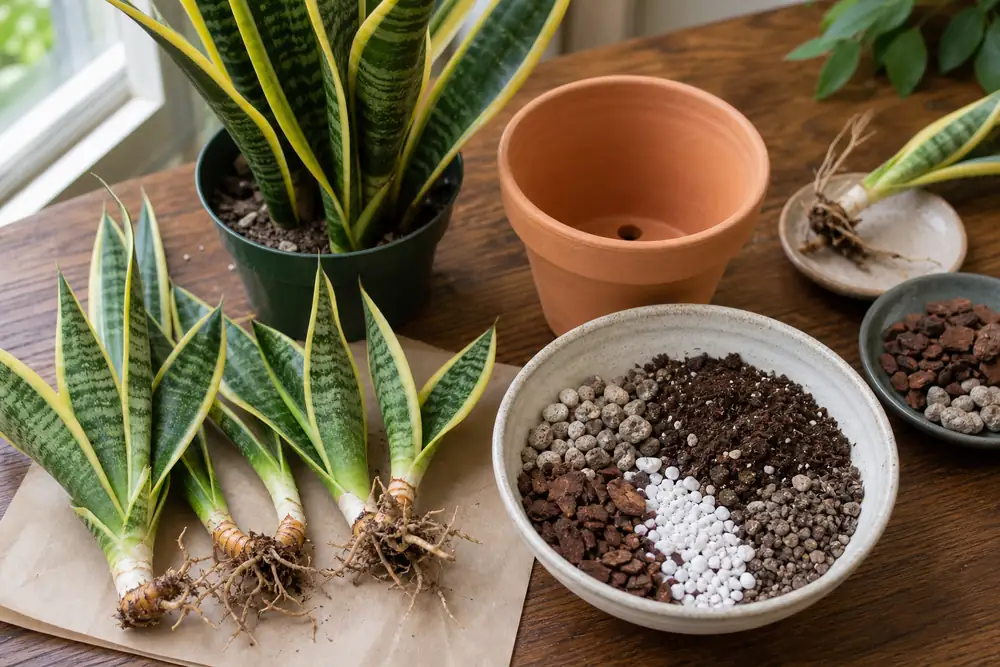
Repotting only works when the new root zone changes the moisture pattern. Fresh peat-heavy houseplant mix can still hold too much water around a small snake plant. A sharper mix uses chunky structure so air returns quickly after watering. Perlite, pumice, coarse bark, and a cactus or succulent base all help create larger pores around the rhizome.
Choose a pot only slightly wider than the healthy root mass. A rescued plant with half its roots removed does not need a larger pot. Extra empty mix stays wet because roots are not there to use the moisture. The link between pot size and watering frequency becomes very real after root pruning, because a small root system cannot dry a large container fast enough.
Drainage holes matter more than pot material. Terracotta can help moisture leave through the walls. A terracotta pot sitting inside a watertight decorative sleeve can still rot a snake plant. Lift the inner pot after watering and dump any collected water from the cachepot or saucer. The bottom inch should never sit in runoff.
Set the rhizome at the same depth it grew before, with the leaf bases above the wettest part of the mix. Burying the crown deeper to stabilize a leaning plant invites rot. If the plant wobbles after surgery, use dry stakes or a narrow ring of bamboo support until new roots grip the mix.
Aftercare Watering Starts Only After The Pot Lightens
A rescued snake plant needs restraint after repotting. The plant has fewer roots and fresh cut surfaces, so it cannot use water quickly. If the mix is lightly moist from the bag, wait several days before watering. If the mix is dry and the plant is stable, give a small drink around the root zone after a few days, then let the pot lighten again.
The best check is pot weight paired with a finger test or wooden skewer. A dry pot feels noticeably lighter. A skewer pushed near the root zone should come out mostly dry before the next full watering. Moisture meters can help and can also misread chunky mixes or salt pockets. Your hand still gives useful information when you compare the same pot wet and dry.
Water thoroughly only when the root zone has dried enough, then let excess drain away. Small sips can leave salts in the upper mix and never flush the pot. Constant topping off keeps the lower mix damp. The broader signs of overwatering plants still apply; snake plants usually warn late because their leaves store water so well.
Do not fertilize a plant that just lost roots. Fertilizer pushes new growth demand as the root system is still rebuilding. Wait until the plant has held firm for several weeks and new growth starts. In cool months or low light, that can mean waiting until spring.
When To Restart With Cuttings Or A Division
Sometimes the rescue plant is no longer worth keeping as one pot. A black rhizome, several collapsing leaves, or a sour crown means the center has failed. Healthy pieces can still survive if they are separated from the rot. Division is better than leaf cuttings when you have firm rhizome pieces with roots attached.
Cut leaf pieces only from tissue above the soft area. Each piece should feel firm from edge to edge. Let the cut ends callus before placing them in a barely moist propagation mix. Variegated snake plant leaf cuttings can lose edge variegation when they grow new shoots, so division preserves the original look better when a healthy rhizome exists.
A plant with no firm rhizome and leaves that are soft halfway up is usually finished. Keeping it in the pot can spread decay into any healthy pieces nearby. Restart with the cleanest tissue you have, or replace the plant and keep the new one in a smaller pot with faster drainage. Future Dracaena variety choices should still be matched to light, room temperature, and watering habits before appearance alone.
Snake plants are also mildly toxic to pets if chewed, so keep cut pieces and discarded leaves away from cats and dogs. The ASPCA snake plant listing treats the plant as toxic to dogs and cats, which matters when damaged leaves are lying on a table during rescue work.
Where To Start
One soft leaf base with the rest of the plant still firm calls for same-day root inspection. Remove that leaf, trim any black roots, and repot the firm crown in fresh mix.
Several drooping leaves that stay firm need a pot-weight check before surgery. A dry, light pot needs one thorough watering and drainage; a wet, heavy pot needs time, brighter light, and no more water.
Sour-smelling soil should be treated as root rot until the roots prove otherwise. Discard the old mix, clean the pot, and keep only firm roots and rhizome pieces.
A rhizome that is black through the center is past whole-plant rescue. Cut healthy leaf pieces or firm divisions, let the wounds dry, and restart in a smaller pot.
Conclusion
Mushy snake plant leaves need a root-zone decision before they need routine care. Soft bases, sour mix, black roots, and a heavy pot point toward rot. Firm drooping leaves, a dry pot, and healthy roots point toward water stress, weak light, or a loose root ball.
Start by touching the leaf base and lifting the pot. If the lower tissue is soft, unpot the plant and cut back to firm roots and rhizome. Repot small, keep the mix open, and wait for the pot to lighten before watering again. A rescued snake plant looks stiff, upright, and dry at the crown, with no sour smell when the pot is lifted from its saucer.
Frequently Asked Questions
Can a snake plant recover from mushy leaves?
A snake plant can recover if the rhizome and some roots are still firm. The mushy leaf itself usually will not firm back up, so remove damaged leaves and save the healthy underground tissue.
Should I cut mushy snake plant leaves off?
Yes, cut off leaves that are soft, slimy, translucent, or loose at the base. Keep cutting until the remaining tissue feels firm and the cut surface looks clean rather than gray or wet.
How do I know if my snake plant has root rot?
Root rot usually shows as wet soil that stays heavy, sour odor, black or slimy roots, and leaves that soften at the base. Firm drooping leaves with dry soil point to a different stress.
Can drooping snake plant leaves stand back up?
Firm drooping leaves may stand better after brighter light, correct watering, and a stable root ball. Leaves with damaged bases rarely straighten permanently because the supporting tissue is gone.
How long should I wait to water after repotting a rotten snake plant?
Wait several days if the new mix has any moisture and the cut surfaces are fresh. After that, water lightly only when the root zone is dry enough and the pot feels noticeably lighter.