





Updated March 26, 2026
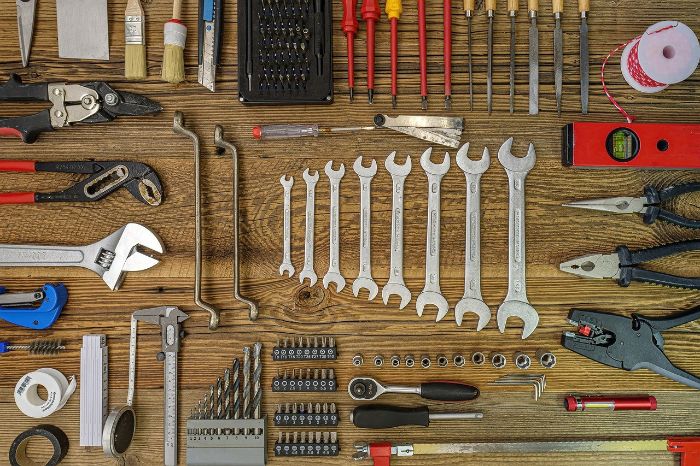
A basic home toolkit should cover fastening, gripping, measuring, cutting, wall hanging, and small plumbing fixes. The hand tools every homeowner needs are the ones that solve loose hinges, crooked shelves, rattling knobs, minor leaks, and fast trim or patch work without sending you back to the store in the middle of the job. That is why hammers, screwdrivers, and pliers sit at the center of a useful home toolkit: they keep showing up long before a project grows large enough to need power tools or trade equipment.
According to the Harvard Joint Center for Housing Studies, maintenance and repair remain a recurring part of ownership costs, so the right toolkit should handle repeated minor repairs, shorten access time, reduce extra purchases, and stay easy to store and retrieve. A good starter setup supports a normal home maintenance routine with a short list of reliable tools kept ready for loose hardware, light plumbing, wall work, and quick trim or patch jobs.
Key Takeaways:
- Start with nine core hand tools for basic home maintenance
- Prioritize hammer, screwdriver, pliers, wrench, tape, and level
- Add support items like gloves, glasses, and a flashlight early
- Skip giant combo kits until real repairs prove the need
- Keep the toolkit nearby and service it twice a year
Table of Contents
Basic Homeowner Toolkit Checklist
A basic homeowner toolkit needs a short core set that covers fasteners, fittings, layout, cutting, and wall work. That is enough to handle the repairs homeowners actually face in kitchens, baths, hallways, bedrooms, and utility areas.
- Claw hammer
- Multi-bit screwdriver
- Folding hex key set
- Tongue-and-groove pliers
- Needle-nose pliers
- Adjustable wrench
- Tape measure
- Level
- Utility knife
- Safety glasses, work gloves, and a flashlight
Best first version of each core hand tool
| Tool | Best first version | What it handles | Why it belongs |
|---|---|---|---|
| Claw hammer | Sixteen-ounce, smooth face | Picture hooks, light trim taps, nail pulling | Drives and pulls nails without stepping up to a heavier hammer |
| Multi-bit screwdriver | Full-size handle with Phillips, slotted, square, and Torx bits | Cabinet hinges, outlet covers, appliances, furniture | Replaces a larger driver set early |
| Folding hex key set | Metric and inch sizes | Flat-pack furniture, bars, racks, appliance handles | Prevents fast damage to boxed-in hardware |
| Tongue-and-groove pliers | Ten-inch pair | Trap nuts, supply fittings, stuck caps | Handles rounded fittings better than standard pliers |
| Needle-nose pliers | Six- to eight-inch pair | Small clips, washers, bent staples, light wire | Retrieves small parts and starts awkward hardware |
| Adjustable wrench | Eight-inch wrench | Shutoff valves, faucet nuts, furniture bolts | Covers common nuts before a full wrench set is needed |
| Tape measure | Twenty-five-foot tape | Shelves, trim, room layout, clearances | Prevents short-measure mistakes and return trips |
| Level | Twenty-four-inch level | Mirrors, shelves, curtain rods, frames | Reduces anchor and bracket layout errors |
| Utility knife | Retractable body with blade lock | Boxes, caulk, shims, drywall paper, flooring packs | Makes quick cuts without setting up larger tools |
Those nine hand tools plus eye protection, gloves, and a flashlight cover a large share of first-year homeowner repairs. Keep them in one compact bag or box near the rooms where repairs usually start, not buried at the back of the garage. The list gives a fast scan. The table shows what each tool actually does. It is also the same cluster of tools that keeps resurfacing during spring home maintenance, when small repairs start stacking up.
Which Hand Tools To Buy First Based On Your Home Repairs
The checklist shows what belongs in a starter kit. This section changes the buying order based on the repair pattern you face first. Homeowners do not all start from the same problems, so the right first buys depend on what keeps happening in the house.
Best tools for loose hardware and furniture assembly
Put the hammer aside and spend on the multi-bit screwdriver, hex key set, tape measure, and level first. Loose hinges, wobbling chairs, cabinet pulls, desks, racks, and curtain hardware are fastener jobs. The usual failure points are rounded Allen hardware, stripped particleboard screws, hinge realignment that never quite holds, and cam locks that keep loosening because the original fit was poor. In this scenario, better tip fit and better layout solve more problems than extra force.
Best tools for small plumbing repairs
Move tongue-and-groove pliers, needle-nose pliers, the adjustable wrench, and the flashlight to the top of the shopping list. This version pays back fastest in small plumbing fixes, during jobs like fixing a leaky faucet where the hardware is awkward and the access is cramped. Compression nuts, shutoff access, and trap loosening are exactly the kind of low-drama homeowner jobs that punish weak grip tools. In many sink repairs, one tool needs to hold the fitting in place as the other turns the nut, which is why weak jaws and sloppy adjustment feel so frustrating so quickly. If the house keeps sending you under sinks, buy grip and access tools before you buy anything aimed at bigger projects.
Best tools for hanging shelves and mirrors
Buy the better level before you buy more tools. Pair it with the tape measure, screwdriver, hammer, and a stud finder as the next upgrade. This group is what keeps simple wall work from turning into patch work, which is why it overlaps so much with DIY home decor projects. Stud miss, off-center drift, weak anchor placement, and bracket holes that do not line up cleanly are the mistakes that turn an easy hanging job into drywall repair. The real decision is often stud versus anchor, plus whether the anchor rating actually matches the load. A longer level and a second measurement pass usually save more wall damage than buying another gadget, especially when one person is trying to hold the piece and check marks at the same time.
Best tools for early outdoor repairs
Finish the hand-tool core first, then add clamps, a compact socket set, and a pry bar. That is the point where projects like DIY deck and patio projects begin asking for more holding power and leverage than a basic indoor starter kit can provide on its own. Loose gate latch alignment, deck screw movement, rusted exterior fasteners, and warped boards that need hold-and-pry control are where you notice the limits of an indoor-first kit. Outdoor work can expand a toolkit quickly, so it is worth separating first-household needs from first-project ambitions.
Core Hand Tools For Everyday Home Repairs
These are the tools that do most of the turning, gripping, and controlled striking in a first-year toolkit. They deserve more care than their price tags suggest because poor fit shows up here faster than anywhere else.
Why a claw hammer belongs in every home toolkit
A smooth-face sixteen-ounce claw hammer is the homeowner standard because it offers control first. It is heavy enough to drive small nails and pull them back out, and light enough for picture hooks, trim taps, paint-can lids, and the little correction hits that happen in finished spaces. A framing hammer can do the same jobs. It just does them with less finesse and a higher chance of leaving marks.
The cleanest toolkit advice is often the most boring advice. Choose the hammer that fits indoor repairs, not the one that looks toughest on the rack.
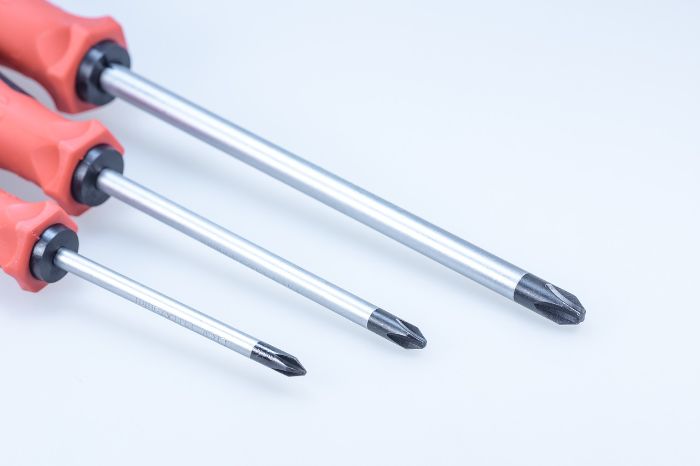
What a good starter screwdriver setup really needs
A multi-bit driver wins the first-buy argument because one handle covers the bits homeowners actually use. According to This Old House recommendations for new homeowners, screwdrivers stay at the top of the list because they solve the first wave of repairs faster than almost anything else in the house. Look for a full-size driver with Phillips #1 and #2, slotted sizes, square #2, and Torx bits around T15 to T20. That spread covers a surprisingly large share of home hardware.
Tip fit is where cheap drivers give themselves away. A good tip settles into the screw head with a dry, locked-in click. A weak tip rocks, slips, and polishes the fastener without moving it. That failure shows up early on cabinet screws and appliance panels.
Why the free hex key from the furniture box is not enough
Thin stamped keys work for one setup and then start to hurt your hand or round off the hardware. A folding hex key set gives better leverage, better control, and a much better chance of keeping the bolt usable the next time the furniture needs tightening.
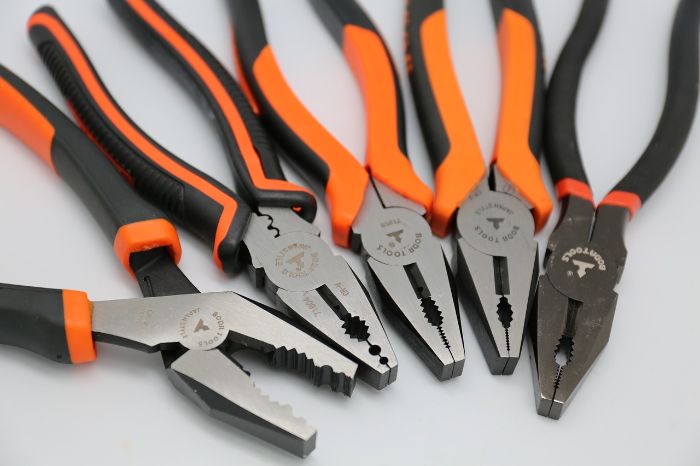
Tongue-and-groove pliers for larger fittings
These pliers are built for turning and holding parts that are too large, too round, or too awkward for ordinary pliers. Under sinks, around traps, and near shutoff valves, that wider jaw range matters immediately.
Jaw adjustment matters almost as much as jaw size. If the channel slips under load or the teeth fail to bite cleanly, the tool skates across rounded chrome fittings without holding them. Under-sink access is where the right jaw position matters most because you rarely get a clean straight-on angle. That is when a simple shutoff or trap job starts feeling much harder than it should.
Needle-nose pliers for clips, staples, and tight spaces
Needle-nose pliers are the reach tool in the kit. They hold small pieces, pull bent staples, grab washers, and work in narrow spaces where fingers fail first. They are not there for brute force. They are there for control.
They also earn their place when you need to bend clips back into shape, retrieve dropped parts, or hold a small piece in place as a screw starts. What they are not built for is torque. Twist too hard with them and you lose the precision that makes them useful in the first place.
The adjustable wrench size that makes the most sense
An eight-inch adjustable wrench is the right first size for most homes because it balances access and leverage. According to This Old House tool recommendations, homeowner tools work best when they match common household tasks and access limits, not maximum size on the rack.
The most common damage pattern here is not a broken tool. It is chatter in the jaw and slip across the flats of the nut. That is why jaw stability matters so much. A wrench that feels fine in the aisle can feel awful under a sink.
Stripped screw heads and scarred nuts usually start with poor fit, not with unusually stubborn hardware. That is the mistake worth preventing early.
Measuring, Cutting, And Surface Prep Tools
Many homeowner repairs do not fail on force. They fail on layout, marking, and cutting. That is why these tools deserve a bigger role than many starter lists give them.
Tape measure and level are not optional add-ons
A twenty-five-foot tape is the practical first size because it works for both small indoor checks and full wall or room measurements. This Old House recommends at least a sixteen-foot tape for household measuring, and stepping up to twenty-five feet gives homeowners more flexibility for room spans, shelving layouts, and furniture clearance without much extra bulk.
A twenty-four-inch level earns its place because small levels can miss slow drift across a shelf or mirror. That is exactly the kind of error that reads loudly once the wall anchors are already in. It is one of the quiet heroes behind clean hanging work and the early steps in drywall repair basics after a wall install goes wrong.
Utility knife for fast cuts and cleaner edges
A utility knife handles box opening, old caulk, shims, flooring packs, drywall paper, and light trimming. A fresh blade glides with a controlled drag. A dull one chatters and tears. That difference shows up in the edge you leave behind.
Why a putty knife is the first near-core add-on
Many broad homeowner lists include putty knives near the top because wall scuffs, small dents, old caulk, and paint scraping show up quickly in lived-in spaces. It sits one tier below the core hand tools, and only by a small margin. A good putty knife helps spread filler cleanly, lift scraped paint edges, and clean up caulk removal without chewing up the surface around the repair. Once the first wall patch or trim cleanup job appears, it usually becomes the next obvious purchase.
How To Choose Homeowner-Grade Hand Tools
Once you know what belongs in the kit and what to buy first, the next question is what version to choose. The cleanest filter is fit, control, access, durability, and replacement ease. The biggest buying mistake is assuming more size always means more usefulness. For homeowners, control usually matters more than raw force, and accuracy matters more than a giant piece count.
- Choose control over size: a sixteen-ounce hammer and eight-inch wrench fit home repairs better than oversized versions.
- Choose accurate measuring tools over cheap ones: a readable tape and true level prevent the mistakes you would otherwise need to patch.
- Choose stable jaws and clean tip fit: sloppy pliers and weak screwdriver tips damage hardware before the job is done.
- Choose replaceable blades: a utility knife stays useful only if you can refresh the edge quickly.
- Choose comfort for repeated use: according to CDC and NIOSH guidance, better grip diameter, neutral wrist angle, and lower squeeze force improve control during cabinet work and overhead tasks.
If a tool feels uncertain in the aisle, it will feel worse in a cramped cabinet or over your head on a step ladder. That is the simplest buyer framework in the whole article.
Other Tools Many Homeowners Add Next
A strong starter kit works because it covers the core hand tools first and expands in a predictable way. The next layer should solve repeated homeowner friction, not just make the box look busier. It should also keep the kit easier to carry to the point of repair, not harder to find and use.
Next-wave tools that solve repeated household problems
Wall and cleanup add-ons usually start with a putty knife and a stud finder. They support patch work, anchor placement, scraped edges, and the small wall corrections that appear early in ownership.
Utility and access add-ons usually mean an extension cord, plunger, wire cutter, non-contact voltage tester, and headlamp. These tools cover awkward outlets, clogs, low-voltage wire handling, quick checks around fixtures, and dark cabinets or utility corners where the starter flashlight still leaves your hands full.
Storage and carry add-ons usually mean a compact toolbox or tool bag that keeps the kit visible and easy to move. For broader home products and tools decisions, keep the hand-tool core ahead of specialty gadgets and convenience buys.
What each next-wave tool solves
A putty knife handles wall dents, old caulk, and trim cleanup. An extension cord solves awkward outlet placement during inspections, cleaning, and light tool use. A plunger covers a messy household problem no screwdriver will touch. Wire cutters and a non-contact voltage tester bring safer handling when you are dealing with light fixtures, thermostat swaps, or old low-voltage wire routing. A headlamp is the hands-free upgrade once the starter flashlight is already in the kit, and a stud finder plus tool bag soon stop feeling optional.
What To Delay Until The House Proves The Need
Not every useful tool belongs in the first purchase wave. A sharp homeowner toolkit is as much about delay logic as it is about buying logic.
Skip giant combo kits packed with filler
The usual pattern is one usable driver, one acceptable hammer, and a lot of low-value extras around them. Big piece counts look impressive. They rarely improve the first month of real repairs. The filler is usually duplicate drivers, weak metal, tiny bits you will never reach for, and low-value pieces that make the kit look fuller than it is.
Delay specialty tools until repeat repairs justify them
Basin wrench, compact socket set, pry bar, caulk gun, and step ladder can all become excellent purchases. They just do not all need to land on day one. Buy them only after the same repair type shows up often enough to justify dedicated access, reach, or leverage, not when the packaging tries to frighten you into overpreparing.
Do not treat hand tools as a shortcut around safety
According to OSHA and CDC/NIOSH guidance, condition, fit, and proper use matter as much as tool choice. Safety glasses, gloves, good lighting, and access matter. An insulated handle does not turn live electrical work into a starter-toolkit task. Safe ladder habits do not get replaced by reaching from a chair because the hammer is already in your hand.
Conclusion
A useful homeowner toolkit starts with nine core hand tools, adds safety and visibility items early, and postpones specialty tools until repeated repairs justify them. That is what separates a practical starter kit from a filler-heavy case.
The real advantage is faster starts, less household friction, fewer postponed repairs, and less wasted spending on tools that sit untouched while the same small problems keep coming back.
FAQ
What tools should be on a home maintenance toolkit checklist?
A home maintenance toolkit checklist should include a claw hammer, multi-bit screwdriver, folding hex key set, tongue-and-groove pliers, needle-nose pliers, adjustable wrench, tape measure, level, utility knife, safety glasses, work gloves, and a flashlight. That combination covers fastening, gripping, measuring, cutting, wall hanging, and small plumbing fixes without overloading the kit with specialty tools too early.
What hand tools should first-time homeowners buy first?
First-time homeowners should buy a claw hammer, multi-bit screwdriver, folding hex key set, tongue-and-groove pliers, needle-nose pliers, adjustable wrench, tape measure, level, and utility knife first. That core group covers the majority of fastener, measuring, grip, and small repair tasks before specialty tools need to enter the picture.
Do I need a tool box or a tool bag for a basic home toolkit?
Either can work, but a compact tool bag is often easier for homeowners because it carries quickly from room to room and keeps the most-used tools visible. A small box works well if the kit mostly stays on one shelf. The better choice is the one that makes the toolkit easier to reach and easier to return to the same place.
What happens if I buy one of those giant bargain tool kits?
You usually get a handful of useful tools surrounded by filler. Weak driver tips and sloppy jaws are the first parts that show up as a problem. A smaller kit with better core tools almost always serves a homeowner better than a larger kit padded with duplicates.
Is a multi-bit screwdriver better than a full screwdriver set for homeowners?
For most homeowners, yes at the start. A multi-bit screwdriver covers the common fasteners in one handle, saves space, and works well for loose hardware, appliance covers, and furniture. A full screwdriver set becomes more useful later when repeated jobs prove you need slimmer shafts, stubby access, or dedicated tip sizes for tight spaces.
How much should a basic homeowner toolkit cost?
A practical range is about $150 to $250 for decent homeowner-grade quality once the hand tools and the first support items are included. Spend on the tools that need stable fit and control first, especially drivers, pliers, wrench, tape, and level. That budget usually goes further than chasing a giant low-cost combo kit.
Where should I keep a home toolkit?
Keep it close to where repairs happen most often, not buried in the back of the garage. A hallway closet, mudroom cabinet, laundry shelf, or utility area works well because the kit stays easy to reach from kitchens, bathrooms, bedrooms, and storage spaces.