
Neem oil for plants can mean several different pesticide formulations, and the word on the front of the bottle does not tell you how each one works. A clarified neem oil mainly acts through contact with susceptible pests. An azadirachtin product can disrupt feeding and insect development. Confusing the two can lead to missed pests, unnecessary spraying or injured leaves.
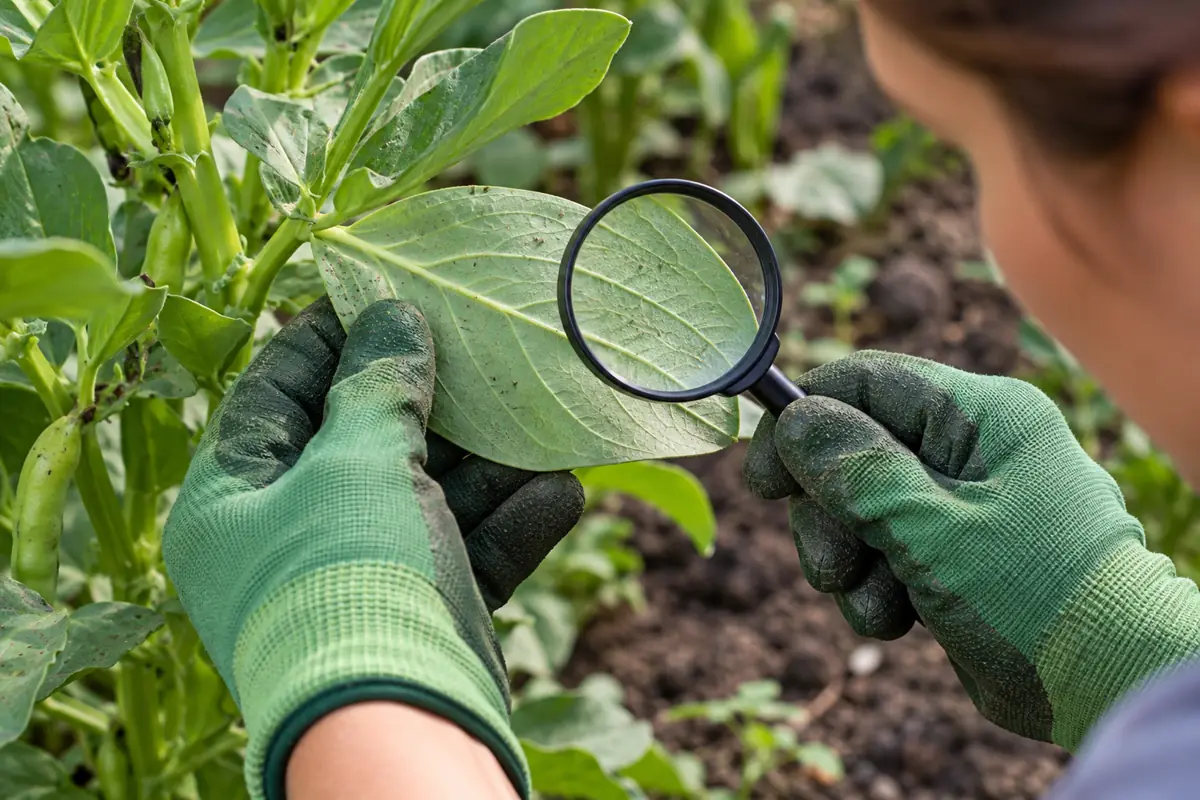
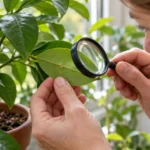
Begin with what is happening on the plant. Find living insects or confirm the disease, inspect the damaged growth and check whether the plant is stressed. Then read the actual product’s active ingredients and directions for that plant, pest and location.
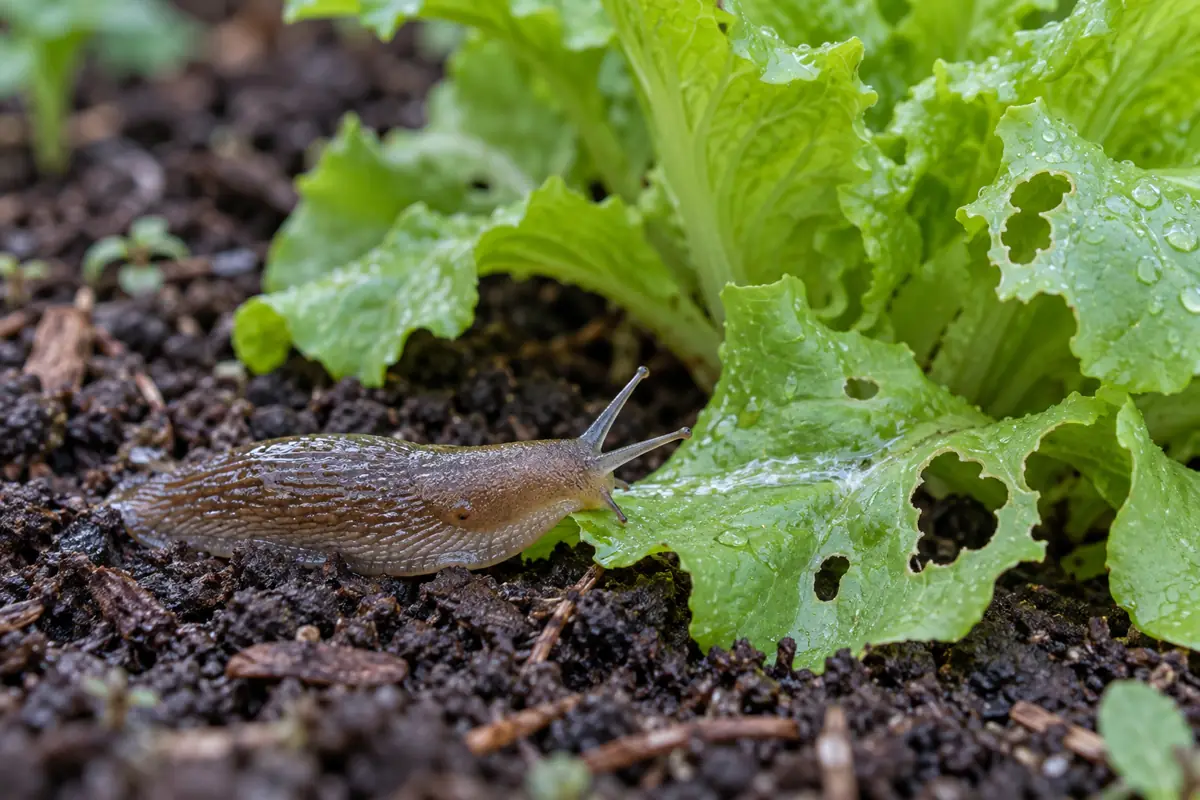
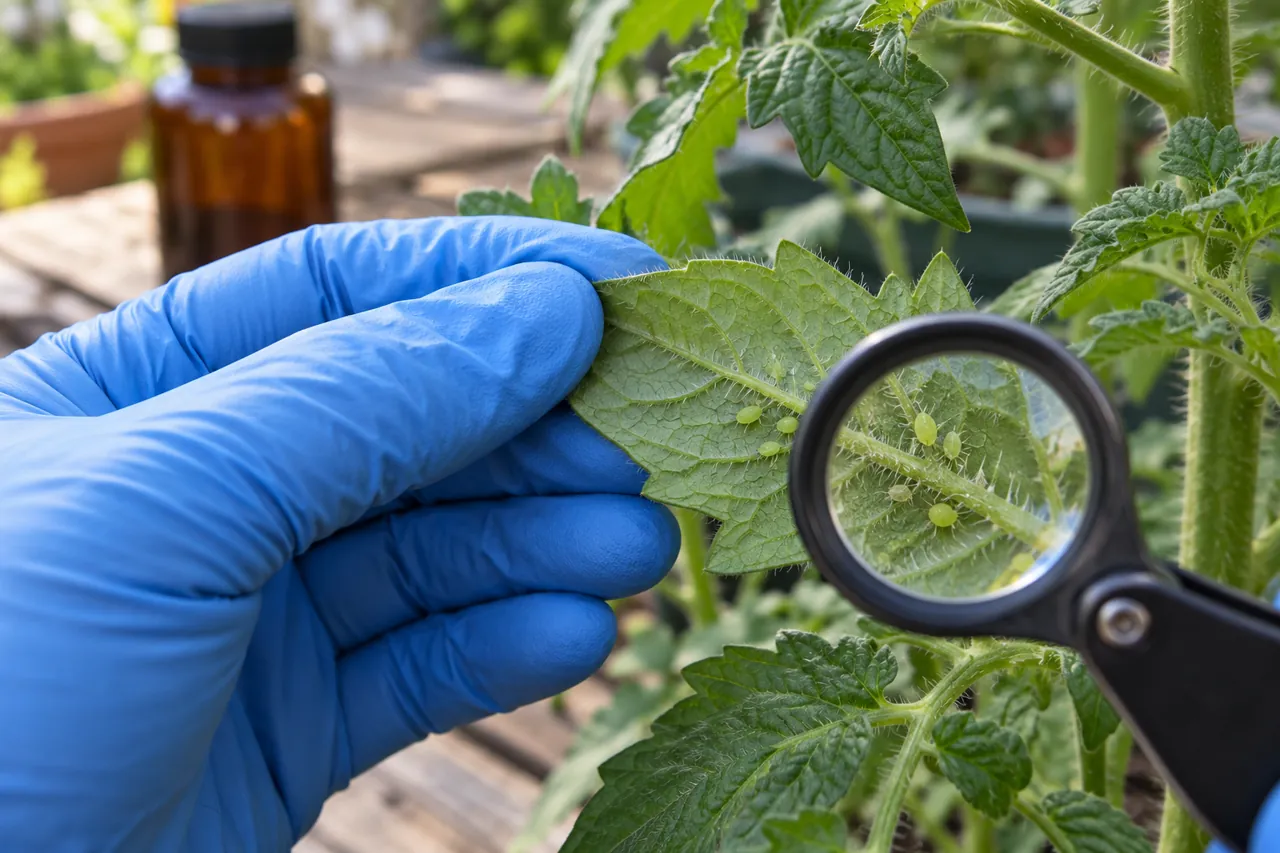
Aphids under a tomato leaf, caterpillars chewing cabbage and hard scale covers on a houseplant ask for different decisions. Sometimes water removal or leaving natural enemies alone is enough. When treatment is justified, the product and the conditions must fit together.
Read the active ingredient before choosing the job.
- Clarified hydrophobic extract of neem oil
- A contact oil. It must reach susceptible pests; some products also list particular leaf diseases.
- Azadirachtin
- A feeding deterrent and insect growth regulator. Susceptible immature insects may respond over time.
- Cold-pressed oil, blends or cosmetic oil
- Composition and use differ. Read every active ingredient and the garden-use directions; do not substitute a homemade dilution.
- Before applying anything
- Confirm the plant, pest, indoor or outdoor site, weather and precautions on the actual label.
Key Takeaways
- Identify living pests and plant damage before choosing neem.
- Read active ingredients; contact oil and azadirachtin act differently.
- Match the exact product to crop, pest and location.
- Delay oil sprays on stressed plants or unsuitable weather.
- Track living pests and new damage before repeating treatment.
Table of Contents
Neem Oil for Plants Works Differently From Extracted Azadirachtin
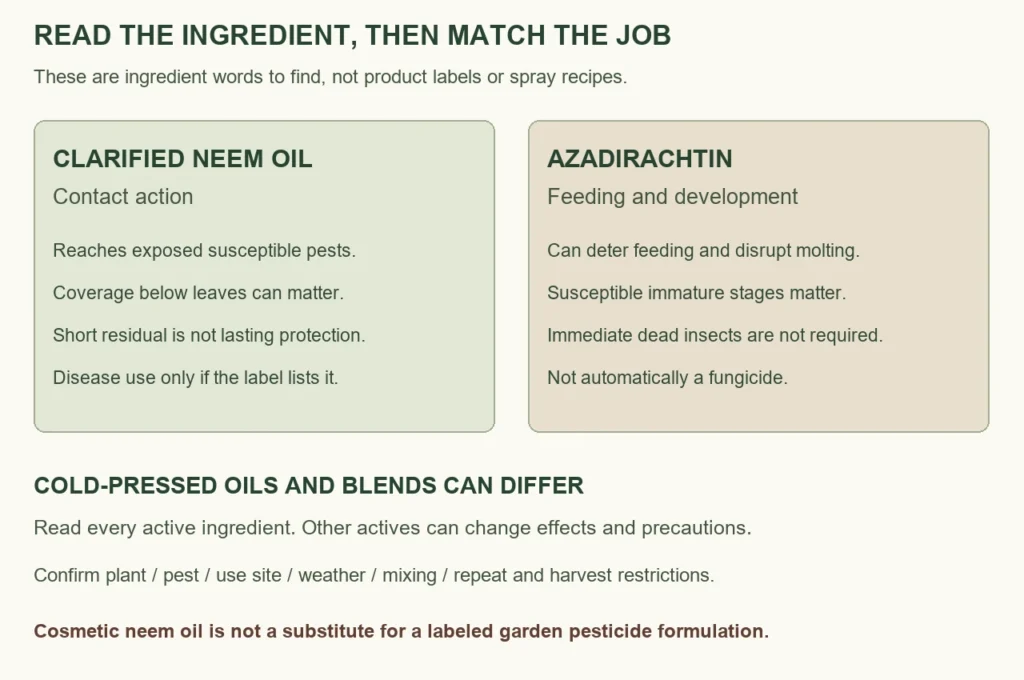
Neem seeds contain a mixture of compounds. Processing can separate azadirachtin from the oil; the remaining material is described as clarified hydrophobic neem oil. A cold-pressed preparation can retain a different mixture. Read the declared active ingredient rather than assuming every neem-derived bottle contains the same compounds in the same amounts.
Clarified oil behaves mainly as a horticultural contact oil. It can coat susceptible pests, interfere with breathing and disrupt cell membranes. A colony sheltered beneath a leaf may escape a spray directed only at the upper surface. The generally short residual activity also means that a dry coating is not long-lasting protection against every new arrival.
Azadirachtin acts differently. It can deter feeding and interfere with development and molting, especially in susceptible immature insects. A larva may reduce feeding before you see a change in survival. Expecting an immediate pile of dead insects can lead to a needless second application.
Results vary with the pest. In one comparison, one azadirachtin product performed better against some beetle larvae than against infestations dominated by adults in a comparison across agricultural field trials. The trials involved particular crops and products; their average effect does not predict control in a home garden or apply automatically to clarified neem oil.
The neem oil and azadirachtin fact sheet from the National Pesticide Information Center describes those components and their effects. Its general explanations do not authorize a use on your particular crop. Blended products can contain other active pesticides that change both the target and the precautions.
Read the Crop, Pest and Use Site Before Opening the Sprayer
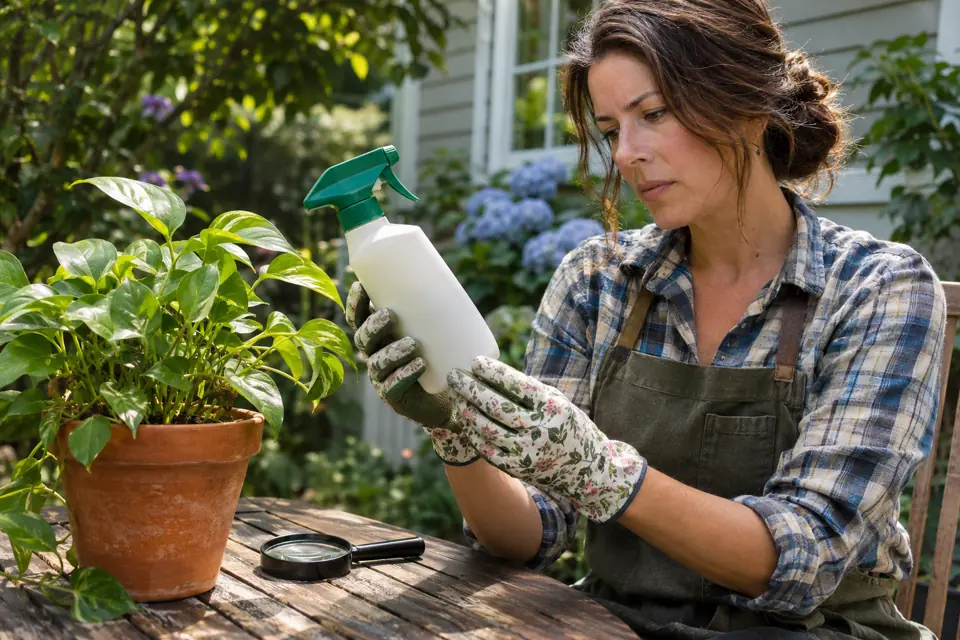
Turn the container around and find the active ingredient panel, formulation and directions for use. Check whether it is ready to use or concentrated. Ready-to-use liquid is already prepared for its directed application; a concentrate requires its own measured preparation. Adding an arbitrary spoonful to water does not make the two equivalent.
Then check the plant or applicable crop group, the growing location and the intended target. Outdoor ornamentals, indoor houseplants, greenhouse crops and edible herbs are different uses. Directions for roses outdoors do not automatically apply to basil on a kitchen shelf.
Read the harvest restrictions for food crops, along with application limits, repeat intervals, protective equipment and environmental precautions. The EPA treats pesticide labeling as legally enforceable. A general claim that an ingredient is natural or used on vegetables cannot replace the directions for the formulated product.
If the print is unclear or the directions do not resolve your plant and site, obtain the complete current labeling from the manufacturer or ask your local Extension service before use. Match the exact product and registration details. A similarly named product, old retailer listing or professional nursery table may describe something different.
Cosmetic oil and household detergent are not a garden formula
A bottle sold for cosmetic or medicinal use does not supply garden pesticide directions merely because it contains neem. UF/IFAS explicitly distinguishes those oils from pesticide formulations. Choose an appropriately labeled garden product or another management method; do not improvise a dish-detergent emulsifier and then assume the leaves or edible crop will tolerate it.
Other ingredients matter too. A neem-branded mixture may contain an additional insecticide. Read the full panel and all restrictions, including those introduced by the other active ingredients. Plant origin, organic-production approval and permission to treat a particular crop are separate questions.
Match the label to one plant and one problem
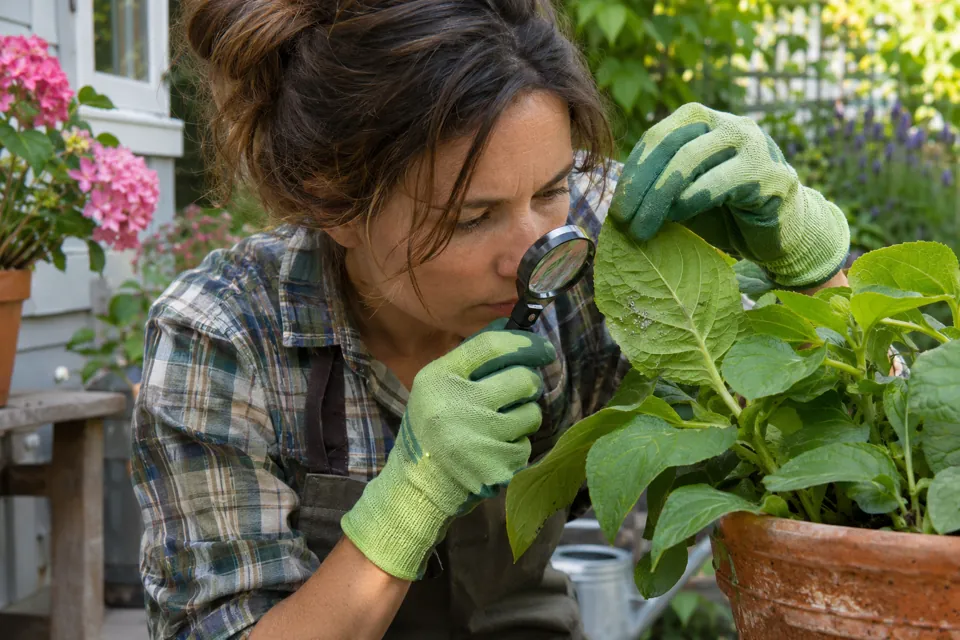
Write down the plant, its location and what is still active on it before opening a bottle. For a patio pepper with sticky leaves, turn over the newest shoots and check for living aphids. Then look for the crop, pest and use site on the label in your hand. Two bottles sold as neem can have different active ingredients and directions. A match on the brand or the front of the bottle tells you very little.
Sticky residue alone calls for a closer look. Clean one leaf and inspect the next flush of growth before deciding. When you find an active pest and the product label fits, note any weather, bloom or harvest restrictions on that same label. If the plant or use is unclear, set the bottle aside and resolve that question first.
Match the Pest’s Exposed Stage to the Product’s Action
A living aphid colony, settled whitefly nymphs and a caterpillar all present different surfaces and feeding behavior. Start with identification, current injury and the plant’s ability to tolerate that injury. A few pests with active predators may need observation, not a bottle.
| What you have confirmed | Possible product fit, if labeled | Common reason to reconsider |
|---|---|---|
| Exposed aphids, whitefly nymphs or mites | A suitable neem contact oil reaching the actual pests | Hidden undersides, sensitive leaves, stressed host or natural enemies already reducing the colony |
| Young chewing insect larvae | A susceptible stage listed on an azadirachtin product | Wrong species or stage, or an expectation of immediate contact knockdown |
| Hard, wax-covered adult scales | Species- and stage-specific management; exposed young stages may be more vulnerable | Repeatedly wetting protected covers without checking living insects or crawler timing |
| Diagnosed powdery mildew or another foliar disease | A particular oil formulation explicitly labeled for that disease and plant | Azadirachtin alone is not a fungicide; black or white marks may have another cause |
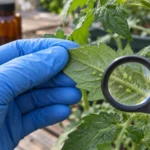
For aphids, inspect the undersides and young shoots, then consider physical and biological aphid control. A water stream can remove a colony from a sturdy plant, although tender seedlings need gentler handling. Keep beneficial insects in the decision, especially when the plant is growing well.
On a flowering outdoor tomato, a small aphid colony on a vigorous shoot may be less urgent than the same infestation on struggling new growth. Look for predators and examine the developing leaves. If you can remove the colony gently, recheck that shoot for living aphids and new curling before choosing a pesticide. If treatment becomes necessary, the tomato use, flowers, heat and actual oil formulation still need checking. Pest presence is the beginning of the decision, not an automatic instruction to spray.
Whitefly nymphs remain on leaf undersides, where a top-only mist misses them. Mobile adults seen afterward do not tell you what happened to those settled nymphs. Check the same leaves and living stages when judging the result.
A white fungal-looking patch needs a diagnosis before a fungicide choice. Sticky honeydew and sooty mold differ from powdery mildew; black spot on rose leaves has its own disease pattern and management. No neem product inherits permission to treat all leaf spots from a broad marketing phrase.
Likewise, flying gnats do not make a generic oil drench appropriate. Confirm fungus gnat larvae and the damp growing medium. Some azadirachtin products permit specific soil applications, which is different from pouring a cosmetic or foliar oil into a pot.
Check Edible Crops, Indoor Plants and Sensitive Leaf Surfaces
For a tomato plant, verify the applicable edible-crop use and target on the label before thinking about harvest. Do the same for every herb or vegetable. Do not transfer a zero-day harvest allowance from one oil product to a different formulation, crop or mixture.
Check both the edible herb and indoor location for basil near the kitchen. An outdoor ornamental label does not resolve either question. If the product is unsuitable, isolate the affected pot where practical and confirm the pest and use a plant-appropriate physical response; do not make the bottle suitable by diluting it further.
For a houseplant, confirm indoor use and the plant’s tolerance. Moving the pot outdoors for spraying does not erase a label restriction. Follow its application and return-to-use directions, and keep spray away from food, people, pets and surfaces that are not treatment targets.
Waxy blue or gray foliage can change color when oil removes the surface wax responsible for that appearance. Some succulents and other sensitive plants can also suffer injury. The horticultural oil application and sensitivity guidance from University of Maryland Extension describes this risk and advises checking known plant intolerances.
Where the label permits the plant and tolerance remains uncertain, test a small, inconspicuous area first. Maryland’s guidance calls for watching it over the next one or two days. Look for spotting, a change in leaf color or damaged margins. A successful small test is a preliminary check, not proof that every later application will be tolerated under different weather.
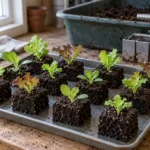
Check stressed plants separately. A wilted transplant or dry root ball can leave foliage vulnerable even after a quick watering. Restore suitable moisture and allow the plant to recover before reconsidering oil. Do not use a pesticide spray as a treatment for stress when no target pest has been established.
Heat, Slow Drying and Recent Sprays Can Change the Decision
Oil injury depends on the product, plant and conditions. Maryland’s horticultural-oil guidance advises against use above 85°F; UF/IFAS uses an above-90°F warning in its general oil guidance. These are different source recommendations, not a range in which every neem product is safe. Follow the actual label and postpone when conditions or plant stress make injury more likely.
A cool hour on the clock is not enough. Cloudy, rainy or very humid weather can slow evaporation, and near-freezing weather introduces other limits. Check the forecast and the product’s conditions for use. A fixed evening time cannot guarantee that an oil application is appropriate.
Check the plant’s recent treatment history. Oils can be incompatible with sulfur and some copper formulations. Read both products’ directions for mixtures and required separation; do not invent a general number of days or add another pesticide to make the tank more powerful.
Keep spray off open flowers and foraging pollinators, and protect natural enemies from direct contact. Short residual activity can reduce some later exposure; it does not make direct coating harmless. Pollinator-conscious pest management begins with checking the pest and its natural enemies, then choosing a suitable response. Neem-derived actives can also pose aquatic risks, so follow drift, runoff and water-protection restrictions around ponds, drains and other water.
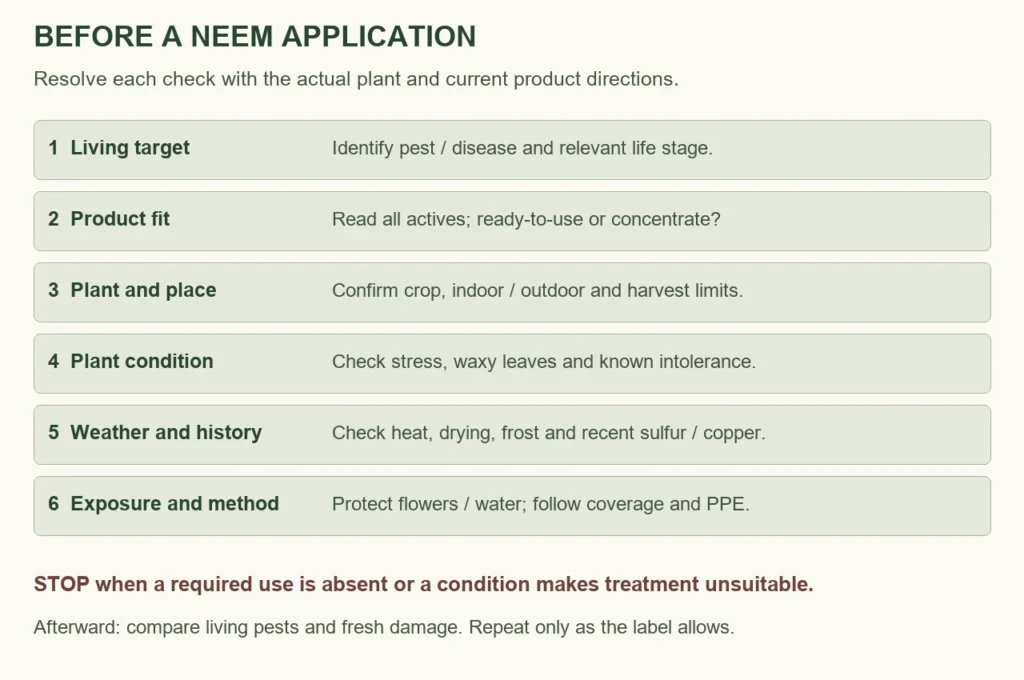
Follow the Product’s Mixing and Coverage Directions
Once the plant, target and conditions fit, prepare only as directed by that product. Measure concentrate with the specified equipment and water volume, wear the required protection and follow any shaking or agitation instructions. A mixture separating in the sprayer can deliver uneven amounts of oil.
For a contact treatment, reach the permitted surfaces where the susceptible pests actually occur. Turn accessible leaves to inspect the undersides and follow the coverage directions without unnecessary runoff. Spraying extra liquid over the upper surface does not compensate for missing a sheltered colony below.
For azadirachtin, the target’s feeding and developmental stage affect the expected response. Follow that formulation’s method and timing; do not assume the same application pattern as a contact oil or that every neem-derived treatment moves throughout the plant.
Write down the product, plant, pest stage, dilution used if applicable, date and weather. Mark a few representative leaves or shoots and note living pests and fresh injury. This gives the next inspection something concrete to compare, rather than relying on how glossy the foliage looks after spraying.
Judge New Feeding and Living Pests Before Repeating a Spray
Check whether living pests remain in the treated locations and whether fresh damage continues. Old scale covers can persist after the insects die, and dead leaf tissue does not turn green again. Those remnants alone do not demonstrate treatment failure.
If a contact oil misses pests beneath curled leaves, review coverage and whether that site can be reached safely. If an azadirachtin treatment has not produced immediate dead insects, consider its feeding and growth effects before drawing a conclusion. Neither situation justifies increasing the concentration beyond the label.
Stop when the plant develops unexplained injury
New brown patches, yellowing or damaged leaf edges after spraying warrant a pause. Compare treated and untreated areas and review heat, soil moisture, recent sprays and plant sensitivity. Oil injury is one possibility; pests, diseases and water stress can produce overlapping symptoms. Do not cover a new injury with another round of the same treatment before diagnosing it.
Repeat only if living pests or disease conditions warrant it and the label allows the interval and total use. Continued reinfestation may reflect new insects, an untreated source or an unsuitable product-stage match. A routine weekly spray is not a substitute for these observations.
Choose a different tactic when the fit is poor. Removing affected material where appropriate, managing water or conserving natural enemies can be part of broader pest management. For a valuable plant with an uncertain diagnosis, take clear photographs and seek local Extension advice before escalating treatment.
Conclusion
Identify the problem, read the active ingredients and match the product to the plant, pest stage and use site. Keep weather, stress and nearby organisms in the decision. Neem can be a useful tool when those conditions fit; careful observation determines whether to apply it, stop or choose another approach.