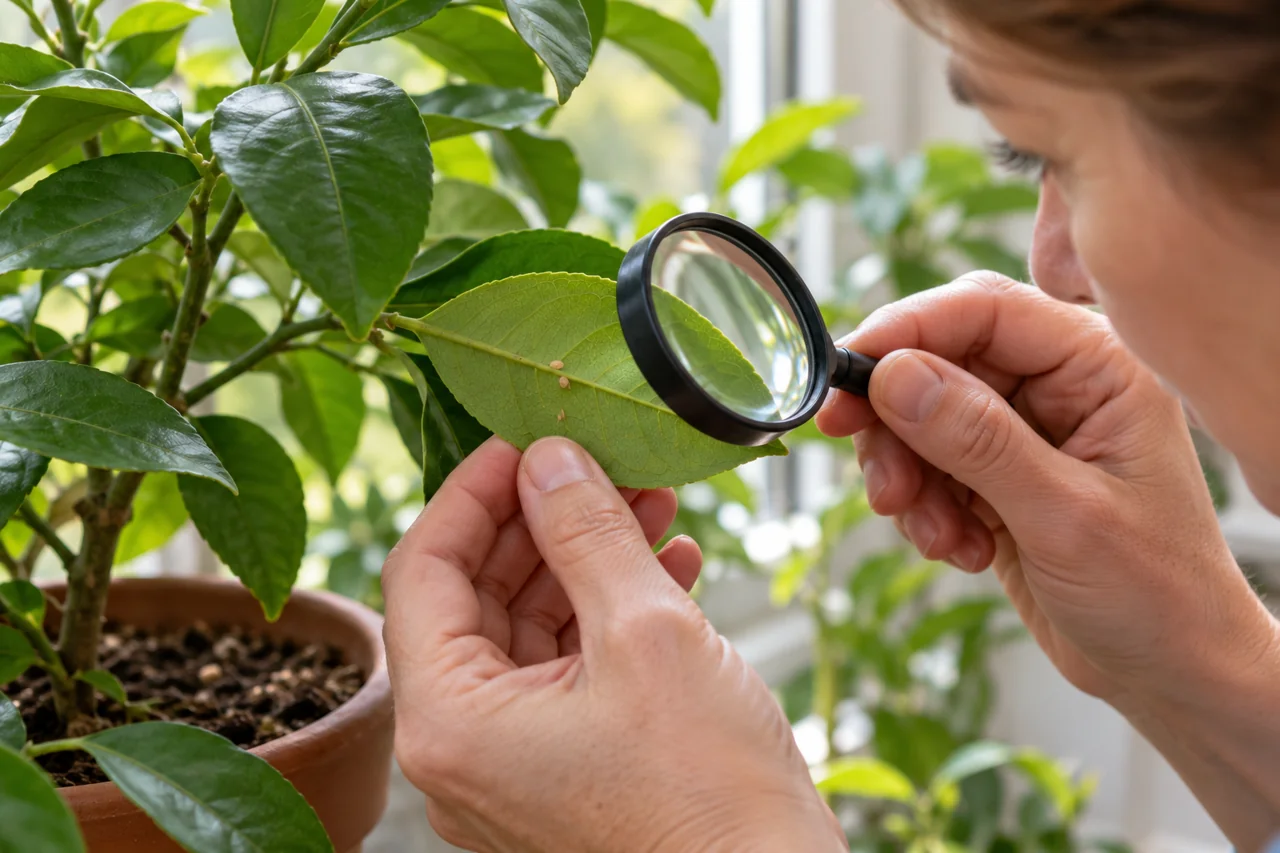
Scale insects often look like small bumps attached to leaves, stems or bark, with little resemblance to an insect you can pick out by its legs. Some blend into a twig. Others gather beneath a leaf vein, accompanied by sticky drops or a black surface film. Those clues help you choose where to inspect, but none identifies the pest by itself.
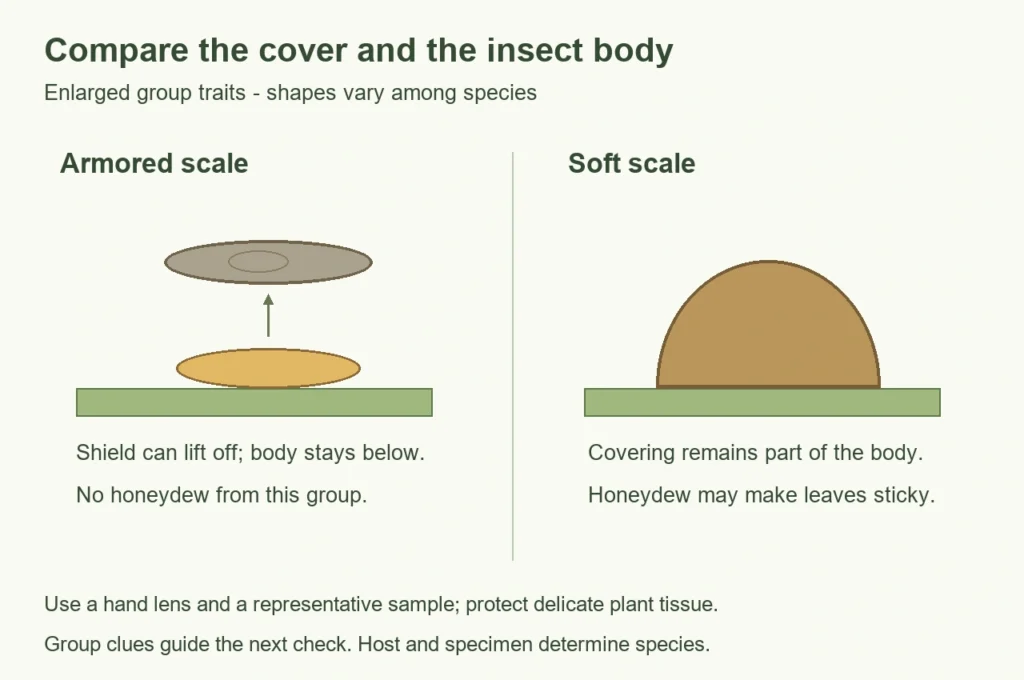
The first useful distinction is between a separate armored cover and a soft scale’s attached body covering. The second is whether living insects remain beneath what you see. Dead shields can stay on a plant, making an old infestation look active long after feeding has stopped.
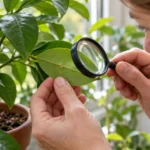
Use a hand lens, examine a few representative spots and record the host plant. Then match the response to live insects, plant damage and the vulnerable young stages. A bottle chosen before those checks can miss the pest.
Inspect the bump before choosing a treatment.
- A separate shield lifts off, leaving a body below
- Armored scale is a possibility. These scales do not produce honeydew; check the host and whether insects are alive.
- A pliable dome and insect lift together
- Soft scale is a possibility. Sticky honeydew can accompany it. Check for other honeydew-producing insects too.
- Only dry, empty covers remain
- Check more samples and look for new crawlers or fresh damage. Old covers alone do not justify another spray.
Key Takeaways
- Inspect leaf undersides, veins and twig crevices with magnification.
- Separate armored covers from attached soft bodies before choosing control.
- Check living insects and new damage before repeating a treatment.
- Monitor crawlers using the identified species and local seasonal timing.
- Match any pesticide to the plant, location and current label.
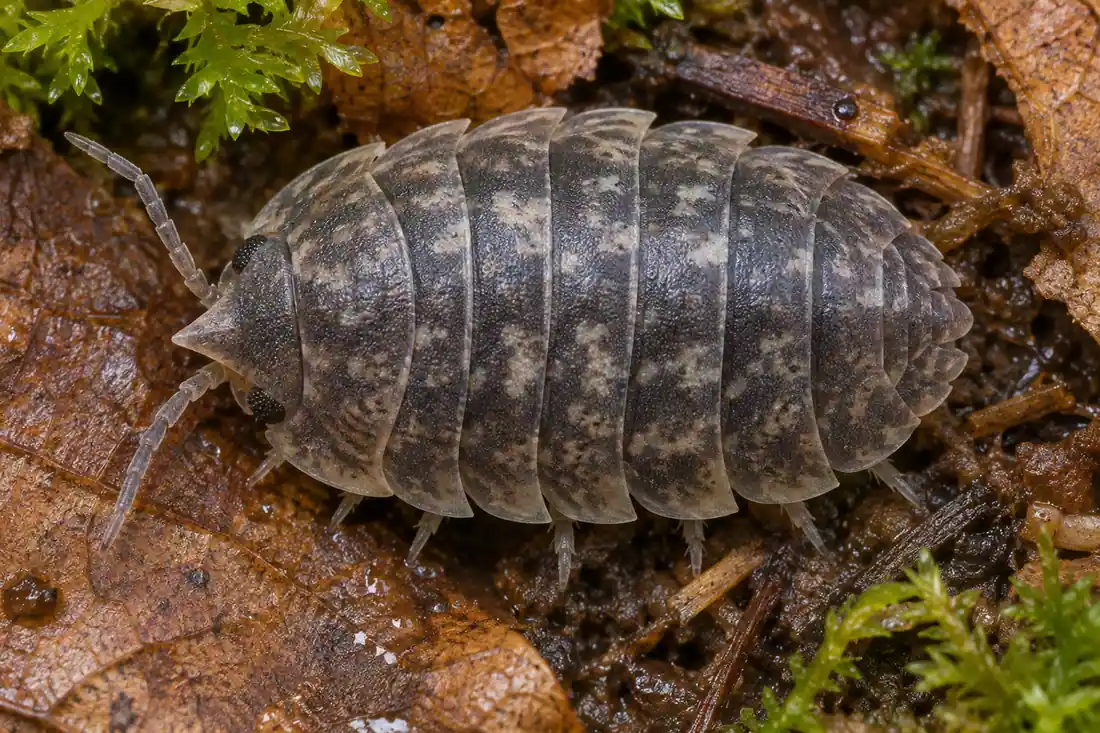
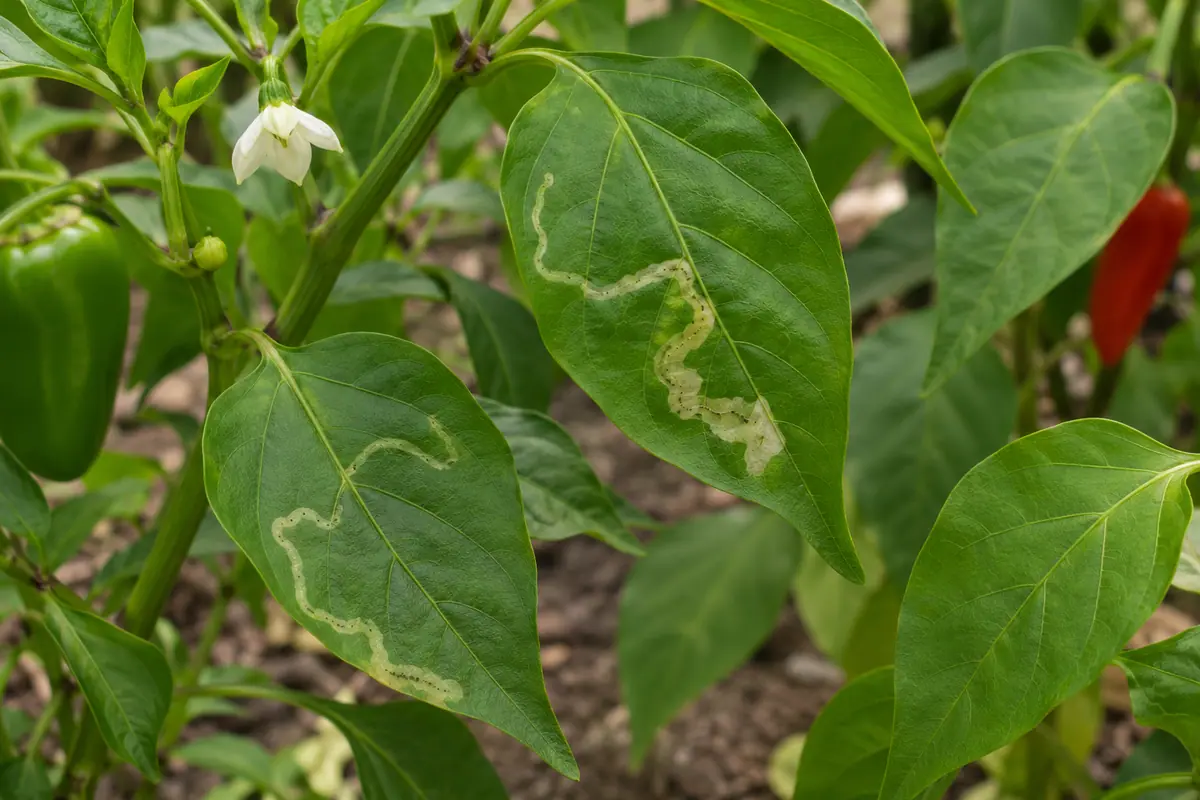
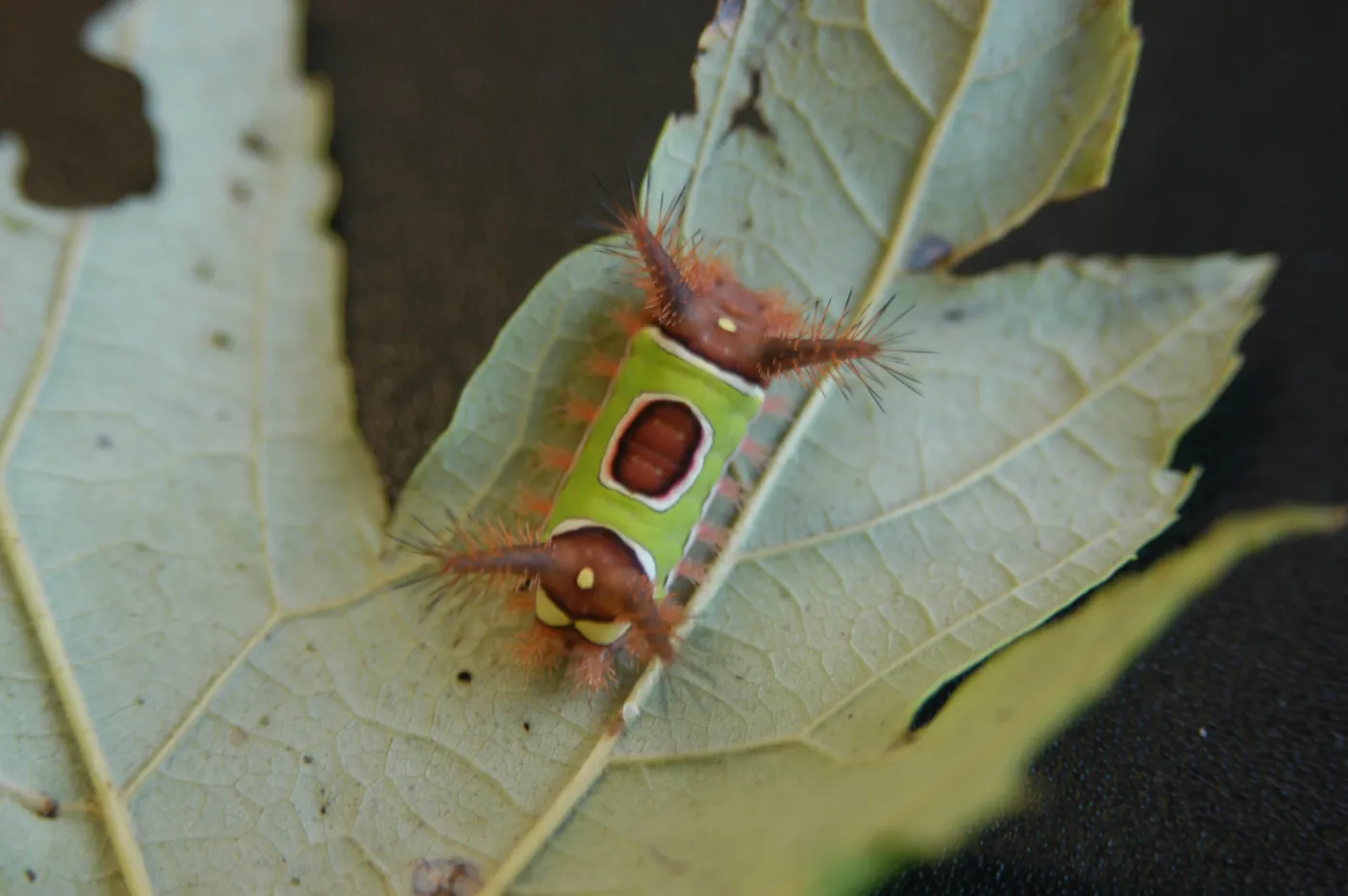
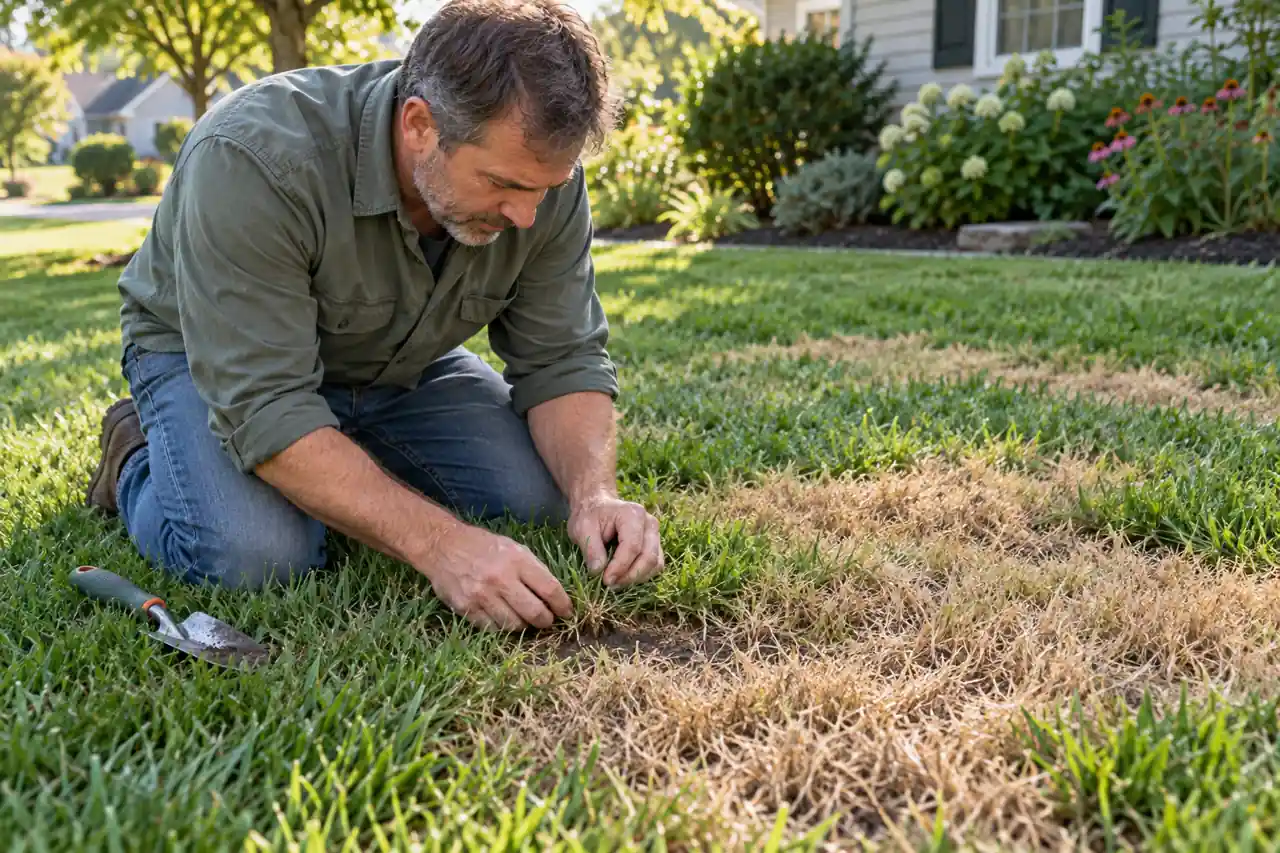
The enlarged pest visuals are illustrations of general traits. Use a hand lens or an expert identification for the insects on your own plant.
Table of Contents
Identify Scale Insects on Leaves, Stems and Bark
Begin on the plant parts closest to the symptoms. Turn over a yellow-spotted leaf, follow its main vein and inspect the stalk where it joins the stem. Check twig forks, bark crevices and the sheltered spaces between emerging leaves. A clean upper leaf surface can conceal a substantial population underneath.
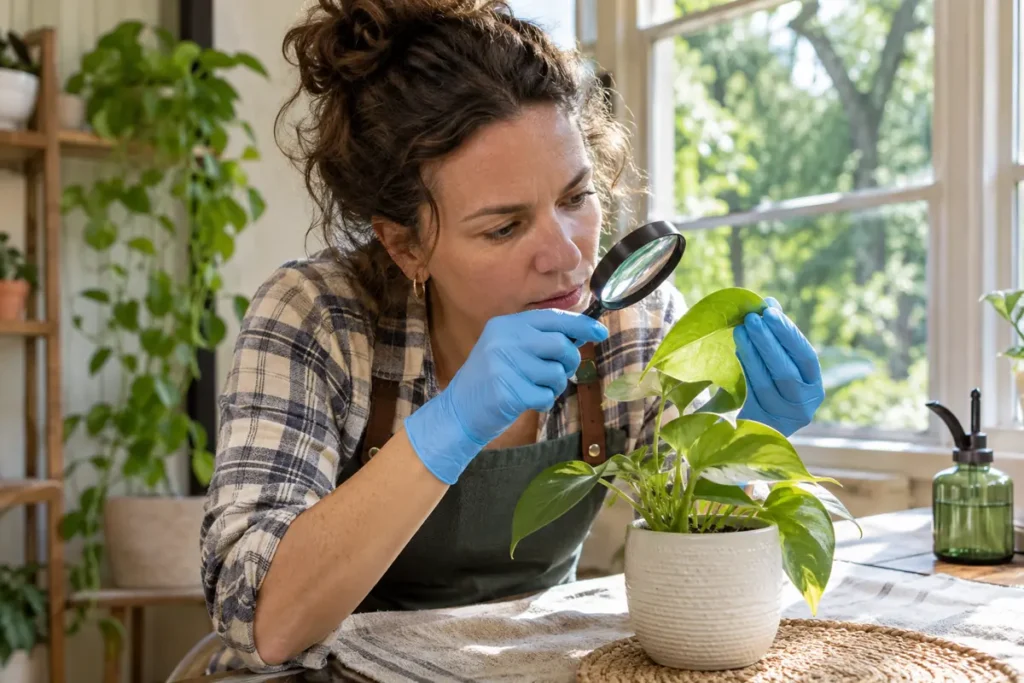
Common scales can be smaller than a grain of rice. Many armored forms measure roughly one-sixteenth to one-eighth inch, and common soft forms can be larger. Shape and color vary with species, sex and age. Use those features to guide inspection, not to decide the species from a distant photograph.
Touch a representative bump gently on an inconspicuous area. Naturally occurring bark pores and root buds can resemble insects. Check their attachment; they do not detach like a scale cover. Avoid gouging a stem to prove a diagnosis. Valuable or delicate plants deserve a clearer photograph or a specimen assessment when the result remains uncertain.
Sticky leaves call for a broader search. Aphids and whiteflies produce honeydew too. Cottony insects may be mealybugs on a houseplant, which Wisconsin Extension places within the scale-related superfamily. Cottony egg sacs also occur in other scales, so white fuzz alone is not a reliable dividing line.
Armored and Soft Scales Feed and Cover Themselves Differently
Armored scales have a distinct protective covering above the insect. On a suitable sample, that covering can lift away and leave the body on the plant. Their feeding removes plant-cell contents, and they do not excrete honeydew. A dry-looking infestation can still damage a susceptible host.
Soft scales have a covering attached to the body. A typical dome comes away with the insect as one attached unit. They feed on phloem sap, the plant’s sugar-transporting tissue, and excrete honeydew. Ants may visit the sugary residue, and sooty mold can grow on it.
| Feature | Armored scale | Soft scale |
|---|---|---|
| Covering | Separate waxy shield above the body | Pliable covering attached to the body |
| Gentle lifting test | Shield can separate from the insect | Covering and insect usually lift together |
| Honeydew | Not produced by this group | Can make leaves and surfaces sticky |
| Useful supporting clues | Host, attached plates, local spots or declining shoots | Host, domes, fresh honeydew and associated sooty film |
Black sooty mold grows on the honeydew coating. It is different from a fungus invading the leaf itself. Heavy surface growth can shade the leaf. The source of fresh sugar still needs identification before a treatment can address it. Find the insect producing the residue.
The group changes management, and the species can change it further. The UC Integrated Pest Management scale identification and management guidance describes both damaging species and others tolerated in large numbers by some hosts. Record the plant’s identity along with photographs of the scale.
Check for Living Bodies and Actual Plant Injury
A shield count is not necessarily a living-insect count. Dead covers can remain attached after the insect dies, a persistence described in University of Maryland Extension’s scale monitoring guidance. Before treating, inspect a few representative scales under magnification and compare different parts of the plant.
A live body is generally tender and moist beneath its covering. Dead remains can be dry, crumbly or difficult to see. On expendable material, a gently pressed live scale may leave wet residue. Limit that check to representative expendable material; preserve the tissue on prized leaves.
Small round exit holes can indicate that a parasitoid wasp has emerged from a killed scale. That is useful evidence of natural control on those specimens. It does not establish that every scale on the plant is dead. Look nearby for intact living bodies and newly settled insects.
Compare pest activity with new growth. Increasing yellowing, leaf drop or twig decline calls for closer investigation, particularly on a sensitive host. A healthy shrub with a few scales and evidence of parasitoids may need observation. Waterlogged roots, drought and poor placement can also weaken the plant, so check those conditions before attributing every symptom to the bumps.
Choose and photograph a few repeatable observation points. A particular leaf vein or short stretch of twig is easier to compare later than a broad impression that the plant still looks dirty. Note live bodies, fresh honeydew and new damage separately from old shields.
Find Crawlers Before Setting a Treatment Date
Newly hatched scales are called crawlers. They move to a feeding site before developing the protection that makes settled scales difficult to reach. The young, relatively exposed stage often offers a better opportunity for contact treatments when treatment is needed.
Crawler activity varies with the species and local conditions. Some outdoor scales have a distinct seasonal window; indoor brown soft scale can have overlapping generations. A calendar copied from another state can miss the vulnerable stage entirely. Identification and local Extension timing information help you decide when scouting should intensify.
Sample a woody twig with tape and a lens
Choose several infested twigs you can reach safely. Place a small strip of transparent double-sided tape around each at a marked location, keeping a folded end for removal. Do not bind growing bark. Inspect and replace the strips about weekly during the expected crawler period, recording the host, location and date.
Tiny yellow or orange specks need magnification. Compare them with actual crawler bodies near the scales; dust, pollen and mites can collect on the same tape. The tape gives a sample of movement, not a species diagnosis from color alone. Remove it when the monitoring period ends.
One crawler is a reason to investigate the current wave, especially when timing information for the identified species suggests a longer emergence period that one application might miss. Species-specific guidance may use the beginning of emergence or the timing of a larger cohort. Match any intervention to that biology and the product’s label.
On a small indoor plant, inspecting marked leaf undersides with a hand lens may be more useful than wrapping tape around delicate leaf stalks. Continue looking after manual removal because concealed individuals and overlapping ages can produce another group of crawlers.
Indoor brown soft scale illustrates why a single clean-looking inspection is not the end of the check. Its tiny crawlers can remain under the mother’s covering before moving to a new feeding site, according to brown soft scale biology and management guidance. Revisit the same veins, leaf bases and nearby plants; a new sticky patch is a reason to look for living insects, not proof that every old bump survived.
Start With Accessible Removal and Plant-Specific Care
Move an infested houseplant away from the rest of the collection for assessment, and inspect neighboring plants and new arrivals for similar insects hidden beneath leaves or in stem crevices. Do not assume a short period without visible adults proves the whole collection is clear.
For a small accessible population, support the leaf or twig and gently dislodge scales with a damp cotton swab or a soft brush where the tissue tolerates it. Check along veins and leaf bases. A smooth leaf can take different handling from a tender orchid sheath; stop if removal is tearing the plant.
Clean sticky residue from sturdy foliage gently so fresh honeydew becomes easier to recognize. Keep inspecting the less accessible sites. A surface wipe may miss scales hidden beneath sheaths or among new leaves, and repeated aggressive scraping can cause more damage than the remaining insects.
Change the response for a shrub or tree
Limited, heavily infested shoots may be removed when that fits normal pruning cuts and plant structure. Avoid stripping a whole crown to remove scattered scales. Correct irrigation or root stress and assess whether the host is unusually prone to the pest.
Preserve resident predators and parasitoids. Tiny wasps and scale-eating beetles can be easy to miss, so look for their effects as well as conspicuous adults. A broader natural pest-control approach reduces unnecessary disruption of those organisms.
Trace ants before deciding whether they matter. Ants tending honeydew-producing insects can defend them from natural enemies. That relationship differs from an unrelated ant trail passing the pot. Address genuine access bridges or seek appropriate local ant management without applying sticky materials directly to tree bark.
For indoor plants, review water, drainage and light as part of ordinary houseplant care. University of Minnesota Extension connects poor growing conditions with difficulty resisting pests. Extra fertilizer cannot compensate for damaged roots or remove a protected scale population.
Use the Host, Life Stage and Label to Judge Treatment
Consider a pesticide only after confirming active scale and deciding that the damage warrants it. Horticultural oils and formulated insecticidal soaps are among the contact options used in suitable situations. Their effectiveness depends on reaching the pest, the vulnerable stage and the plant’s tolerance.
A protective adult cover can keep a contact product away from the body beneath. Thorough, label-directed coverage of the relevant leaf or twig surfaces matters. A product wetting only the upper leaf surface may miss the insects along veins underneath.
A Purdue laboratory and field comparison found that oil and insecticidal soap did not perform identically across the scale species and stages tested. Very young crawlers were susceptible in the laboratory, but results for settled insects differed by species and product; the tested treatments did not produce a statistically supported reduction in adult populations in that study. Those results cannot predict the outcome on your particular houseplant. They explain why the correct insect, life stage and eligible label matter more than a general promise that one spray kills every scale.
| Before treatment | Confirm | Reason to pause |
|---|---|---|
| Host and use site | Exact crop and indoor or outdoor use allowed | An outdoor ornamental label does not establish indoor edible use. |
| Pest and stage | Living scale and appropriate susceptible stage | Old shields or an absent crawler stage may give no useful target. |
| Plant and weather | Label conditions, hydration and known sensitivity | Heat, frost or stressed foliage can increase injury risk. |
| Other products and flowers | Compatibility and pollinator restrictions | Open blooms or incompatible recent applications can rule treatment out. |
Oil temperature cautions differ among general guides: Maryland warns against application above 85 degrees Fahrenheit, and the UC scale guide lists temperatures over 90 degrees among its exclusions. Neither number overrides the current product label or makes a stressed plant safe to spray below that number. Follow the more restrictive applicable directions and local plant-specific advice.
Do not combine oil with other pesticides unless their directions permit it. Sulfur and some copper formulations can be incompatible, and required separation intervals depend on the products. Oil can also remove the blue or gray surface wax of some plants. Check host sensitivity before treating valuable foliage.
Indoor citrus and culinary herbs require particular care. A product allowed on an indoor ornamental is not automatically suitable for an edible plant in the same room. Check the actual crop, use site and harvest directions before selecting a product, and avoid substituting a homemade dish-soap or cooking-oil mixture for the tested formulation.
Systemic treatments are not interchangeable across scale groups either. Some products effective against soft scales perform poorly against many armored scales, and pollinator exposure can constrain use. For large trees, above-head applications or an uncertain damaging species, obtain qualified local help and keep your own inspection at ground level.
Measure Recovery With Fresh Growth and New Living Scales
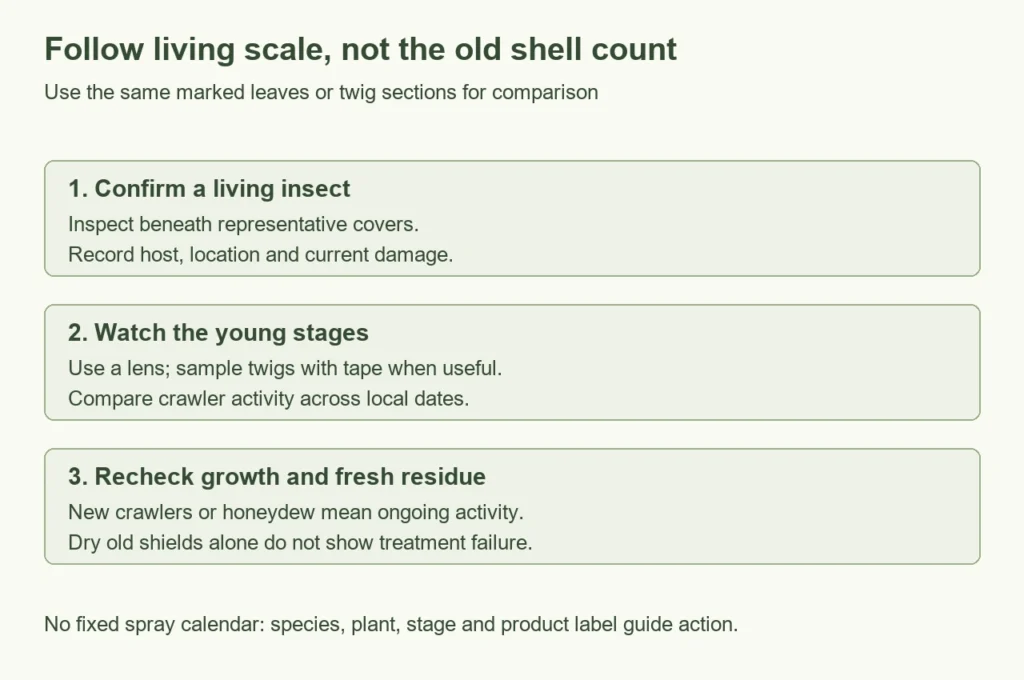
Return to the marked leaves and twigs after removal or treatment. Record what is alive, where new crawlers appear and whether fresh honeydew is forming. Old sooty film may remain after the sugar source stops, and adult covers may remain after death. Neither is a reliable outcome measure alone.

Newly settled pale scales on previously cleared tissue indicate continued activity. Recheck sheltered leaf bases and the timing of crawler emergence. A missed site, protected older stage or new generation may explain recurrence. Review that evidence before repeating a product, and keep any further application within its directions.
When inspecting several plants, handle the affected one last and clean the tools you used before returning to healthy foliage. Crawlers are very small and can move on handled plant material. Keep the observation separate from treatment: clean hands and careful handling can reduce accidental transfer, but they do not confirm that hidden scales have been removed.
Healthy new growth with few or no new living scales supports continued observation. Expanding dieback, repeated fresh honeydew or rising live counts calls for a revised plan. Keep the host and species in that reassessment; a tolerant landscape shrub and an indoor edible citrus do not offer the same choices.
A heavily infested potted plant can be a reasonable candidate for replacement, particularly when repeated removal damages it or exposes a valued collection to ongoing spread. That is a practical choice alongside management, not proof that every scale-infested plant is beyond recovery.
Track the same leaves before deciding whether scale returned
On a plant you can reach easily, choose three inspection points: a leaf underside, a stem joint and a spot near new growth. Photograph each before removal or treatment. Recheck those same places and one nearby leaf. New bumps outside the original patches or live insects under a cover carry more weight than the number of old shells in the photo.
Clean a small patch of sticky residue so you can tell whether fresh honeydew appears there later. Fresh stickiness prompts a search for living soft scale or another sap feeder. A clean patch alone cannot rule out armored scale, so keep inspecting sheltered surfaces.
Conclusion
Find the body beneath the bump, distinguish armored from soft scale and check whether insects are still alive. Follow crawler activity and plant response before choosing further control. Gentle removal and sound growing conditions can resolve manageable cases; more demanding cases need host-specific timing and an eligible treatment. Old shields should prompt inspection, not an automatic repeat spray.