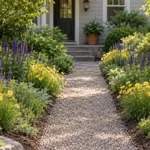

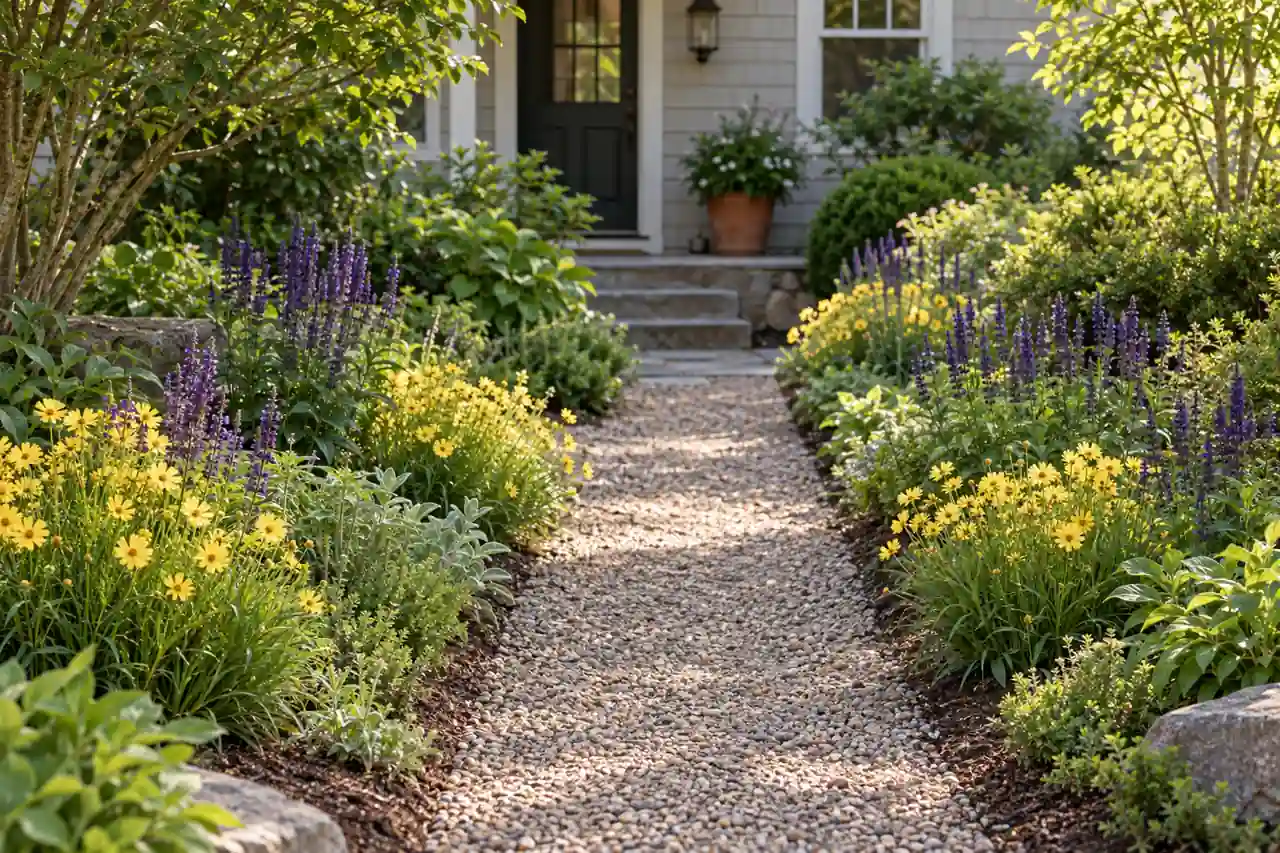
A cottage garden combines informal groups of flowers, foliage and sometimes herbs around a route that remains easy to use. The planting can look abundant without putting every flower shoulder to shoulder. Repeated shapes and colors hold the mixture together, even as different plants take their turn in bloom.
That relaxed appearance needs some measuring underneath. A small nursery pot can become a wide clump, a climbing rose can lean into a doorway, and a border full of June flowers can lose most of its color by August. Buying familiar English flowers does not solve those problems, especially in a hot, humid or summer-dry American garden.
Start with the walking space, then allow for mature plants and several flowering periods. A modest border with room to grow is a more workable beginning than an instant display that needs constant cutting back.
Build the planting around four checks.
- Keep the route open
- Mark entrances, clear walking width and working access before placing plants.
- Draw adult plant widths
- Use the named cultivar’s eventual spread, not its pot size. Keep that footprint out of the path.
- Spread the flowering periods
- Include early, middle and late-season interest, plus foliage between blooms.
- Match the local conditions
- Choose plants for actual sunlight, soil moisture, summer heat and the care you can give.
Key Takeaways
- Measure walking routes before buying flowers for the border.
- Draw mature plant widths and preserve space around crowns.
- Repeat flower forms and colors across loosely arranged groups.
- Match seasonal bloom choices to local heat and moisture.
- Fill temporary gaps with annuals, then remove them as needed.
Table of Contents
A Cottage Garden Uses Repetition Beneath the Informal Planting
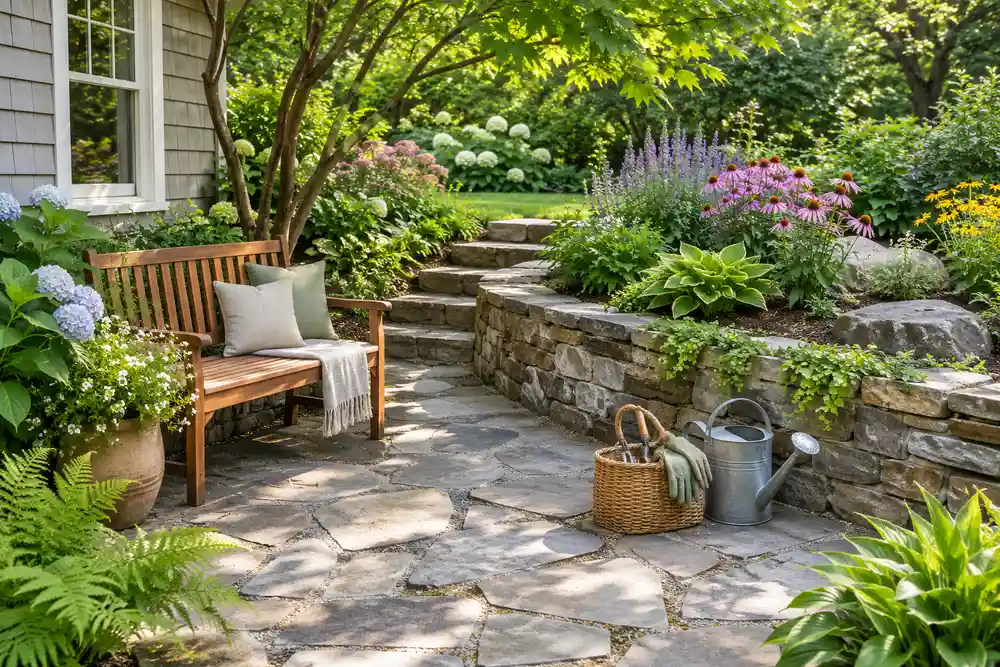
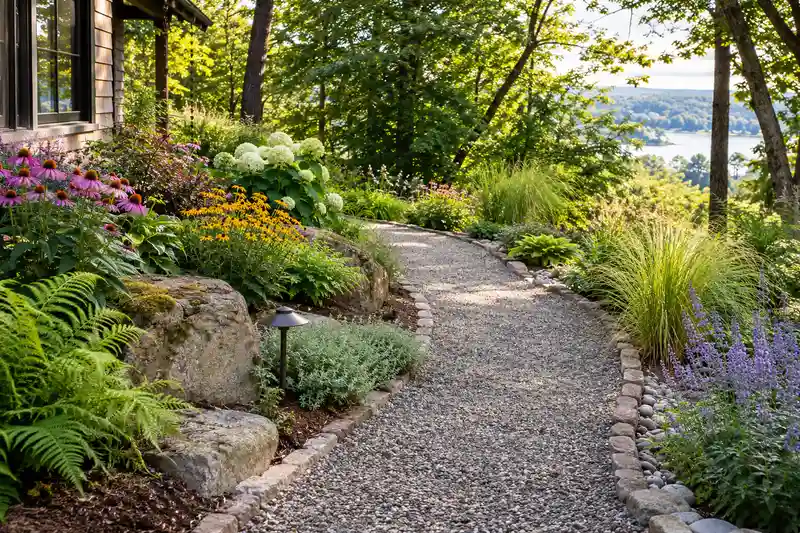
The familiar look comes from mixed plants, soft edges and changing flowers, often beside brick, stone, gravel or a simple fence. Herbs and vegetables can share the space where their growing conditions fit. Roses, lawn and a rose-covered arch are optional. A narrow side border can carry the same character as a larger front yard.
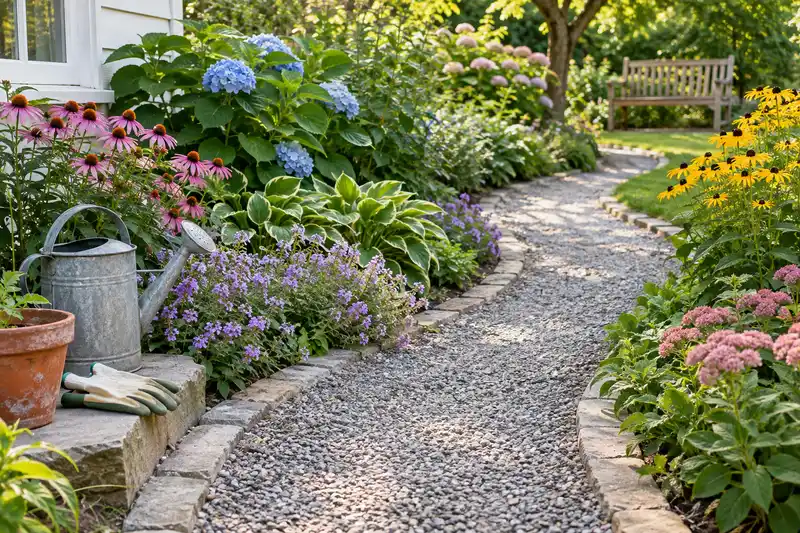
Choose a few shapes to repeat: upright flower spikes, rounded clumps and low foliage, for example. Purple spikes repeated near both ends can connect pale yellow daisies and pink summer flowers without every plant matching. A single large specimen can interrupt the rhythm deliberately. Many unrelated specimens scattered one per spot usually make the bed harder to read.
Give the edges a visible line. A clear path beside loose stems makes the planting look intentional; an edge hidden beneath tangled growth can make even healthy plants feel neglected. The loose growth belongs inside the space allocated to it.
The functional layers described by Illinois Extension separate low groundcover, plants with strong lasting forms and plants that dominate briefly in flower. In a small garden, one perennial may serve more than one role. A substantial sedum clump supplies summer foliage, late flowers and winter seedheads. You do not need a tree, shrub and vine in every bed.
Measure Light, Drainage and Working Access Before Planting
Mark the boundary with stakes or a hose and walk the proposed route carrying the things you actually use. Open the gate. Try the wheelbarrow. Reach toward the far side of each bed without stepping into it. Keep access to taps, meters and doors. A planting strip that is manageable from two sides may be too deep beside an inaccessible fence.
Record sunlight on several growing-season days. Bare deciduous branches in March can make a site appear much brighter than it is in July. Note morning and afternoon exposure separately, along with shade cast by the house. Put sun-loving flowering plants where the growing-season light reaches them; use shade-adapted foliage and flowers elsewhere.
Watch what happens after rain. Water collecting at the foot of a slope asks for different plants or drainage work from a sunny bed that dries quickly. Squeeze a little moist soil and feel whether it crumbles or remains a sticky lump. That observation starts the investigation; it does not replace a soil test or prove the roots have enough drainage.
Choose a soil test suited to the decision before adding lime or fertilizer. Prepare the bed according to the plants and the test results. Existing tree roots and persistent weeds also deserve attention before permanent plants go in.
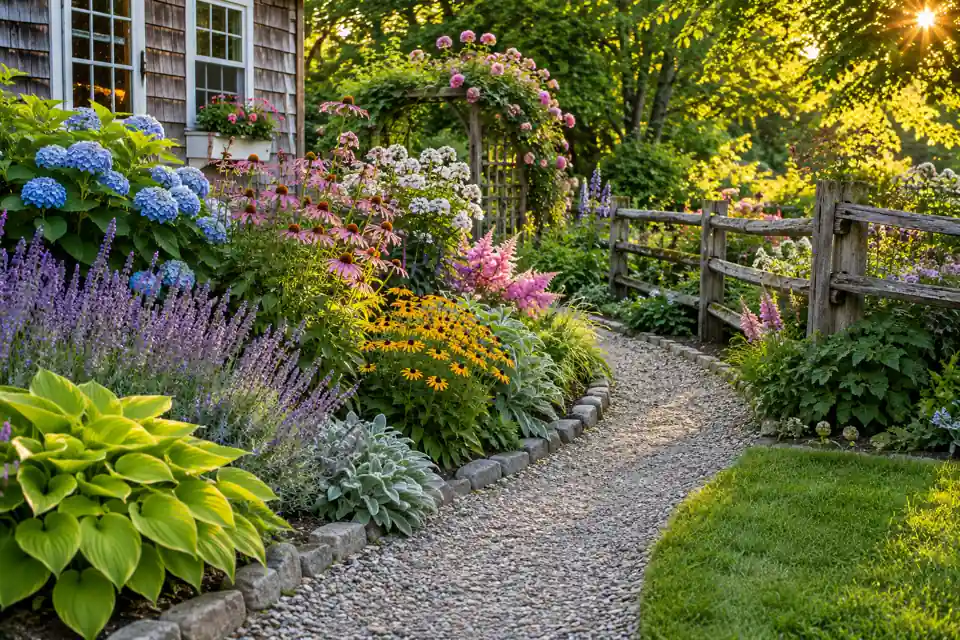
Locate circulation first, then resolve the surface, base and drainage through the garden pathway design. Oregon State’s accessible-garden guidance emphasizes reachable beds, wider routes and places to turn. A path must suit the people using it, including anyone with a mobility aid.
Plan a 10-by-15-Foot Cottage Garden Around Mature Plant Widths
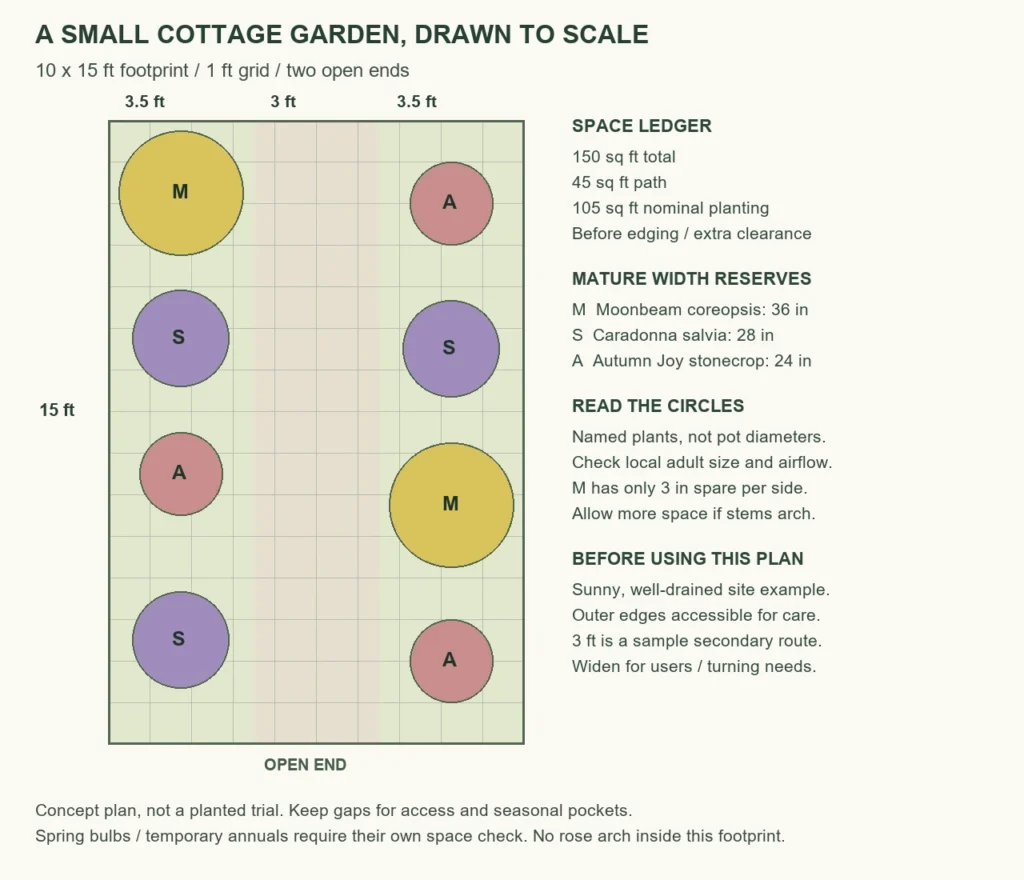
A 10-foot-wide, 15-foot-long rectangle contains 150 square feet. A straight, 3-foot-wide path running its full length occupies 45 square feet, leaving two planting strips, each 3.5 feet wide and 15 feet long. Together, those strips provide 105 square feet before edging, extra clearances or turning space.
This example assumes a through route with usable access beyond both ends and maintenance access along the outer edges. Three feet is a sample secondary route, not a claim of wheelchair accessibility or comfortable two-person passage. Widen it for your actual needs. A 4-foot path would leave two 3-foot strips; a dead end needs a workable turnaround, which also reduces planting space.
Use plant circles before deciding how many to buy
Draw every plant at its expected mature width. A 36-inch-wide clump centered in a 42-inch strip leaves only 3 inches on each side. That is a geometric fit, with little allowance for arching stems. A 24-inch clump leaves 9 inches on each side. Favor the smaller plant beside busy routes, and increase space if the local plant commonly grows wider.
The example uses three named perennials for a sunny, well-drained temperate border. They are examples to check locally, not a nationwide shopping list. ‘Moonbeam’ threadleaf coreopsis, commonly sold as Coreopsis verticillata ‘Moonbeam’, is listed by NC State as Anacis verticillata ‘Moonbeam’. Its description allows a 1-to-3-foot spread, so the drawing reserves the upper end. Sterile seeds do not prevent its rhizomes from spreading.
‘Caradonna’ perennial salvia has dark flower stems and upright purple spikes. Darwin Perennials lists a width of 12 to 28 inches; the plan reserves 28. ‘Autumn Joy’ stonecrop, listed by NC State as Hylotelephium spectabile ‘Autumn Joy’, reaches about 1 to 2 feet wide; its 24-inch circle provides a rounded late-season anchor. Both NC State profiles describe well-drained conditions for the chosen coreopsis and stonecrop.
The circles repeat down the beds with gaps between mature outlines. Those gaps are working allowances and possible seasonal pockets, not instructions to add another permanent shrub. A rose expected to spread 5 feet cannot fit within a 3.5-foot strip. Place it in a wider bed or choose a genuinely smaller plant.
More species do not automatically mean fewer weeds. In a three-year trial of perennial combinations, some simpler combinations covered ground and suppressed weeds better than the most diverse mix tested. The dense experimental plots and Italian site are not a planting recipe for a home border. Choose compatible plants that can occupy the intended spaces, and plan to weed open ground while they establish.
Keep the low layer subordinate to the larger crowns
Low plants soften edges and occupy selected gaps. Spreading groundcovers need room too. Mark spring bulb pockets and temporary annuals separately from permanent circles. Leave the walking edge clear and keep growth away from plant crowns that resent trapped moisture. Do not fill every empty inch merely because soil is visible in the first year.
Lay out the walkway at the plants’ mature width
Mark the walking space with two garden hoses, then set out circles of twine for the mature footprint of each plant beside it. Walk the route carrying the widest thing you normally bring through, such as a watering can or basket. At a bend, make the turn with the equipment in hand. Move the plant circles until you can pass without brushing them. A young plant’s nursery pot hides this problem until the border fills out.
Keep the circles for slow-growing perennials in place when planning the first summer. If bare ground bothers you, put removable pots there for one season. Pull them as the permanent plants widen. This preserves the space on your plan without committing the border to two plants that will outgrow it.
Choose Flowers That Hand the Display From One Season to Another
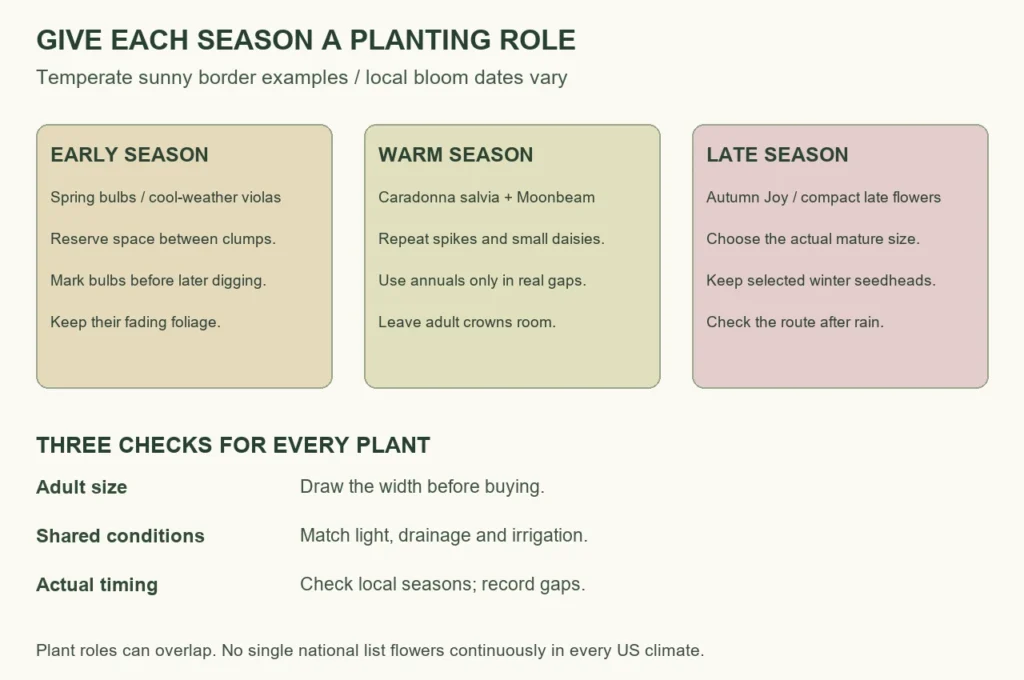
A nursery bench in full bloom encourages buying plants with the same flowering window. Instead, make a small seasonal ledger before shopping. For every proposed plant, write its usual local bloom period, foliage value and mature size. Add a missing season before adding a fourth plant that peaks with everything else.
In temperate gardens, spring bulbs and cool-weather violas can precede the summer border. Mark bulb positions so later digging does not slice through them, and leave their foliage to finish its growth cycle. Violas can fade when summer heat arrives. Treat their color as a temporary contribution.
Salvia spikes and pale yellow coreopsis supply different shapes during the warmer growing period. A few suitable annuals can brighten gaps as permanent clumps develop. Keep tall, floppy cosmos selections away from a narrow path; choose by the named variety’s size as well as the flower color.
| Garden stage | Possible contribution | Check before planting |
|---|---|---|
| Early season | Locally suitable spring bulbs or cool-weather violas between permanent clumps | Bloom timing, summer foliage and available root space |
| Late spring into summer | ‘Caradonna’ salvia for vertical spikes; coreopsis for airy yellow flowers | Local flowering window, mature width and sun |
| Late summer into fall | ‘Autumn Joy’ flowerheads; a locally suitable compact aster in a wider or revised space | Adult size and drainage; do not add it on top of an occupied circle |
| After flowering | Selected seedheads, persistent stems and repeated foliage forms | Path clearance, disease and the value of leaving seedheads |
Late flowers deserve a deliberate place. Illinois Extension’s fall planting examples include asters, helenium and sedums, with very different eventual sizes. A tall Joe-Pye weed is not interchangeable with a compact aster just because both flower late. The ‘Autumn Joy’ growth profile describes pink buds developing into late-season flowers and browned winter heads. Its fleshy leaves and strong flowerhead shape help between those stages.
Exact weeks shift with climate, weather, cultivar and plant age. Three seasonal roles do not guarantee uninterrupted flowers. Record any gaps during the first growing season and adjust the following year’s choices. Foliage texture can keep a border attractive during a pause in bloom. Match pollinator-friendly plants to local flower timing and accessible flower shapes, as well as color.
Flower shape matters when wildlife is one of your goals. In a three-year Pennsylvania garden trial, researchers observed insects visiting selected native species and cultivars across different flowering periods. The results apply to the plants and site studied, not every named cultivar. Check local plant-trial observations and choose a sequence that can thrive in your own soil.
Adapt Cottage Garden Plants to Heat, Moisture and Shade
An English-looking border does not need English growing conditions, but its plants must tolerate yours. University of Georgia’s perennial selection guidance for hot, humid gardens identifies heat tolerance and disease as limits in the Southeast. A hardiness zone describes winter cold; it does not describe summer humidity, rainfall or winter drainage.
Hot, humid summers need breathing room
Keep susceptible plants out of stagnant, shaded pockets. Choose locally recommended, disease-resistant cultivars and leave room for their actual adult crowns. Powdery mildew can infect dry leaves; watering only the soil does not remove the risk created by poor air movement. White powder on crowded phlox or bee balm calls for a plant-specific diagnosis and a look at the growing conditions.
Preserve the desired form when making a substitution. If a cool-climate flower supplied a purple spike, look for a locally suitable spiked flower with the right mature width. Do not replace it with a large, thirsty shrub simply because its bloom color matches.
Summer-dry sites need compatible water demands
Group plants that can share the same irrigation. Oregon State’s summer heat and drought guidance includes lavender and other adapted plants for suitable Pacific Northwest sites. A lavender planted in wet winter soil is a different proposition from one in a sunny, draining bed. New drought-adapted plants still need establishment care.
Dry western gardens can retain the loose mixture of mounds, spikes and seasonal flowers using regionally recommended plants. Check the actual species of penstemon, agastache or yarrow before assigning it a position. Those common names include plants with different sizes and needs. Give a thirsty planting its own watering area to protect the drier bed.
Shade changes the plants, not the possibility of a cottage style
Use shade-adapted flowers and textured foliage where trees or buildings limit light. Moist shade and dry shade need different choices. Repeated leaf shapes, early flowers and a clear route can carry the style without sun-loving roses. Place fragrant plants near an entry only when their light and soil needs fit; sensory garden plants also need thoughtful placement for the people using the space.
Check the botanical name against current local invasive-plant guidance before buying self-seeders or vigorous groundcovers. A plant’s old-fashioned reputation says little about its behavior in your state. Edible herbs are optional; do not treat unknown ornamental flowers as food.
Install in Phases and Leave Space for Expanding Roots
Finish access and resolve persistent weeds or drainage problems first. Set the pots on the ground at the mapped centers and step back to check the repeated forms from the main window and entrance. Then imagine the full circles, not the plants currently sitting inside them.
Plant permanent clumps at the depth appropriate to each plant, water the root balls and surrounding soil, and check that water reaches both. A nursery root ball can dry separately from the bed around it. Keep the crowns visible and avoid burying moisture-sensitive plants under a mound of mulch.
Use temporary annuals in genuinely open pockets during establishment. Remove or reduce those fillers as the perennials widen. Young plants do not have to touch on planting day. The small gaps that look unfinished now can prevent a much larger rearrangement later.
Keep Paths Clear as Clumps Spread and Flowering Changes
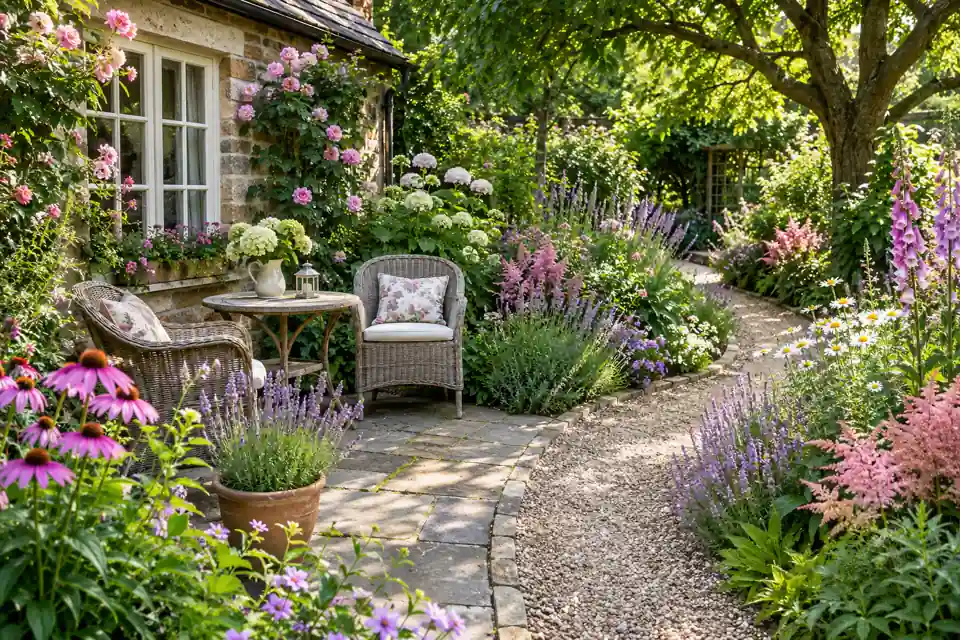
Check the route after rain and during rapid growth. Wet stems can lean farther than dry ones, brushing trousers and dripping onto the path. Lift a flopping stem and inspect whether it needs discreet support, a roomier position or replacement with a shorter cultivar. Repeated cutting to keep an oversized plant inside a tiny space is a sign to revise the planting.
Watch both the soil and the plants during dry spells. Feel below the dry surface near a new root ball before watering. Investigate wilting in soft, wet soil before adding more water. Match watering to the group and its stage of establishment.
Deadhead plants that respond usefully to it, and leave selected seedheads where birds, winter appearance or other habitat goals matter. Not every perennial flowers again after cutting. Remove unwanted seedlings before their roots become entangled with established clumps; divide spreading plants when the species and season suit the work.
If visits to the garden are infrequent, reduce plants needing repeated staking, deadheading or containment. Keep a few successful forms and repeat them. A border matched to the time available usually stays more attractive than a more elaborate one maintained in occasional exhausting bursts.
Conclusion
Begin with a clear route, a measured bed and a short list of plants that fit at maturity. Repeat compatible forms, reserve different flowering periods and let temporary fillers retreat as permanent plants grow. The cottage character comes from that changing mixture around usable space, with the species chosen for the garden you actually have.