




Updated April 12, 2026
Beet plant growth moves through germination, clustered seedling emergence, thinning, leaf expansion, root swelling, and harvest. The timeline matters most when leaf growth and root size are moving together at the right time.
Each beet stage has visible progress cues, a usual timing range, common delays, and quality risks for both greens and roots. Beets need different stage tracking than broader vegetable growth stages because leaves above ground and a swelling root below ground must develop in balance.
Most beets germinate in about 10 to 15 days in cool spring soil. By about weeks 2 to 3, crowded seedlings should be thinned. Leaf expansion usually dominates weeks 3 to 5, visible root swelling often follows through weeks 4 to 8, and the main harvest window commonly opens around days 50 to 60. Baby beets come earlier. Roots held much beyond table size can keep enlarging, but the calendar stops being useful once texture starts turning fibrous or woody.
Key Takeaways:
- A beet “seed” is usually a multigerm seed cluster, not one single seed
- Thin early or you will grow crowded leaves and undersized roots
- Leaf growth should support root swelling, not replace it
- Most table beets taste best around 1 to 3 inches across
- Heat, drought, and delayed harvest make large roots tougher fast
Table of Contents
Beet Plant Growth Timeline – Timing, Leaf Growth, And Root Development
The total timeline is only a starting point. Beet germination often takes about 10 to 15 days, usable harvest commonly arrives around 50 to 60 days from direct seeding, and roots can reach about 1 1/2 inches in roughly 60 days before enlarging quickly with enough space and moisture. The real timing test is whether thinning, leaf expansion, and root swelling happen on schedule.
The biggest early trap is botanical, not nutritional. What gardeners call a beet seed is usually a dried fruit cluster with multiple embryos inside. That is why several seedlings can emerge from one spot and why thinning is not a cleanup job. It is one of the main yield decisions in the whole crop.
Pro Tip: Track four dates for each sowing – planting day, first emergence, thinning day, and first root you pull at usable size. The gap that stretches tells you which stage slowed the crop.
| Stage | Typical timing | What it looks like | What protects quality | What usually goes wrong |
|---|---|---|---|---|
| Germination | About 10 to 15 days after sowing | Several seedlings may emerge from one seed cluster | Fine moist seedbed and shallow sowing | Crusting, cold soil, and patchy emergence |
| Seedling clump | Weeks 2 to 3 after sowing | Cotyledons give way to true leaves in crowded little groups | Fast thinning and shallow weeding | Overcrowding and uneven plant size |
| Leaf expansion | Weeks 3 to 5 after sowing | Canopy thickens and petioles lengthen | Uniform moisture and balanced fertility | Weed competition and all tops no root |
| Root swelling | About weeks 4 to 8 after sowing | Shoulders widen and root diameter starts showing | Correct spacing and steady growth | Crowding, drought, and woody texture |
| Harvest window | About days 50 to 70, depending on size goal | Roots enter the tender 1 to 3 inch table-beet window | Pulling by size instead of waiting blindly | Holding roots past the tender window into toughness |
At every checkpoint, compare leaf growth with root swelling: the canopy should support the root, not replace it.
Germination Stage – Days 0 To 15 Set Up The Whole Timeline
Beet germination is easier to manage once you stop expecting one seed to become one plant. A beet “seed” is usually a fruit or seed ball with several embryos, which is why several seedlings can emerge from one planted unit. That single fact explains much of the crop’s early behavior.
What Healthy Germination Looks Like
Healthy beet germination reads like a row of small clumps, not evenly spaced single seedlings. Cotyledons open first, true leaves follow, and the row becomes visible without dragging out for weeks. Beet seed can germinate across roughly 45 to 85 degrees F, which makes spring and fall sowing possible, but emergence is cleaner when the seedbed stays evenly moist.
What Delays Emergence
Poor stands usually start with crusted soil, seed planted too deep, or a seedbed that dried out at the surface. Crusting after heavy rain can ruin emergence, which is why small-seeded root crops need a fine seedbed and stable soil structure more than a rich one. Warm-water soaking before sowing can help speed germination in cool soil, but even good soaking cannot rescue a hard crusted surface later.
What Protects The Rest Of The Timeline
Good germination does more than start the crop fast. It gives you seedlings that are close enough in size to thin intelligently. A patchy row creates mixed-age plants, which usually turns into mixed root sizes later.
Seedling And Thinning Stage – Around Weeks 2 To 3 The Crop Splits Or Stalls
Thinning is the first real turning point in the beet timeline. Crowded seedlings can look healthy for a while, but improper thinning is one of the most frequent causes of beet plants making tops but no roots.
What The Leaves Should Be Doing Now
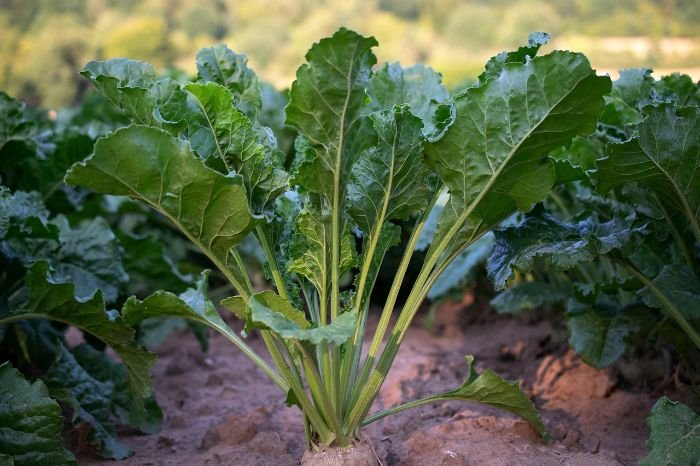
Healthy seedlings move from cotyledons into true leaves quickly, stand upright, and separate into individual plants before the canopy closes over the row. Final spacing usually falls around 1 to 3 inches, with wider spacing supporting larger roots.
What The Root Is Doing Now
At this point the root is still small, but the future size of the crop is already being negotiated. Because several seedlings often emerged from each seed cluster, every extra day of crowding gives the strongest seedlings a head start and leaves the weaker ones behind. What looks like a harmless clump in week 2 often becomes a row of uneven beet sizes by week 6.
What Timing Drift Means
Late thinning reads as dense, attractive top growth with little room at the crown line. Plants may look vigorous, but they are competing for the same small pocket of light, water, and nutrients. That competition delays root swelling and leaves you with marble-sized beets under leafy tops.
What Protects Yield In This Stage
Thin when plants are still small enough to separate cleanly, and weed shallowly because beets compete poorly with weeds when young. Final thinning can be delayed until very small roots are large enough for table use, which gives edible thinnings without sacrificing spacing discipline. The important thing is not thinning late enough to enjoy the greens. It is not thinning so late that the main crop never catches up.
If you plant mixed beds, this is also the stage where spacing logic matters more than visual density. Even well-planned companion planting for vegetables does not rescue a beet row that stayed crowded too long underground.
Leaf Development Stage – Around Weeks 3 To 5 The Canopy Should Start Paying Rent
Beet leaves are not just decoration or a side harvest. They are the engine that fills the root. The crop needs real leaf area, but it needs the right kind of leaf growth: active, healthy, and proportional to the root zone below.
What The Leaves Should Be Doing Now
Healthy leaf growth shows steady expansion, strong color for the variety, and petioles that lengthen without becoming weak or floppy. Beets need fertile soil, especially enough potassium, to support vigorous growth. That does not mean forcing a jungle of leaves. It means giving the plant enough balanced support to keep photosynthesis moving while the root begins to swell.
What The Root Should Be Doing At The Same Time
By this part of the timeline, the root should be moving from invisible establishment into the first real signs of storage growth. You may not see a large shoulder yet, but the crown should be firming and the plant should no longer behave like it is only making salad greens. If week 4 or 5 arrives and the leaves are surging with no sign of root response, the handoff is late.
| Leaf signal | Healthy read | What it can mean if off | Root consequence |
|---|---|---|---|
| Canopy growth | New leaves appear steadily without crowding | Slow growth from weed pressure or low vigor | Less energy for root fill |
| Color | Consistent color for the cultivar | Pale or weak growth may point to nutrition stress | Roots size slowly and unevenly |
| Density | Plants fill out but remain individually distinct | Dense lush tops from crowding | Leaves look good while roots stay small |
| Leaf damage | Most foliage remains intact and working | Serious mines, spots, or chewing damage | Less working canopy for swelling roots |
What Timing Drift Means
The most common slowdown is not mysterious nutrition trouble. It is simple imbalance: crowding, weeds, or irregular moisture keep the plant busy holding leaves instead of filling roots. The same plant nutrition principle applies here: enough fertility to keep leaves productive, without so much push in the wrong place that the crop loses balance.
A practical inference follows from how the plant works. If you harvest greens heavily while still expecting large roots, root growth slows. The crop can give you leaves or roots generously, but not both at full speed at the same moment.
Root Swelling Stage – Usually Weeks 4 To 8 Reveal Whether Timing Was Right
Beets do not make a true bulb. They make a swollen root and crown that becomes obvious once the plant has built enough leaf area to feed it. This is the stage gardeners wait for, but it only arrives cleanly if the earlier spacing and moisture decisions were right.
What The Leaves Should Be Doing Now
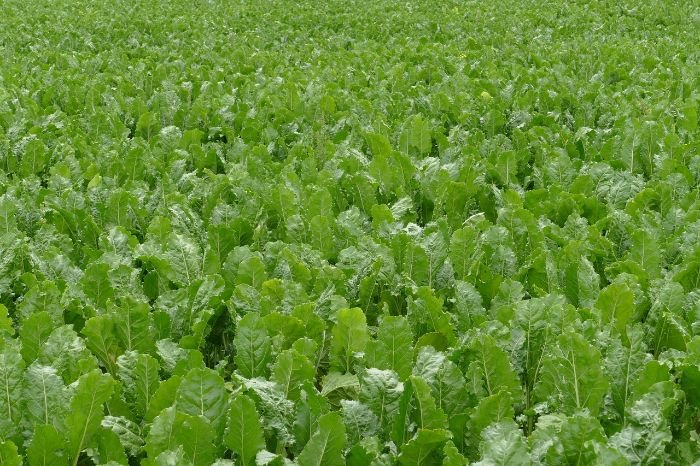
By the time roots begin swelling clearly, the canopy should still be active but no longer racing ahead of the crop. Leaves should keep expanding enough to support the root, yet the row should feel more balanced than leafy. If top growth is still surging while the crown line looks unchanged, the plant is late in making the leaf-to-root transition.
What The Root Should Be Doing By Weeks 4 To 8
Beets can reach about 1 1/2 inches in diameter in roughly 60 days, then enlarge quickly with adequate moisture and space. In the bed, healthy root swelling looks like a widening shoulder at the soil line, a smoother rounded profile at the crown, and roots that sample at usable size instead of staying marble-small. Size should start catching up to leaf mass now, not just later at harvest.
| Root cue | On-schedule read | What delay looks like |
|---|---|---|
| Shoulder visibility | Shoulders begin to show as the crown widens | No visible thickening long after the canopy is full |
| Surface shape | Root feels rounded and smooth at the crown | Thin necks or tiny roots under a heavy top |
| Crown-to-leaf balance | Leaf mass and root size begin moving together | All leaf growth and very little root gain |
| Size gain | Noticeable change between sample pulls | Week after week of little real enlargement |
What Timing Drift Means
The crop usually tells you what went wrong. Many leaves and tiny roots usually mean thinning was late or spacing stayed too tight, often because multigerm seed clusters were not separated in time. Mixed shoulder sizes across the same row often trace back to uneven early emergence or uneven thinning. Irregular moisture leads to uneven growth, and beets larger than about 3 inches often become tough and fibrous. Uniform moisture supports better root quality, which is why simple soil moisture monitoring matters more here than another guess at feeding.
Compared with the much faster radish growth stages, beets spend more time building leaf area before the root really declares itself. That longer handoff period is why impatience and crowding cost more with beets than with very short-season root crops.
What Protects Quality In This Stage
Keep moisture even, keep weeds down while cultivation is still shallow, and resist the urge to let every root run huge. The best beet is often not the biggest one. It is the one that sized steadily without heat or drought pushing it toward fiber and woodiness.
Harvest Stage – Around Days 50 To 70 The Timeline Turns Into A Quality Window
Beets can be harvested through a wider size range than many root crops, but quality still has a limit. Roots are usually best pulled at about 1 to 3 inches in diameter. Around 1 1/2 inches is a strong cooking, pickling, or canning size, while roots above about 3 inches are more likely to become tough and fibrous.
When Baby Beet Phase Becomes Table Beet Phase
Baby beets often come from thinnings or the earliest usable pulls before the main crop reaches full table size. By about day 50 to 60 in good conditions, many roots move into the classic 1 to 3 inch table range. Small roots are usually sweeter, more tender, and easier to cook whole. Larger roots can still be excellent if they sized under cool conditions and even moisture, but once the crop pushes past that sweet spot the gain in size often becomes a loss in texture.
| Harvest goal | What you look for | Best use |
|---|---|---|
| Thinnings | Very small roots removed during spacing | Salads, greens, quick cooking |
| Baby beets | Small tender roots with smooth skin | Roasting whole, bunching, quick harvests |
| Table beets | About 1 to 3 inches across with firm texture | General kitchen use, pickling, storage |
How Long The Quality Window Usually Stays Open
In cool moist weather, the harvest window can stay forgiving for a while. In warming or drying weather, it closes quickly. That means the same beet size can be a quality gain in one week and a quality decline in the next. Delay only helps while the root is still getting better faster than it is getting tougher.
How To Harvest Without Throwing Away Quality
Loosen soil gently if needed, pull roots before they sit too long at oversize, and keep the harvest shaded while you work. Root diameter is a practical harvest cue because size affects tenderness, storage quality, and the risk of fibrous texture, as reflected in the home beet guide.
After Harvest – Greens And Roots Need Different Handling Speeds
Beets are a dual-use crop even after you pull them. The roots can hold quality for storage. The greens need faster use. If you want both from the same planting, the cleanest sequence is light greens harvesting early, then full root harvest once swelling is complete. Heavy greens cutting late in the timeline can slow the final root finish because the plant loses the leaf area that was still feeding it.
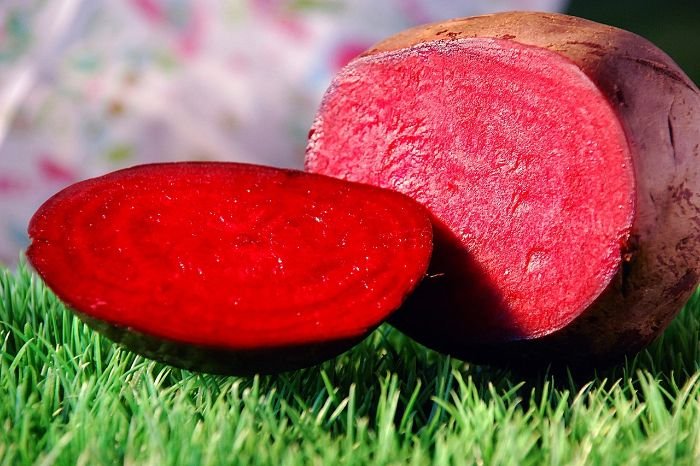
Handle the two harvests on different clocks. Use greens quickly, trim tops from storage roots promptly, and do not leave the bunch intact if root quality matters. Store the sound, medium-size roots first and use cracked, oversized, or nicked roots early. If the bed produces more roots than the kitchen can handle fresh, home canning rules matter before storage roots lose texture or quality. The crop keeps teaching the same lesson after harvest that it taught during growth: the leaves and root are linked, but they do not peak for the kitchen at exactly the same moment.
Beet Life Cycle Beyond Harvest – Why Bolting Ends The Root Stage
Beets are biennials treated as annuals for the root crop. They need two growing seasons to complete the full life cycle. In the first season they build leaves and a storage root. In the second, or after a strong shift into reproductive growth, they move toward flowering and seed.
That matters because bolting is not just a flower-stalk problem. It is the end of the root-sizing stage. Once the plant commits to reproduction, the root stops being the part the gardener was trying to improve.
Conclusion
Beet plant growth makes more sense when you read it as a sequence of handoffs on a real timeline. Days 0 to 15 are for germination. Weeks 2 to 3 decide thinning. Weeks 3 to 5 tell you whether leaf growth is moving on schedule. Weeks 4 to 8 reveal whether the root is actually swelling in response. Around days 50 to 70, the crop stops being a timeline question and becomes a quality-window question.
Correct the stage that is falling behind. If the row is patchy by day 15, fix the seedbed. If the tops are heavy and the roots are tiny by weeks 3 to 5, go back to spacing and moisture. If the roots are enlarging but quality is slipping after day 60, pull earlier next round. When the sequence is working, the leaves stay active, the shoulders widen on schedule, and the beets come out smooth, firm, and sized for how you actually want to eat them.
FAQ
How long does it take beets to grow from seed?
Most garden beets need about 50 to 60 days from direct sowing to usable harvest size, though thinnings and baby beets come earlier. Cool weather, variety choice, and spacing all change the exact timing.
Why do several beet seedlings come up in one spot?
Because what looks like one beet seed is often a multigerm seed cluster. Several embryos can sprout from the same planted unit, which is why beets usually need thinning.
When should I thin beets?
Thin once seedlings are established and you can separate them cleanly, usually when true leaves are present and plants are still small. Final spacing of about 1 to 3 inches works for most home garden goals, with wider spacing giving larger roots.
Why are my beets not forming bulbs?
Usually because the crop stayed overcrowded too long or never made the leaf-to-root transition cleanly. Beets also do not form true bulbs, so what you are waiting for is a swollen root. If the tops look busy but the crown never thickens, spacing and moisture are the first things to check.
Can you transplant beets?
Yes, more successfully than carrots, but direct sowing is still simpler and usually better for even root development. If you transplant, move seedlings young and keep the root oriented straight down.
How long after thinning do beets start swelling?
Usually within the next couple of weeks if weather and moisture are favorable. In most plantings, the row should begin shifting from pure leaf gain toward visible root thickening somewhere between about weeks 4 and 8 from sowing.
How can I harvest beet greens without ruining the root crop?
If root yield matters, take greens lightly and let most of the canopy keep working. The safer harvest for frequent greens is the thinning stage, when small plants can be removed whole without asking the remaining roots to recover.
Why did my beets bolt?
Bolting means the plant has shifted out of its root-building stage and into reproductive growth. Once that happens, the root is no longer the plant’s priority and quality usually drops.