


Updated April 19, 2026
Lilac varieties number more than 600 named cultivars of common lilac alone, according to the National Garden Bureau – and that count does not include the other species and interspecific hybrids available today. If you have ever stood near a blooming lilac hedge in early May and caught that sweet, heavy scent before you even noticed the flowers, you already know why so many people want one. What most people do not know is which one, and why it matters.
Most variety lists skip the three filters that actually determine success: what your climate can support, how much space the plant will need in ten years, and what trade-offs exist between fragrance, bloom time, and form. Get those filters right and the selection becomes far less complicated than the catalog pages suggest.
Key Takeaways:
- Match your zone to the right species before choosing color or fragrance
- Avoid planting common lilac in zone 8 without checking chill hour requirements first
- Choose Miss Kim or Baby Kim for spaces under 10 feet wide
- Deadhead spent flower clusters before mid-June for stronger blooms next year
- Reblooming lilacs flower again in late summer, but each flush is lighter than the spring display
Table of Contents
Lilac Species – Why The Genus Has 600 Cultivars And Only a Dozen Matter
The genus Syringa contains approximately 30 species, most native to eastern Europe and Asia. Carl Linnaeus first described it in 1753, and breeders have been developing cultivars ever since – ranging from deep magenta doubles to cream-edged picotee forms and everything between. For practical purposes, US gardeners work with a much shorter list.
The species that shape most purchasing decisions are: Syringa vulgaris (common lilac, the classic 8 to 15-foot shrub with the strongest scent), Syringa reticulata (Japanese tree lilac, reaching 20 to 30 feet with cream-white flowers), Syringa meyeri and its close relative Syringa pubescens subsp. patula (the compact Korean forms, 4 to 6 feet), and the S. x hyacinthiflora group (early-blooming hybrids, slightly hardier than vulgaris). The Preston hybrids, developed by Isabella Preston at the Central Experimental Farm in Ottawa in the early 1900s, added late-blooming and cold-tolerance traits that expanded what zone 2 and 3 gardeners could grow. These are the five branches worth knowing before you read any catalog.
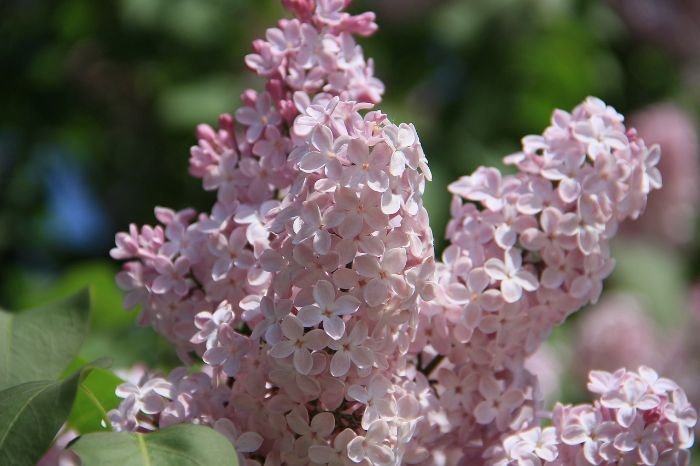
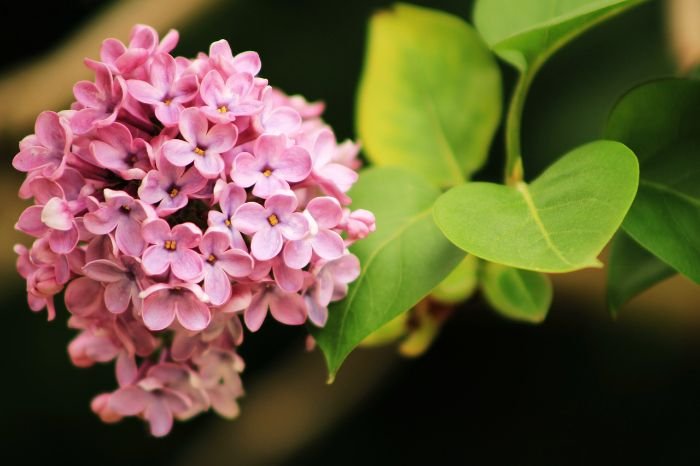
One detail that surprises most people: lilac bud color and open flower color are not the same thing. What reads as deep purple in the bud stage often opens to medium lavender in full sun. If you are choosing a variety primarily for color, look at descriptions of the open flower, not the bud photos that dominate most catalog images. Lilacs are also genuinely long-lived – over 100 years in good conditions – which means the choice you make now may still be in your garden when the next generation is gardening in it.
Hardiness Zones and Chill Hours – The Filter That Comes First
This is where most purchasing mistakes happen. The common lilac, Syringa vulgaris, performs best in zones 3 through 7. In that range, it gets the winter cold it needs – typically 1,000 to 1,500 hours below 45 degrees F – to set flower buds for the following spring. Fall short of that chill requirement, and the plant leafs out normally but does not bloom. You get a healthy green shrub, year after year, with nothing to show for it in May.
Have you ever planted a lilac in zone 7 or 8 and waited three seasons for flowers? That is almost always a chill-hour problem, not a care problem. It is also why common lilacs planted in zone 8 are such a reliable disappointment – the plant survives – flowers never follow.
Zone 8 and 9 gardeners do have options – cultivars developed specifically for low-chill conditions exist and perform well. The Descanso Hybrid lilacs, bred at Descanso Gardens in La Canada Flintridge, California, require only 200 to 400 chill hours – a fraction of what standard varieties need. ‘Lavender Lady’ and ‘Blue Skies’ from that program are the standard recommendation for southern California and Gulf Coast gardens. For zone 8, ‘Miss Kim’ (Syringa pubescens subsp. patula) is also reliable, tolerating summer heat better than most vulgaris cultivars. All three have documented performance in conditions where common lilac simply does not flower.
The soil component ties directly into site selection. Lilacs prefer slightly alkaline conditions, pH 6.5 to 7.5, and they will not tolerate waterlogged roots – even briefly. Beds with clay-heavy or poorly drained soil need amendment before planting, not as a corrective measure years later when problems are already visible.
Low-Chill Options for Zones 8 and 9
The first choice for zone 8 is S. pubescens subsp. patula ‘Miss Kim’, which handles reduced winter chill better than any vulgaris cultivar. For zone 9, the Descanso Hybrids – ‘Lavender Lady’, ‘Angel White’, and ‘Blue Skies’ – are the practical options. S. x laciniata (cutleaf lilac, zones 4 to 8) also performs in the lower end of this range, with pale lavender flowers and fragrance that holds well in heat. In zone 9, afternoon shade during the hottest months extends bloom quality noticeably.
| Species / Group | USDA Zones | Chill Hours | Notes |
|---|---|---|---|
| Common lilac (S. vulgaris) | 3-7 | 1,000-1,500 | Strongest fragrance; widest cultivar choice |
| Miss Kim (S. pubescens subsp. patula) | 3-8 | Lower than vulgaris | Compact; heat-tolerant; mildew-resistant |
| Descanso Hybrids | 7-9 | 200-400 | Developed specifically for warm climates |
| Japanese tree lilac (S. reticulata) | 3-7 | Moderate | Blooms June; minimal fragrance |
| S. x hyacinthiflora | 2-7 | Moderate | Blooms 10-14 days earlier than vulgaris |
Lilac Size and Form – Matching the Shrub to Your Space
A lilac planted in the wrong-sized space does not stay small because you want it to. It grows to its genetic size, and then you face a choice between removing it or cutting it back hard every few years – either of which suppresses blooming. The better approach is to match the variety to the space at the start, before the plant is established and the decision becomes costly.
The current range of available forms is wider than it has ever been.
Compact and Dwarf Forms
Baby Kim (Syringa pubescens), introduced by Proven Winners, stays at 2 to 3 feet tall and wide at full maturity – small enough for a large container on a patio. ‘Palibin’, the compact Meyer lilac, reaches 4 to 5 feet and is widely considered one of the most reliable dwarf options, with strong mildew resistance and lavender-pink flowers. ‘Miss Kim’ runs 4 to 6 feet tall and wide. All three are slow-growing relative to their mature size – do not expect them to fill a hedge line quickly – plan for their eventual footprint all the same.
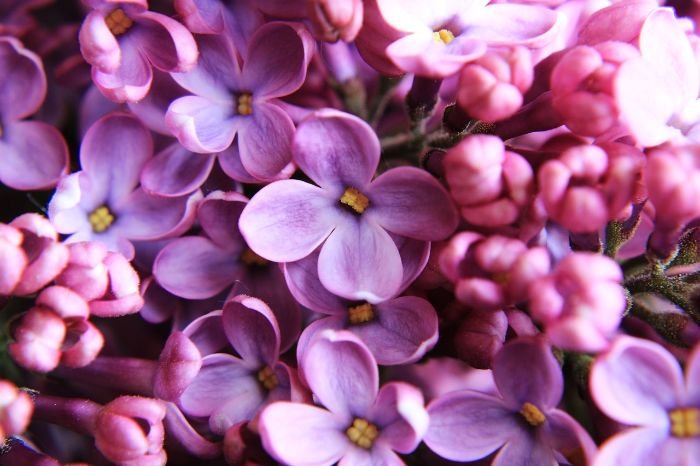
Pro Tip: Dwarf lilacs produce their best bloom with air circulation on all sides. Planting them flush against a wall or fence concentrates humidity around the foliage, which feeds powdery mildew even on resistant varieties. Three feet of clearance from any structure makes a measurable difference.
Standard Shrub and Tree Forms
Common lilac cultivars in the S. vulgaris group typically reach 8 to 15 feet at maturity, often wider than they are tall once well established. That footprint needs planning in a mixed border. The Japanese tree lilac (S. reticulata) grows 20 to 30 feet tall with a spread of 15 to 25 feet, forming a genuine small tree with an oval crown. In a garden already containing other large flowering ornamentals, magnolia trees and Japanese tree lilac work particularly well together – magnolias peak in April and the tree lilac follows six to eight weeks later, extending the ornamental season without competing for the same window.
One honest caveat on tree lilacs: Syringa reticulata blooms in late June, two to four weeks after vulgaris, with large cream-white panicles that carry almost none of the sweet lilac scent most people expect. The flowers smell faintly of privet. It is a genuine trade-off – impressive late-season bloom, no fragrance – and worth knowing before you plant one expecting the classic May perfume.
Bloom Timing, Color, and Fragrance – What Varies More Than You Expect
A well-chosen sequence of lilac species and cultivars can extend bloom across nearly eight weeks. S. x hyacinthiflora hybrids open 10 to 14 days before common lilac – late April in zone 6 in a normal year. Standard S. vulgaris cultivars peak in May. The Preston hybrids follow in late May. Japanese tree lilac closes the sequence in June. Most gardeners plant one species and get two weeks of bloom. A three-species planting can stretch that to six or seven.
I often notice that gardeners underestimate how much fragrance varies across species. S. vulgaris produces the classic lilac scent – dense, sweet, slightly heady on a warm morning. Miss Kim carries a spicier, more distinctive fragrance that many people find more refined. The Japanese tree lilac, for all the visual impact of its flower clusters, has almost no sweet scent at all. If fragrance is the primary reason you want a lilac, S. vulgaris cultivars are the category to stay within.
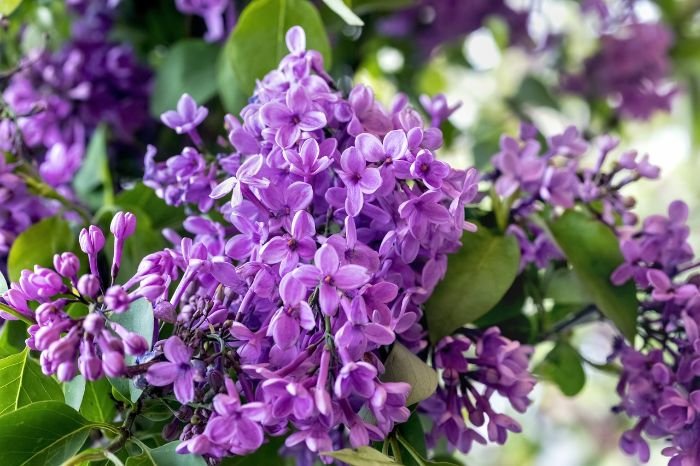
Color selection has one consistent pitfall: the bud color and open flower color are different. Most purple lilacs in tight bud will read as deeper and more saturated than the open flower, which often fades toward medium lavender in full sun. ‘Sensation’ is one of the few cultivars that reads consistently at both stages – deep purple with white edges on each individual floret, a pattern that does not wash out. ‘Primrose’ offers something rarer still: a cream-to-yellow tone that is one of the few genuinely distinct departures from the purple-pink-white spectrum that defines most of the genus.
Reblooming Varieties
Bloomerang (Syringa x ‘Penda’) is the most widely sold reblooming lilac. It produces a spring flush, rests through the hottest part of summer, then flowers again from late August through frost. The spring display is proportionally lighter than a comparable single-blooming vulgaris, and the fall flush is lighter still. Whether the extended season justifies the trade-off in spring intensity depends on how much you value continuous interest versus a single strong show. For gardeners who primarily want a memorable May display, standard vulgaris cultivars still win that comparison.
Named Lilac Cultivars – A Curated Selection With Real Data
The table below covers cultivars with well-documented performance across different zones and conditions – a shorter curated list with real data, not an exhaustive catalog. These are plants with enough trial history and wide retail availability that a recommendation carries weight.
| Cultivar | Species | Zones | Height | Color | Notable Trait |
|---|---|---|---|---|---|
| ‘Charles Joly’ | S. vulgaris | 3-7 | 10-12 ft | Deep magenta, double | Classic strong fragrance; one of the most recognized doubles |
| ‘Sensation’ | S. vulgaris | 3-7 | 8-10 ft | Purple, white-edged florets | Bi-color pattern; consistent from bud to open flower |
| ‘Primrose’ | S. vulgaris | 3-7 | 8-10 ft | Cream-yellow | One of the few yellow-toned lilacs; single flowers |
| ‘Miss Kim’ | S. pubescens subsp. patula | 3-8 | 4-6 ft | Pale blue-lavender | Spicy fragrance; best compact option for zone 8 |
| ‘Palibin’ | S. meyeri | 3-7 | 4-5 ft | Lavender-pink | Outstanding mildew resistance; slow-growing |
| Baby Kim | S. pubescens | 4-8 | 2-3 ft | Lavender | Smallest available form; container-suitable |
| Bloomerang | S. x ‘Penda’ | 3-7 | 4-6 ft | Rosy purple | Reblooms late summer; lighter than spring flush |
| ‘Excel’ | S. x hyacinthiflora | 3-7 | 10-12 ft | Pale lavender | Opens 10-14 days before vulgaris; strong fragrance |
| ‘Lavender Lady’ | Descanso Hybrid | 7-9 | 10-12 ft | Lavender | Low-chill (200-400 hrs); primary option for zone 9 |
| ‘Ivory Silk’ | S. reticulata | 3-7 | 20-25 ft | Cream-white | Tree form; blooms June; nearly no typical lilac scent |
The Arnold Arboretum at Harvard University maintains one of the largest public lilac collections in North America, with plantings dating to the 19th century. Their documentation of open-flower color, bloom timing, and cultivar performance under New England conditions is a useful reference when evaluating varieties beyond this list.
For planting distances, timing, and soil preparation once you have chosen a variety, the guide on planting lilac bushes covers those practical steps in detail.
Conclusion
The decision starts with zone and chill hours. Once that filter is applied, the remaining choices – size, color, fragrance, bloom timing – are mostly a question of what you want from the plant each spring. For most zone 3-7 gardeners, S. vulgaris cultivars remain the benchmark: the strongest fragrance, the widest selection, and cold-hardiness proven across generations. For smaller spaces or zone 8 conditions, Miss Kim and Palibin have earned their place on almost every recommendation list because they deliver reliably across their rated range without the management that full-sized shrubs eventually require.
Plant in well-drained, slightly alkaline soil with at least six hours of direct sun, and within two to three years of establishment you will have a plant that rewards almost no annual attention. The marker that it has settled in: catching the scent on a warm morning in early May, the flowers just coming open, before you have even stepped outside to check on them.
FAQ
What is the best lilac variety for a small yard?
Miss Kim (Syringa pubescens subsp. patula) and Palibin (Syringa meyeri) are the most consistently recommended choices for limited space. Both reach 4 to 6 feet at full maturity and grow slowly enough that they rarely overrun a bed. Baby Kim is the smallest option currently available, staying at 2 to 3 feet – proportional enough for a large container on a patio. All three bloom reliably and carry fragrance, which is not always true of compact ornamentals bred primarily for size reduction.
Can you grow lilacs in zone 8 or 9?
Zone 8 is manageable with the right cultivar. Miss Kim performs well there and handles summer heat better than any standard vulgaris variety. Zone 9 requires seeking out low-chill cultivars specifically: the Descanso Hybrids – ‘Lavender Lady’ in particular – were developed at Descanso Gardens in California precisely because gardeners in that zone kept trying to grow lilacs that needed chill hours the climate could not provide. Standard common lilac (S. vulgaris) requires 1,000 to 1,500 chill hours below 45 degrees F; Descanso Hybrids need only 200 to 400.
What happens if you do not deadhead lilacs?
Lilacs set seed in the spent flower clusters. Left on the plant, the energy that would otherwise support next season’s flower buds goes toward seed production. Removing spent clusters before mid-June – cutting just below the flower head, not into older wood – redirects that energy and tends to improve the following year’s bloom. This applies most directly to S. vulgaris cultivars. Compact forms like Miss Kim and Palibin are somewhat less sensitive to this timing – deadheading still benefits them over the long term.
What is the longest-blooming lilac?
No single species produces flowers for more than two to three weeks on its own. The practical way to extend bloom is to choose cultivars from different species with staggered timing: S. x hyacinthiflora types open first, standard vulgaris follows, Preston hybrids extend into late May, and Japanese tree lilac closes the sequence in June. Bloomerang adds a second flush from late August through frost, though it is lighter than the spring display. A three-variety planting with deliberate timing can provide bloom across six to eight weeks in most zones.
Why is my lilac not blooming?
Three causes account for most cases. The first is insufficient chill hours – either the variety is not suited to the zone, or an unusually mild winter left it without enough cold exposure to set buds. The second is shade: lilacs need at least six hours of direct sun to bloom reliably, and even partial shade cuts flower production noticeably year over year. The third is excess nitrogen, which pushes leafy growth at the expense of flowers. A fourth cause that often goes unchecked is pruning at the wrong time – cutting stems after midsummer removes the developing flower buds for the following spring.
What is the difference between French lilac and common lilac?
French lilac refers to cultivars of Syringa vulgaris developed by breeders in France, primarily the Lemoine nursery in Nancy from the 1870s onward. Victor Lemoine and his family produced hundreds of cultivars during that period, including ‘Charles Joly’ and ‘Madame Lemoine’, selected for larger flower heads, double flowers, and improved color range. French lilacs are not a separate species – they are cultivated varieties of S. vulgaris. The term is sometimes used broadly to describe any large-flowered vulgaris cultivar, regardless of actual breeding origin.
Can lilacs be grown in containers?
Baby Kim is the only variety commonly recommended for container culture. At 2 to 3 feet, it stays proportional to a large pot without the aggressive root system that makes most lilacs unsuitable for long-term container growing. Even Baby Kim needs a genuinely large container – at least 24 inches wide and deep – with drainage holes that function well. In zone 5 or colder, containers do not buffer winter cold the way in-ground soil does, so the roots may need additional insulation through the coldest months.
Do all lilacs smell the same?
No, and the variation is larger than most people expect before planting. Syringa vulgaris cultivars carry the classic sweet, dense fragrance that defines the genus in most people’s experience. Miss Kim has a spicier, more distinctive scent. The Japanese tree lilac (S. reticulata) has almost none of the sweet fragrance – its flowers smell faintly of privet, which surprises gardeners who plant it expecting the typical May perfume. Some S. x hyacinthiflora hybrids carry fragrance close to vulgaris, with a slightly lighter character. If fragrance is the primary motivation, stay within S. vulgaris and verify the cultivar’s fragrance notes specifically.