Fruit gardening trends in 2026 are being shaped by grocery pressure, import reliance, compact plants, and a stronger desire for gardens that produce something useful. The strongest data signal is economic: fresh fruit CPI was 2.1 percent higher in May 2026 than in May 2025, and USDA ERS forecast fresh fruit prices to rise 1.8 percent across 2026.
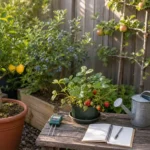
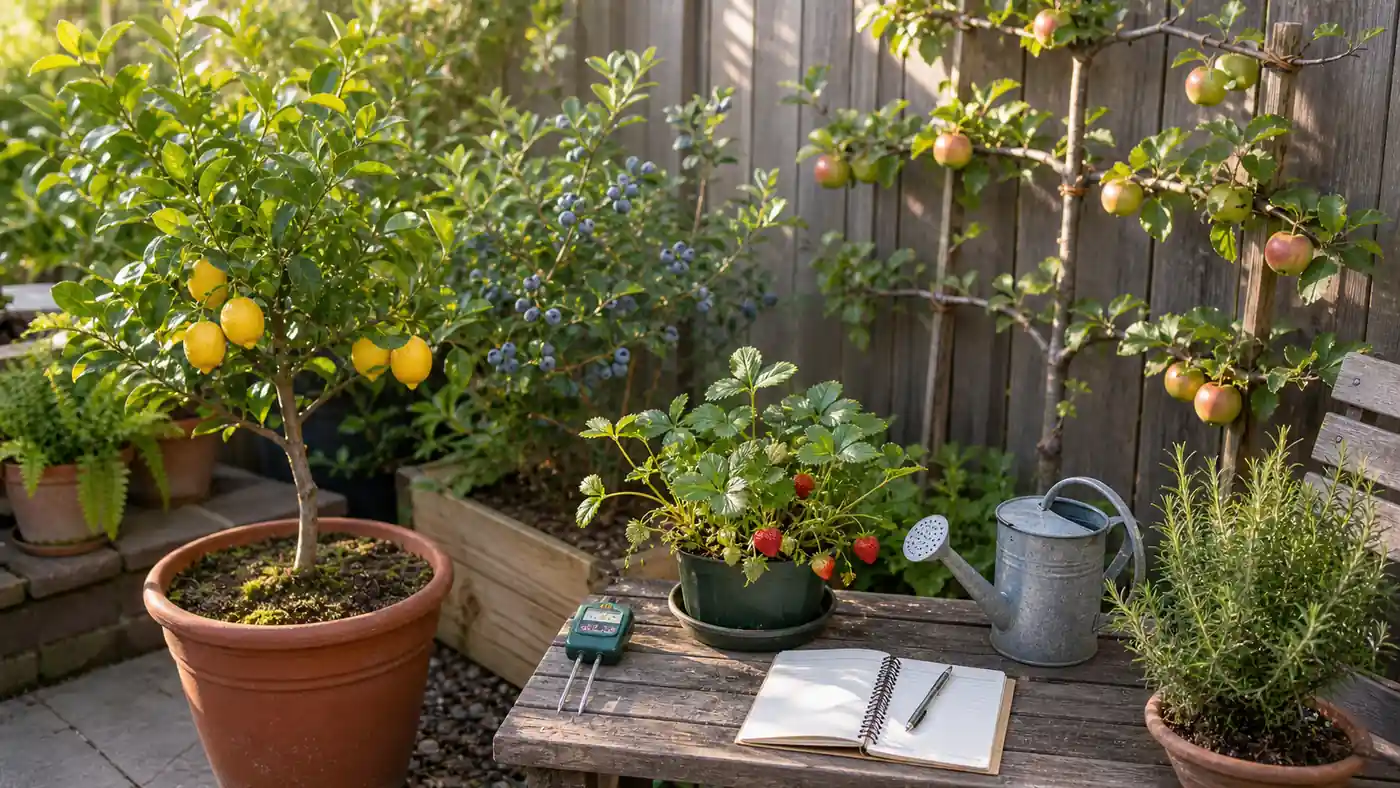
The strongest behavior signal is plant choice. Citrus, figs, berry shrubs, compact edibles, and container-friendly fruit plants are showing up in 2026 trend reports because they fit smaller spaces and give gardeners a visible payoff. A patio lemon, blueberry shrub, espalier apple, or container fig turns part of the food system into something a household can touch, prune, smell, harvest, and understand.
Key Takeaways
- Track +2.1% fresh fruit CPI pressure.
- Connect $10.61B imports to home fruit interest.
- Prioritize citrus, figs, berries, and dwarf trees.
- Treat containers as a fruit-growing entry point.
- Use sensors and soil tests for perennial crops.
Table of Contents
2026 Fruit Gardening Trend Snapshot
Sources: Garden Insider calculations from BLS and USDA ERS data, plus 2026 industry trend coverage. Official data explains price and supply pressure. Trend signals explain visible consumer interest in citrus, berries, figs, compact edibles, and fruiting patio plants.
Fruit Gardening Trend Overview – Utility Is Replacing Novelty
The 2026 fruit gardening pattern is practical. Gardeners are choosing fruit plants that give food, shade, fragrance, pollinator value, and a longer relationship with the yard. Citrus on a patio, berry shrubs along a fence, and a dwarf peach in a large container all fit that shift because they feel decorative and productive at the same time.
Industry trend coverage points in the same direction. The Sill’s 2026 predictions list citrus, figs, and berry shrubs among fruiting favorites for outdoor spaces. Better Homes & Gardens reported that Meyer lemon tree sales were up 60 percent in The Sill’s trend data, and House Beautiful’s 2026 garden trends noted that edible plants remain popular as compact varieties make container mixing easier.
| 2026 trend driver | Data or signal | Source type | Why it matters for fruit gardening |
|---|---|---|---|
| Fresh fruit price pressure | Fresh fruit CPI +2.1% year over year in May 2026 | BLS data | Makes fruit feel financially visible at the grocery shelf |
| Fresh fruit forecast | USDA ERS forecast +1.8% fresh fruit prices in 2026 | Official forecast | Turns fruit into a household budget conversation |
| Import reliance | $10.61B in fruit imports from January-April 2026 | USDA ERS trade data | Shows why year-round fruit supply depends on global trade |
| Fruiting plant interest | Meyer lemon sales up 60% in trend coverage | Retail trend signal | Points to container citrus as a visible entry crop |
| Compact edibles | Compact edible varieties highlighted in 2026 garden trends | Industry trend signal | Fits patios, balconies, and mixed ornamental beds |
The fruit price statistics give the economic layer behind this shift. The numbers explain why fruit plants feel more relevant in 2026 than a purely ornamental impulse buy.
Price-Driven Fruit Gardening – Grocery Pressure Creates Curiosity
Fruit prices are moving unevenly across the basket, and the 2026 pressure is visible enough to change how fruit plants feel. USDA ERS forecast fresh fruit prices to rise 1.8 percent in 2026. BLS data showed fresh fruit CPI 2.1 percent higher in May 2026 than in May 2025, with apples and citrus rising faster than the fresh fruit basket.
That makes fruit gardening less about replacing a weekly grocery run and more about targeting high-satisfaction crops. Dwarf Meyer lemon can give fragrance, flowers, glossy leaves, and occasional fruit. Blueberry shrubs can make a small edible border. Grapevines can shade a pergola and still produce clusters if pruning stays disciplined.
| Fruit price signal | Latest value | Period | Gardening implication |
|---|---|---|---|
| Fresh fruits CPI | +2.1% | May 2026 vs May 2025 | Fresh fruit is still rising at retail |
| USDA fresh fruit forecast | +1.8% | 2026 forecast | Price pressure remains mild, not absent |
| Apples CPI | +5.6% | May 2026 vs May 2025 | Tree fruit feels more visible in food budgets |
| Citrus CPI | +6.1% | May 2026 vs May 2025 | Container citrus has stronger emotional appeal |
| Frozen fruit CPI | +7.1% | May 2026 vs May 2025 | Berry crops become more interesting for freezing |
Home fruit still has a long payoff curve. A young apple tree or grapevine asks for pruning, spacing, pest monitoring, and patience before it gives useful harvests. That is why the strongest 2026 fruit gardening move is selective: grow the fruit that fits the site and the household, not the fruit that looks most expensive in one grocery week.
Compact Fruit Trees – Containers Make Fruit Less Intimidating
Compact fruit plants are the bridge between interest and action. A full-size tree can feel like a decade-long landscaping decision. Dwarf citrus, patio figs, columnar apples, and berry shrubs in large containers feel testable. These plants can sit near a door, stay reachable for watering, and show progress through flowers, new leaves, and fruit set.
Citrus carries the strongest 2026 signal. The Sill’s trend report named fruiting trees and fruiting favorites, including citrus, figs, and berry shrubs. Better Homes & Gardens reported Meyer lemon tree sales up 60 percent in The Sill’s data. That retail signal lines up with the broader move toward useful patio plants.
| Compact fruit option | Why it fits 2026 | Main constraint | Best use case |
|---|---|---|---|
| Dwarf citrus | Fragrant, evergreen, container-friendly, high emotional payoff | Cold protection and bright light | Patio in warm zones, indoor overwintering elsewhere |
| Container fig | Fast fruiting for a woody crop and strong heat tolerance | Root restriction and winter protection | Sunny patio or warm wall |
| Columnar apple | Vertical fruiting form for narrow spaces | Pollination and pruning discipline | Small yard, side path, large container |
| Blueberry shrub | Edible shrub with strong landscape value | Acidic soil and consistent moisture | Containers or acid-amended beds |
| Grapevine | Shade, structure, fruit, and long-term value | Annual pruning and support system | Pergola, fence, or trained row |
The crop still has to match the site. Blueberries need acidic soil and consistent moisture. Bananas need warmth, space, and a long season. A compact label cannot erase biology.
Import-Aware Fruit Gardening – Tropical Interest Has A Reality Check
Import dependence is one reason fruit gardening gets more emotionally interesting in 2026. USDA ERS trade data shows $10.61 billion in U.S. fruit imports from January through April 2026. Fresh fruit made up 70.5 percent of that value. Mexico supplied 41.0 percent of U.S. fruit import value in the same period.
Domestic availability data makes the point sharper. In 2024, imports accounted for 100 percent of U.S. fresh availability for bananas, mangoes, limes, and pineapples. Avocados were 88.4 percent import-supplied, raspberries 82.3 percent, blueberries 67.6 percent, and grapes 61.6 percent.
| Fresh fruit | Import share of U.S. domestic availability | Year | Home garden reading |
|---|---|---|---|
| Bananas | 100.0% | 2024 | Possible only in warm climates or protected setups |
| Mangoes | 100.0% | 2024 | Mostly warm-zone and greenhouse interest |
| Limes | 100.0% | 2024 | Strong container citrus candidate |
| Pineapples | 100.0% | 2024 | Slow patio or indoor novelty crop |
| Avocados | 88.4% | 2024 | Climate-limited tree with high curiosity |
| Raspberries | 82.3% | 2024 | High-value crop with broader backyard potential |
| Blueberries | 67.6% | 2024 | Good fit when soil acidity is managed |
| Grapes | 61.6% | 2024 | Strong home option where disease pressure is managed |
The fruit import and export statistics show the supply-chain side of that reality. Import dependence is a clue for what feels valuable, then climate, container size, and years-to-harvest decide the crop.
Edible Landscaping – Fruit Plants Are Becoming Design Plants
Edible landscaping is moving fruit plants out of the hidden side yard. A blueberry hedge can carry spring flowers, summer fruit, red fall foliage, and winter stems. A fig can read as an architectural shrub. Espalier apples can turn a fence into a living grid. Grapes can create shade before the fruit ever ripens.
House Beautiful’s 2026 trend coverage points to edible plants staying popular, with compact varieties fitting containers and mixed plantings. The Sill predicts outdoor spaces with functional gardens, fruiting trees, pollinator-friendly plants, and layered greenery. Those are industry signals, and the garden logic is sound: fruit plants work harder when they also solve privacy, shade, structure, or seasonal interest.
| Landscape job | Fruit plant candidates | Payoff | Risk to manage |
|---|---|---|---|
| Low edible hedge | Blueberries, currants, aronia | Flowers, fruit, fall color | Soil pH and bird pressure |
| Vertical screen | Grapes, hardy kiwi, espalier apple | Shade and structure | Pruning and support strength |
| Patio focal point | Citrus, fig, dwarf peach | Fragrance, flowers, harvest | Water swings and winter protection |
| Pollinator edge | Serviceberry, raspberry, blackberry | Bloom, fruit, habitat value | Suckering or thorn management |
| Small-space harvest | Strawberries, dwarf blueberry, columnar apple | Visible harvest in tight spaces | Container drying and nutrient drawdown |
Fruit plants make poor decoration when harvest is the only goal. They make stronger design plants when the gardener values the whole cycle: bloom scent, leaf texture, swelling fruit, bird pressure, pruning cuts, and the brief moment when ripe fruit softens under the fingers.
Precision Fruit Gardening – Data Helps Perennial Crops Survive
Precision gardening matters more for fruit than for many annual crops because mistakes can last for years. Blueberries planted into alkaline soil can stay yellow and weak. Poorly trained grapevines can become tangled canopies by year three. Container citrus allowed to swing from dry to saturated can drop leaves, flowers, and young fruit.
Homes & Gardens described precision gardening as a 2026 trend built around soil tests, climate mapping, plant recommendation tools, identification apps, moisture meters, and smart watering. For fruit, that trend is less about gadget collecting and more about reducing expensive misfits before the plant becomes permanent.
| Precision tool | Best fruit use | Decision it improves | Failure signal it catches |
|---|---|---|---|
| Soil test | Blueberries, apples, pears, grapes | pH and nutrient correction before planting | Yellowing, weak growth, poor fruit set |
| Moisture meter | Container citrus, figs, blueberries | Watering timing in large pots | Leaf drop, shriveled fruit, root stress |
| Local chill-hour data | Apples, peaches, cherries, blueberries | Variety selection | No bloom or weak fruit set |
| Disease tracking | Grapes, apples, stone fruit | Spray timing and pruning sanitation | Leaf spots, mildew, fruit rot |
| Zone and microclimate maps | Citrus, figs, avocados, pomegranates | Winter protection and placement | Cold injury or dieback |
Long-lived fruit crops reward measurement. Training grape vines, choosing a blueberry soil mix, or placing a citrus container becomes easier when the gardener measures the condition first and buys the plant second.
Source And Methodology Notes – What Counts As Evidence
The strongest statistics come from official USDA ERS and BLS data. Industry trend reports are used only as signals of consumer interest, retail movement, or design direction. A sales spike for Meyer lemon trees is a retail signal that gains weight beside official price and trade pressure.
| Source | Latest period used | Evidence type | How it is used |
|---|---|---|---|
| USDA ERS Food Price Outlook | May 2026 forecast cycle | Official price forecast | Fresh fruit price pressure and farm-level context |
| BLS Public Data API | May 2026 | Official CPI data | Fresh fruit, apples, citrus, and frozen fruit price movement |
| USDA ERS Fruit and Tree Nuts Data | Updated May 19, 2026 | Official trade data | Fruit import value, fresh import share, partner concentration |
| USDA ERS import share of domestic availability | 2024 | Official availability data | Import reliance for bananas, mangoes, limes, avocados, berries, and grapes |
| The Sill Plant Trend Report | 2025 report with 2026 predictions | Retail and trend signal | Fruiting trees, citrus, figs, berry shrubs, plant-care confidence |
| Better Homes & Gardens 2026 garden trends | Published January 2026 | Industry trend coverage | Meyer lemon sales signal, edible plants, data-driven gardening |
| House Beautiful 2026 garden trends | Published 2026 | Industry trend coverage | Compact edibles, heat and drought tolerance, edible gardening |
| Homes & Gardens precision gardening trend | 2026 trend coverage | Industry trend coverage | Soil tests, site-specific plant choices, moisture tools, apps |
Where To Start
Price-driven fruit gardens should start with one crop the household already buys and enjoys. Blueberries, strawberries, figs, citrus, and grapes make better first choices than a large mixed orchard.
Small-space fruit gardens should start with containers and dwarf forms. Choose the pot size, winter plan, sun exposure, and watering routine before buying the plant.
Design-led edible landscapes should start with one fruit plant that also solves a landscape job. Use blueberries for a low hedge, grapes for shade, or espalier apples for a narrow fence.
Climate-risk fruit gardens should start with measurement. Check soil pH, chill hours, summer heat, winter lows, and water access before committing to a perennial crop.
Conclusion
Fruit gardening in 2026 is being pulled by practical forces: higher fruit prices, visible import dependence, smaller outdoor spaces, and stronger interest in plants that do more than decorate. The strongest direction is the shift toward fruit plants that fit a real site and keep paying back through food, shade, fragrance, flowers, or seasonal structure.
Start with one crop that matches the household and the microclimate. A lemon flower in a sunny window, a blueberry hedge turning red in fall, or a grapevine casting shade over a hot path gives the trend a real root system.
Frequently Asked Questions
What are the biggest fruit gardening trends for 2026?
The biggest 2026 fruit gardening trends are compact fruit trees, container citrus, berry shrubs, edible landscaping, climate-resilient fruit choices, and more data-driven plant care using soil tests, moisture checks, and local climate information.
Why are people more interested in growing fruit in 2026?
Fruit has become more visible in household budgets and supply chains. Fresh fruit CPI was 2.1 percent higher in May 2026 than in May 2025, and U.S. fruit imports reached $10.61 billion from January through April 2026.
What fruit is best for small-space gardening?
Container citrus, dwarf blueberries, strawberries, figs, columnar apples, and trained grapes are the strongest small-space options. The best choice depends on sun, winter temperature, soil pH, and watering access.
Are fruit trees good for edible landscaping?
Yes, when the plant also has a landscape job. Blueberries can work as edible shrubs, grapes can shade a structure, espalier apples can cover a narrow wall, and figs can act like sculptural shrubs in warm sites.
Does growing fruit save money?
Sometimes. Savings are a weak first reason because fruit plants often need several seasons, pruning, soil correction, pest management, and containers or supports. The strongest value comes when the plant also adds shade, beauty, fragrance, habitat, or a crop the household genuinely uses.