
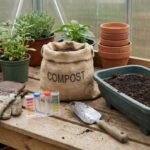


Underwatering is one of the most common reasons garden plants stall, wilt, and produce less than they should – and the earliest damage happens underground where nobody checks. A bed that looked fine last week can turn crispy at the tips, or a pot that felt damp two days ago can pull away from its edges and leave roots hanging in dry air. The pattern repeats across every climate: water arrives too late, too shallow, or not often enough, and each missed cycle compounds the stress.
The shift from reacting to wilted leaves to preventing them is not about watering more. It is about matching timing, depth, and frequency to what each plant actually draws from the soil. Read the early signals, adjust the routine, and the garden responds fast.
Key Takeaways
- Check soil moisture at root depth before deciding to water
- Match watering frequency to soil type, not a fixed calendar
- Watch for dull leaf color and slow growth before wilting starts
- Avoid shallow daily watering that trains roots to stay near the surface
- Test one change per week and track how plants respond
Table of Contents
What Underwatering Does to a Plant – The Damage You Cannot See Yet
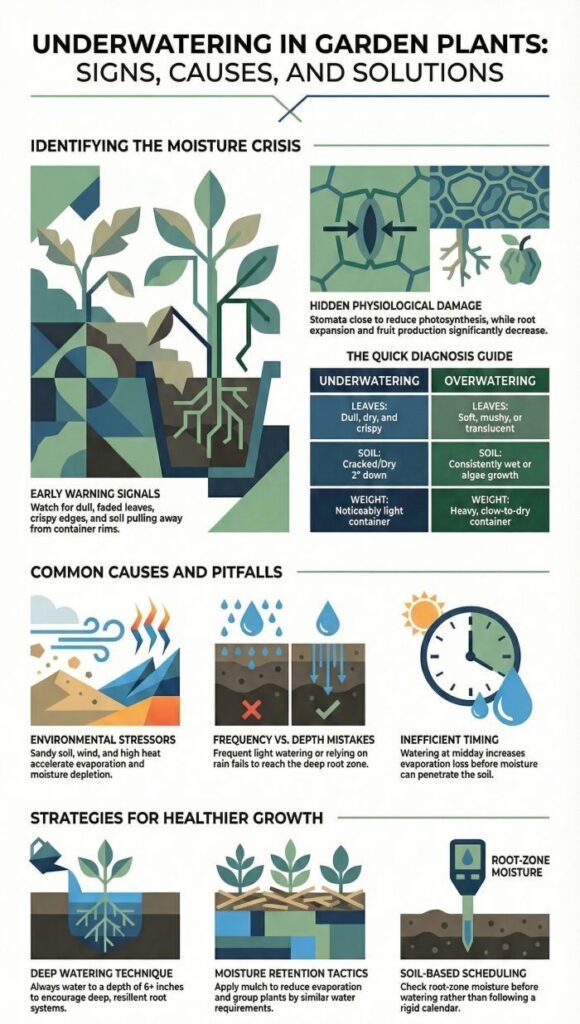
A plant that looks green and upright at 7 a.m. can already be in moisture deficit. Stomata – the microscopic pores on leaf undersides – close as soil water drops below a threshold the plant can tolerate. Once closed, carbon dioxide intake slows and photosynthesis decreases even while the sun is at full strength. Research from the University of California Division of Agriculture and Natural Resources shows that stomatal closure can begin when soil moisture drops to just 50 percent of field capacity, well before any visible wilt.
The hormone abscisic acid (ABA) rises in response to root-zone dryness. ABA signals the plant to conserve rather than grow: leaf expansion slows, new root tips stop extending, and flowering can pause or abort. In annual vegetables this means fewer fruits per plant. In perennials, it means a smaller root network heading into the next season – which makes the plant even more vulnerable the following summer.
Turgor pressure – the internal water pressure that keeps cells rigid – drops as soil dries. Soft new growth droops first, then older leaves curl inward to reduce the surface area exposed to air. By the time a plant is visibly wilting at midday and not recovering by evening, the roots have been underserved for days, sometimes weeks.
This lag between the start of stress and the first visible symptom is why underwatering is so easy to miss. The plant compensates quietly until it cannot, and by then the cost in lost growth, weakened tissue, and shallow roots has already accumulated.
Early Signs of Underwatering – Leaf, Soil, and Root Clues Worth Checking
Most gardeners wait for wilt. That is the last sign, not the first. A 2021 review in the journal HortScience noted that visual wilt in tomatoes appeared an average of four days after measurable yield loss had already started. Earlier signals exist – they just require a closer look.
Leaf and stem changes
Leaves lose their gloss before they lose their shape. A healthy leaf reflects light with a slight sheen; an underwatered one looks flat, almost dusty. On herbs like basil, the youngest leaves at the top darken slightly and feel papery rather than supple. On broadleaf vegetables, margins brown and dry starting from the outermost edges inward.
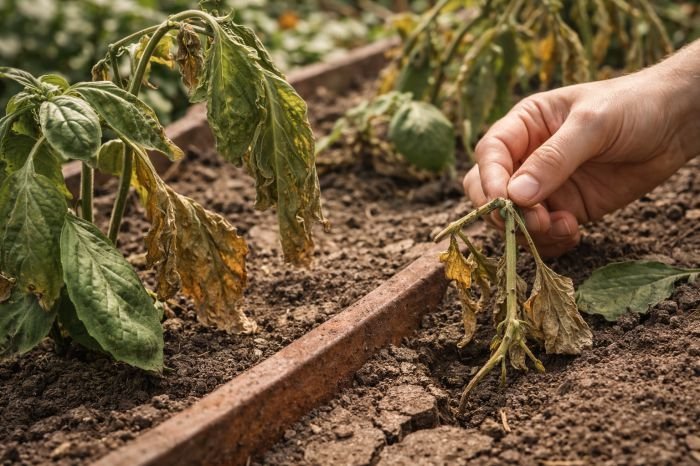
Stems on young plants become thinner than expected. New growth is shorter between nodes, and flower buds may drop before opening. If you bend a stem gently and it feels stiff rather than flexible, the tissue is already well into moisture deficit.
Soil and container signals
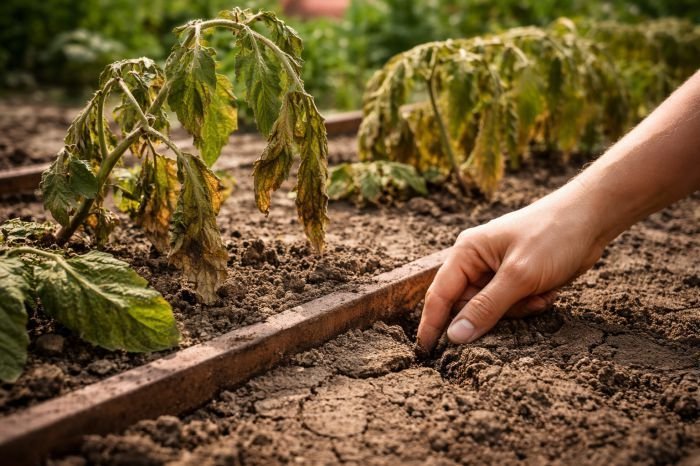
Dry soil pulls away from pot walls, leaving a visible gap. In raised beds, the surface cracks into a mosaic pattern when it dries past the top two inches. A finger pressed into the surface meets hard resistance instead of giving slightly.
Containers feel noticeably lighter when you lift them. A 12-inch terracotta pot that weighs 10 pounds fully watered can drop to 6 pounds when the mix is depleted – that difference is easy to notice without any tool.
Root-zone confirmation
Surface appearance can lie. Wind and sun dry the top inch of soil while deeper layers remain moist, or the opposite – a crust holds dew while the root zone underneath stays dry.
The finger test works to about two inches. For deeper checks, a wooden chopstick or unpainted dowel pushed into the soil and pulled after 10 minutes shows a damp line where moisture begins. Soil moisture meters are faster and remove the daily uncertainty when you manage beds with different exposures. The specific signs of underwatering in garden plants shift by species, but the pattern of dull leaves, dry margins, and shortened internodes holds across most edibles and ornamentals.
| Signal | Underwatering | Overwatering |
|---|---|---|
| Leaf color | Dull, faded green, brown edges | Yellowing, translucent patches |
| Leaf texture | Dry, papery, crisp | Soft, mushy, limp |
| Soil surface | Cracked, pulled from edges | Consistently wet, algae growth |
| Stem feel | Stiff, brittle | Soft, may darken at base |
| Root appearance | Dry, pale, thin | Brown, mushy, foul smell |
| Pot weight | Noticeably light | Heavy, slow to dry |
Common Causes of Underwatering – Why Many Gardens Stay Drier Than They Should
Soil and site factors
Sandy soils drain in hours. A sandy loam in full sun on a south-facing slope can lose an inch of moisture in a single hot afternoon through evaporation alone. The same soil in a shaded, sheltered bed might hold for three days. Colorado State University Extension data shows sandy soil holds roughly 1 inch of plant-available water per foot of depth, while clay loam holds up to 2 inches – doubling the buffer between waterings.
Container mixes compound the problem. Peat-based blends become hydrophobic when fully dried out, meaning water runs straight down the inside wall of the pot and exits the drainage holes without wetting the root ball. Dark-colored containers absorb more radiant heat, which accelerates moisture loss on sunny patios.
Habit and timing mistakes
The most common watering error is consistency without depth. A light sprinkle every evening wets the top inch but never reaches the root zone below four inches. Roots follow the moisture, so they cluster near the surface where they are more exposed to heat and dry spells.
Other patterns that quietly lead to underwatering:
- Watering at midday when evaporation peaks and less reaches the soil
- Relying on rain that looks heavy but drops less than half an inch
- Skipping one session during a heat wave, which compounds into two or three missed cycles
- Using a sprinkler on a windy day where half the water drifts off target
I often notice that gardeners who water every day for five minutes end up with drier root zones than those who water twice a week for twenty minutes. The surface looks wet, which feels reassuring, but a trowel sunk six inches down tells a different story.
Long-Term Effects of Underwatering – How Chronic Dryness Compounds Damage
A single dry spell costs a plant a week of growth. Repeated dry spells cost it a season. Research published by the American Society for Horticultural Science found that tomato plants exposed to three consecutive mild drought cycles produced 30 percent fewer fruit by weight than control plants watered at field capacity – even after full irrigation was restored.
Root systems that form under inconsistent watering stay shallow. Shallow roots mean less access to nutrients, less stability in wind, and faster decline during the next dry period. The cycle feeds itself: a plant with shallow roots dries out faster, which keeps roots shallow, which makes the next missed watering more damaging.
Have you ever noticed a plant that never quite bounces back to its spring vigor, even after regular watering resumes in July? That gap between expectation and reality is often the accumulated cost of early-season dry spells that seemed minor at the time.
Pest pressure rises in dry gardens. Spider mites, thrips, and aphids reproduce faster on water-stressed plants because the thinner leaf cuticle is easier to penetrate. A plant fighting drought and pest damage simultaneously rarely recovers to full production that season.
When soil structure degrades
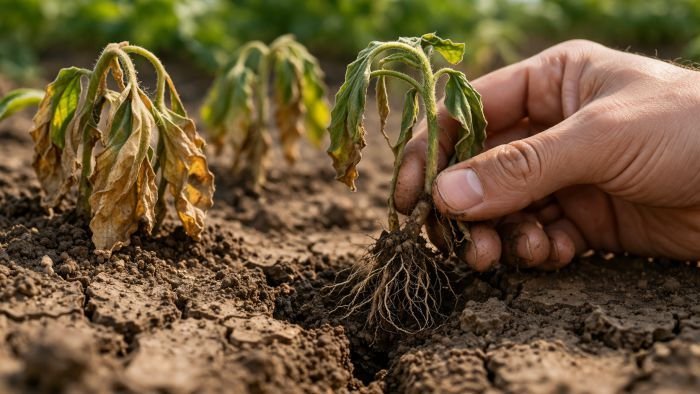
Chronically dry soil loses its aggregate structure. Microbial activity drops below roughly 20 percent volumetric water content, and the organic glue that holds soil particles into porous clumps weakens. Once structure collapses, rain or irrigation water sheets across the surface instead of soaking in, which makes future watering less effective.
This is the point where underwatering starts damaging soil health in ways that outlast the dry spell itself. Rebuilding microbial communities and aggregate structure takes one to two full seasons of consistent moisture and organic input. In beds where underwatering affects plant health repeatedly, even well-watered periods fail to bring growth back to baseline because root capacity has already been reduced.
Watering Schedule Basics – Matching Frequency to What Plants Actually Need
There is no universal watering number. A pepper plant in a clay pot on a Phoenix patio needs water daily in July. The same variety in a raised bed in Portland may go five days between sessions. The variables – soil type, container size, sun exposure, wind, humidity, and root depth – shift the equation so far that any fixed schedule will underserve parts of the garden.
The more reliable approach is to water by soil condition, not by calendar. Check the root zone. If the top two to three inches are dry in garden beds, or if a container feels light when lifted, water deeply enough that moisture reaches the lowest roots. Then wait until that zone dries again before the next session.
| Plant category | Sandy soil | Loam | Clay soil |
|---|---|---|---|
| Leafy greens | Every 1-2 days | Every 2-3 days | Every 3-4 days |
| Fruiting vegetables | Every 2-3 days | Every 3-4 days | Every 4-5 days |
| Established perennials | Every 3-5 days | Every 5-7 days | Every 7-10 days |
| Newly planted shrubs | Every 2-3 days | Every 3-5 days | Every 5-7 days |
| Container herbs | Daily in summer | Every 1-2 days | Every 2-3 days |
These ranges assume full sun and summer conditions. Shade, cooler weather, and wind shelter extend intervals. Rain resets the clock, but only if it delivers at least half an inch – light drizzle that wets foliage without saturating the root zone counts as zero.
The Royal Horticultural Society recommends watering in the early morning when possible. Evaporation loss is lowest, soil absorption is highest, and foliage dries before evening, which reduces fungal risk. If morning is not practical, late afternoon after the worst heat passes is the next best window.
Gardeners managing mixed beds with annuals, perennials, and herbs at different stages benefit from building a watering schedule tailored to various plant types rather than applying one frequency across the whole garden.
Pro Tip: Press your thumb into the soil at the base of the plant right after you finish watering. You should feel moisture at least four inches down. If the soil is still dry at that depth, run the water again at half the volume and let it soak in before walking away. One deep pass always beats two shallow ones.
Moisture Retention Strategies – Tools and Practices That Reduce Watering Pressure
Mulch and organic amendments
Two to three inches of organic mulch – shredded bark, straw, or leaf mold – can cut evaporation by up to 70 percent according to data from the USDA Natural Resources Conservation Service. Applying a mulch layer to conserve soil moisture also moderates root-zone temperature, which slows the evaporation cycle even further on exposed beds.
Compost worked into the top six inches of garden beds raises the soil’s moisture-holding capacity. Sandy beds improve the most because organic matter fills pore spaces that would otherwise drain too fast. Clay benefits too, though the mechanism differs – organic matter opens structure and improves infiltration so water actually enters instead of running off.
Grouping and layout
Plants with similar water needs placed in the same bed or zone simplify scheduling and prevent the common problem of over-serving one group while under-serving another. A section of drought-tolerant lavender next to a bed of thirsty lettuce creates an impossible watering compromise where one plant always loses.
The tradeoff is less design flexibility. Grouping by water needs sometimes means separating plants that look good together or that you would prefer in the same view. That cost is worth it in beds you manage daily, but in a display garden where aesthetics take priority, you accept the extra watering attention as part of the arrangement.
Monitoring tools
A probe-style moisture meter pushed to root depth gives a reading in seconds and costs under fifteen dollars for a basic model. For larger gardens or beds with variable exposure, soil moisture monitoring tools with digital readouts can track trends over days and flag drying zones before plants show any visible stress.
Simple tools help just as much:
- A rain gauge placed in the open tracks actual precipitation, not the forecast
- Wooden chopsticks inserted near root zones show a clear damp line when pulled
- A kitchen scale under a sample pot confirms weight-based watering checks
Where To Start
If your plants are wilting in the afternoon but recovering by morning, start by checking soil moisture at four inches deep. The surface may look dry while the root zone is fine, or the root zone may be bone dry while the surface still holds dew. Knowing which scenario is happening changes your next move entirely.
If you have a mixed garden and some plants look stressed while others thrive, group the struggling ones by exposure and soil type. Water those zones separately – deeper and less often – for two weeks and note the change.
If you are managing containers on a patio or balcony, weigh one representative pot right after a full watering and write the number on the saucer. When the pot drops to about 60 percent of that weight, water again. That single number replaces daily uncertainty and gives you a reliable trigger.
Conclusion
Underwatering rarely announces itself. The signals – dull foliage, shortened stems, soil pulling from pot edges – appear days after the root zone has already been short on moisture. Checking soil at a four-inch depth twice a week during the growing season catches most problems before they cost growth. If leaves are already browning at the margins, water deeply once, wait 24 hours, and check whether new growth resumes flexibility. Plants that stay rigid after a full soak have likely lost fine root mass and need lighter, more frequent sessions for two to three weeks while roots rebuild.
A garden that holds moisture between waterings instead of losing it to evaporation and runoff is a garden that practically waters itself. Beds mulched to three inches, soil amended with compost each spring, and plants grouped by thirst – these adjustments stack. By midsummer, the difference shows in the color: dark, waxy leaves catching light instead of pale tips curling away from the afternoon sun.
How do you know if a plant is underwatered or overwatered?
Check the soil at root depth first. If the soil is dry two inches down and the leaves feel crisp and papery, the plant needs water. If the soil is wet and the leaves are soft, yellow, or translucent, the plant has too much. Underwatered leaves tend to curl inward and brown from the edges, while overwatered leaves often yellow from the center and feel mushy. Lifting a container is the fastest confirmation – a dry pot is noticeably lighter than a saturated one, sometimes by 30 to 40 percent of its full weight.
Can an underwatered plant fully recover?
Most can, but not every one will. Herbaceous annuals like basil and lettuce bounce back within 48 hours if the roots are still alive and soil moisture is restored gradually. Woody perennials that have lost fine root mass take longer – sometimes four to six weeks before new root tips extend enough to support normal growth. The variable that decides the outcome is how long the dry period lasted. A plant wilted for a single afternoon usually recovers overnight. A plant that has been consistently dry for two or three weeks may lose branches or die back to the crown even after rehydration.
How deep should you water garden plants?
Six inches is the minimum target for most garden beds. Vegetable roots typically reach 8 to 12 inches, so wetting only the top three inches misses more than half the active root zone. A slow application for 20 to 30 minutes with a soaker hose on loam soil usually reaches the six-inch mark. Sandy soil drains faster and may need a second pass after a 15-minute soak-in period. Push a screwdriver into the soil after watering – it slides easily through moist soil and stops at the dry boundary.
What happens if you underwater a plant during flowering?
Flower buds abort. The plant redirects its limited moisture to keeping existing leaves alive, and developing buds are the first structures to drop. In tomatoes, even a short dry spell during early fruiting can trigger blossom end rot, where the fruit develops a sunken brown patch at the base because calcium transport stalled without adequate water flow. Peppers respond similarly – flowers fall without setting fruit, and you lose one to two weeks of production waiting for the next round of blooms.
Is it better to underwater than overwater?
Neither is better, but underwatering is easier to fix in most situations. A dry plant given water can recover in hours. A waterlogged plant sitting in saturated soil for days risks root rot, which is often fatal before symptoms appear above ground. That said, chronic underwatering causes its own long-lasting damage – fine root death, soil structure collapse, and compounding pest stress that lowers production all season.
How often should container plants be watered in summer?
Daily in most cases for containers under 12 inches in diameter, and every two to three days for larger pots in partial shade. Terracotta pots lose moisture through the walls and may need twice-daily watering during heat waves above 95 degrees Fahrenheit. Plastic and glazed ceramic retain moisture longer. The lift test is the most reliable daily check – if the pot feels distinctly lighter than it did the morning after a full soak, water again regardless of what the soil surface looks like.
Should you water plants every day in hot weather?
It depends on the planting situation. Containers in full sun above 90 degrees Fahrenheit often need daily or even twice-daily water. In-ground beds with mulch and loam soil can usually go two to three days between deep waterings even in extreme heat, because the soil volume and insulation buffer moisture loss. The risk of daily watering in beds is training roots to stay shallow. A deeper soak every three days builds a root system that handles the next heat wave better than a light daily splash that only wets the surface inch.